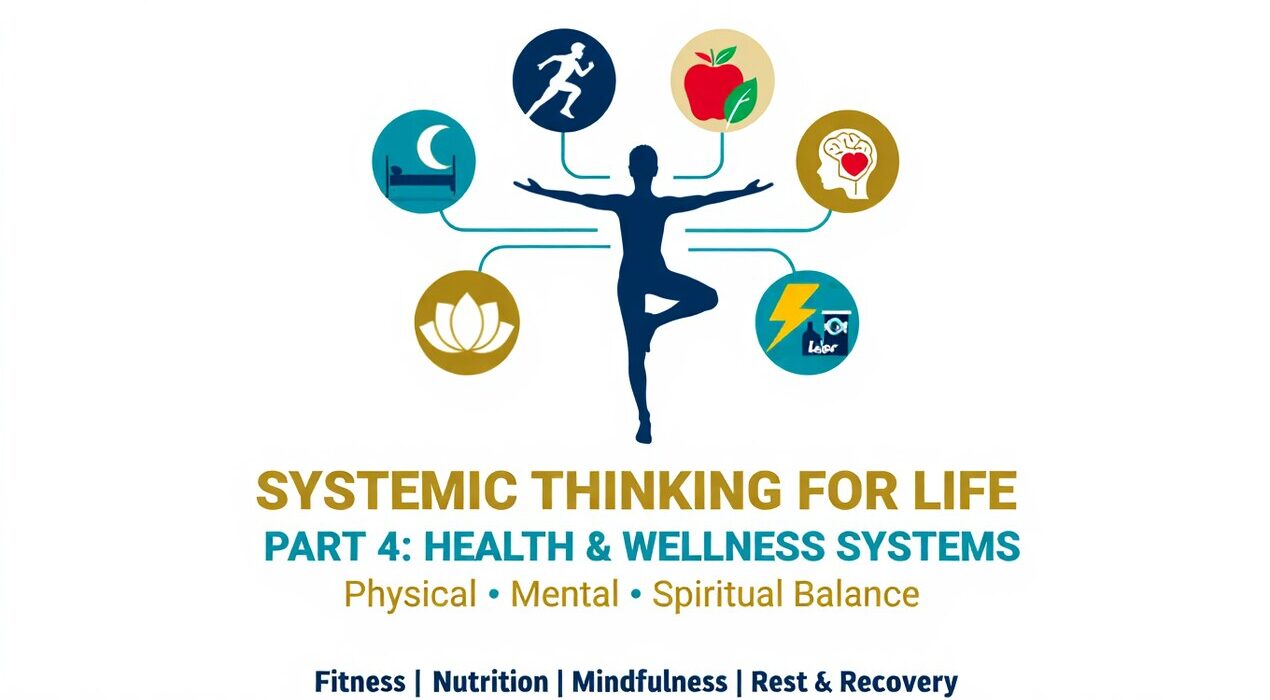
Systemic Thinking for Life: Discipline, Balance and Self-Excellence
Systemic life planning begins with discipline, balance and a commitment to self-improvement. These qualities help people maintain stability in complex environments. When individuals practise self-control and humility, they create stronger foundations for growth.
Self-control allows a person to manage impulses and emotional reactions. As a result, decisions become thoughtful instead of reactive. Balance also plays a key role because it prevents excess in any area of life.
Self-excellence means continuous improvement. People refine their skills, behaviour and relationships over time. When humility replaces ego, learning and growth become constant.
Family Systems and Generational Balance
A family also operates like a system where elders guide younger members. Parents nurture connections and provide values that hold the household together. However, each generation faces a different environment.
Technology, economic realities and career paths have changed rapidly. Therefore, parents must adapt their expectations to current realities. If elders resist change, they may unintentionally weaken the family structure.
Healthy families balance tradition with flexibility. Parents should share values and wisdom while allowing children to build their own paths. Strong roots provide stability, but freedom allows growth.
Planning Life Through Structured Thinking
A useful principle in systemic life planning is to choose caution during uncertainty. Careful decisions protect relationships, finances and opportunities. In complex situations, prevention usually costs less than repair. Life rarely moves in a straight line. Instead, it evolves through adaptation and regular reassessment. Successful individuals anticipate risks and adjust strategies before problems escalate.
Each stage of life requires different priorities. Students focus on discipline and skill development. Early professionals concentrate on reputation, financial stability and career progress.
Marriage introduces shared responsibilities and emotional understanding. Parenthood adds leadership duties, including guidance and financial planning. Later stages emphasise health, mentorship and long-term legacy. Practical planning begins with honest self-assessment. People should evaluate their skills, health, discipline and financial habits. Next, they can define long-term goals and translate them into realistic milestones.
Regular reviews help maintain alignment between priorities and actions. By adapting plans when circumstances change, individuals maintain stability and direction.
Ultimately, two paths exist in life. One involves drifting with circumstances. The other follows systemic life planning, where people set priorities, strengthen relationships and adjust wisely.