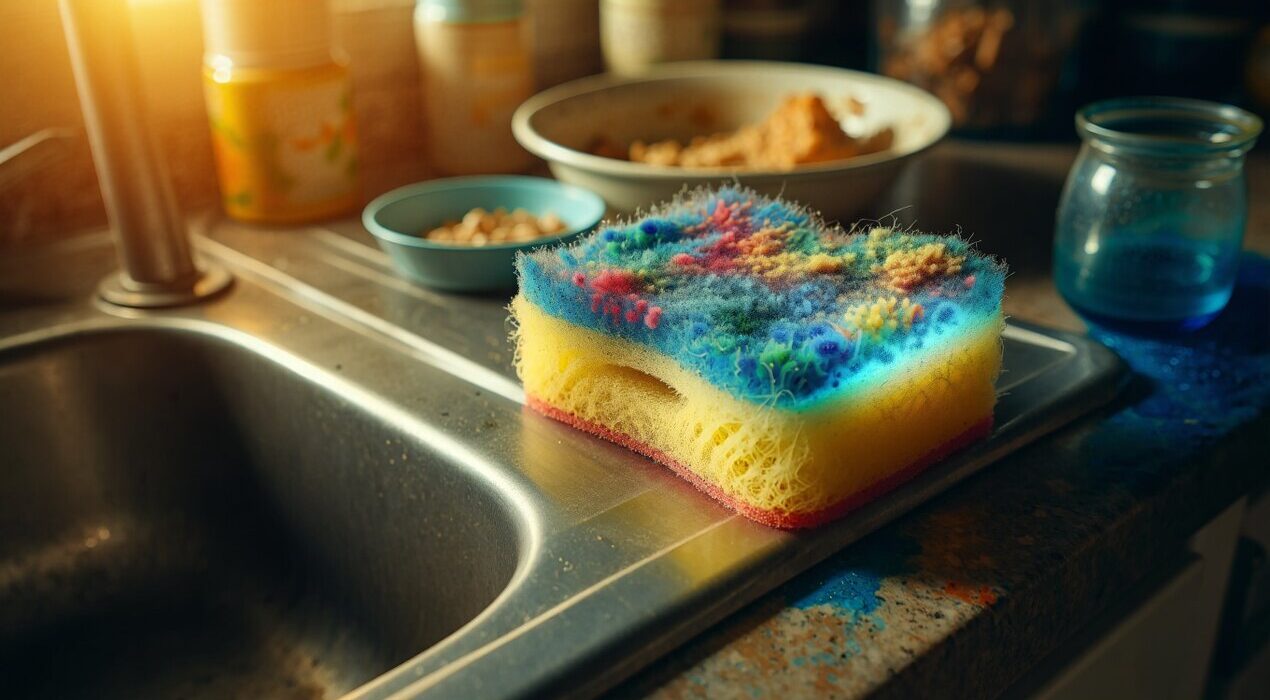
Washing Dishes With a Sponge Has a Hidden Risk
Your kitchen sponge seems harmless. Yet each scrub releases tiny plastic fragments. These microplastics slip down the drain unnoticed. Scientists at the University of Bonn studied this issue. They wanted to know how much plastic sponges really shed. In addition, they asked whether it poses a serious threat.
How They Tested Sponges
The team used two methods. First, they asked households in Germany and North America to use different sponges. Then, they built a device called “SpongeBot.” This robot simulated scrubbing in the lab.The results were clear. All sponges lost material over time. Annual emissions ranged from 0.68 to 4.21 grams per person. Sponges with less plastic shed fewer particles.
Water Matters More Than Plastic
Surprisingly, microplastics were not the main concern. Water use during dishwashing had a far bigger environmental impact. In fact, 85 to 97 percent of the total burden comes from water consumption.For example, if everyone in Germany used one sponge type, emissions could reach 355 tonnes per year. However, wastewater plants capture most of it. Only a few tons actually enter rivers or soil.
Simple Ways to Help
Therefore, you can make a real difference. Use less water when washing dishes. This step has the greatest effect. Choose sponges with lower plastic content. Finally, keep using each sponge longer. Extending its lifespan saves resources.