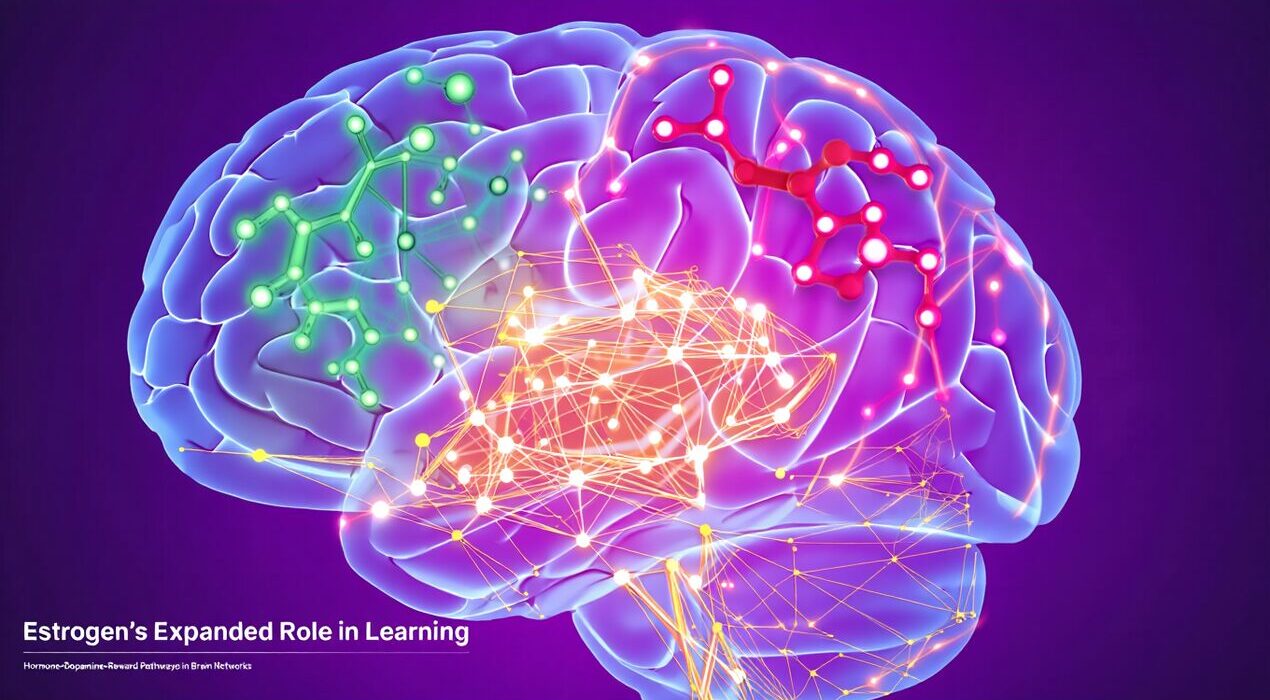
New Study Links Estrogen, Dopamine, and Learning in the Brain
A new study reveals how hormonal shifts can change the way the brain learns. The research focuses on estrogen and its influence on dopamine, the chemical that helps us process rewards. As a result, scientists now have a clearer view of how learning changes across the female reproductive cycle.Hormones affect mood, motivation, and memory. However, the biological steps behind these effects remain partly unknown. This study helps fill that gap.
How Estrogen Boosts Learning
Researchers studied laboratory rats to understand this connection. The animals learned to follow audio cues that led them to a water reward. Their performance improved when estrogen levels increased. The reason is simple: estrogen strengthens dopamine activity, which makes reward signals clearer.In addition, the team observed molecular changes in the brain during different hormonal phases. These shifts affected how the brain responded to rewards. Therefore, the study highlights a direct link between estrogen and the systems that support learning.The findings appear in Nature Neuroscience and involve scientists from NYU and Virginia Commonwealth University.
What Happens When Estrogen Drops
The team also tested what occurs when estrogen activity decreases. The rodents showed weaker learning performance during these phases. However, their decision-making skills stayed the same. This suggests that estrogen influences learning specifically rather than general thinking.These results may help explain why symptoms of some neuropsychiatric disorders vary with hormonal changes. Many conditions show shifts in severity across the reproductive cycle. Understanding this connection may lead to better treatments in the future.
Why This Research Matters
The study offers important clues about how hormones shape brain function. In addition, it helps researchers explore why learning and mood can shift with hormonal changes. This work may open new doors for understanding both health and disease.