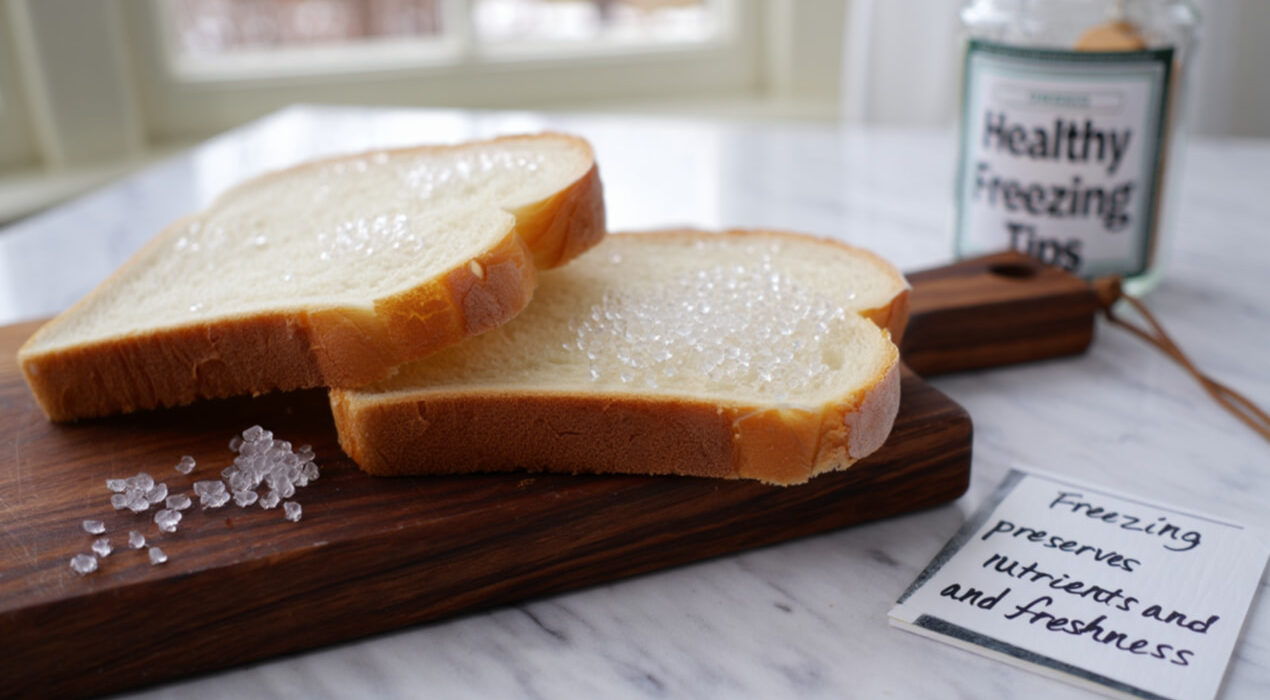
Freeze Bread for Blood Sugar and Gut Health
Bread is a staple in many winter meals, but few people realise that how you store it can affect your health. Freezing bread isn’t just a way to reduce waste; it can also change how your body processes carbohydrates. Dr Kunal Sood explains that freezing alters starch structure, creating resistant starch that behaves more like fibre than sugar. This change helps the body digest bread more slowly, keeping blood sugar levels steadier and reducing spikes after eating.
Recent studies support this idea. One trial in the Journal of Preventative and Complementary Medicine found that freezing and then defrosting white bread cut post-meal blood sugar spikes by up to 30 percent. This simple habit can improve digestion, support metabolism, enhance gut microbiome function, and provide a steadier energy supply.
Resistant Starch and Digestive Benefits
When bread is frozen, some starch molecules reorganise into resistant starch. This slows digestion, reducing sudden glucose surges and easing metabolic strain. Resistant starch also promotes satiety and smoother nutrient absorption. During winter, when meals tend to be heavier and irregular, this effect can help maintain digestive comfort and more consistent energy levels.
Blood Sugar Control, Immunity, and Gut Health
Slower carbohydrate digestion stabilises blood sugar and supports immune function by reducing metabolic stress. Resistant starch feeds beneficial gut bacteria, producing short-chain fatty acids that strengthen the colon and boost immunity. Clinical findings suggest that freezing and then toasting bread enhances these benefits further. Overall, this habit can lead to steadier energy, better gut health, and improved metabolic balance during colder months.