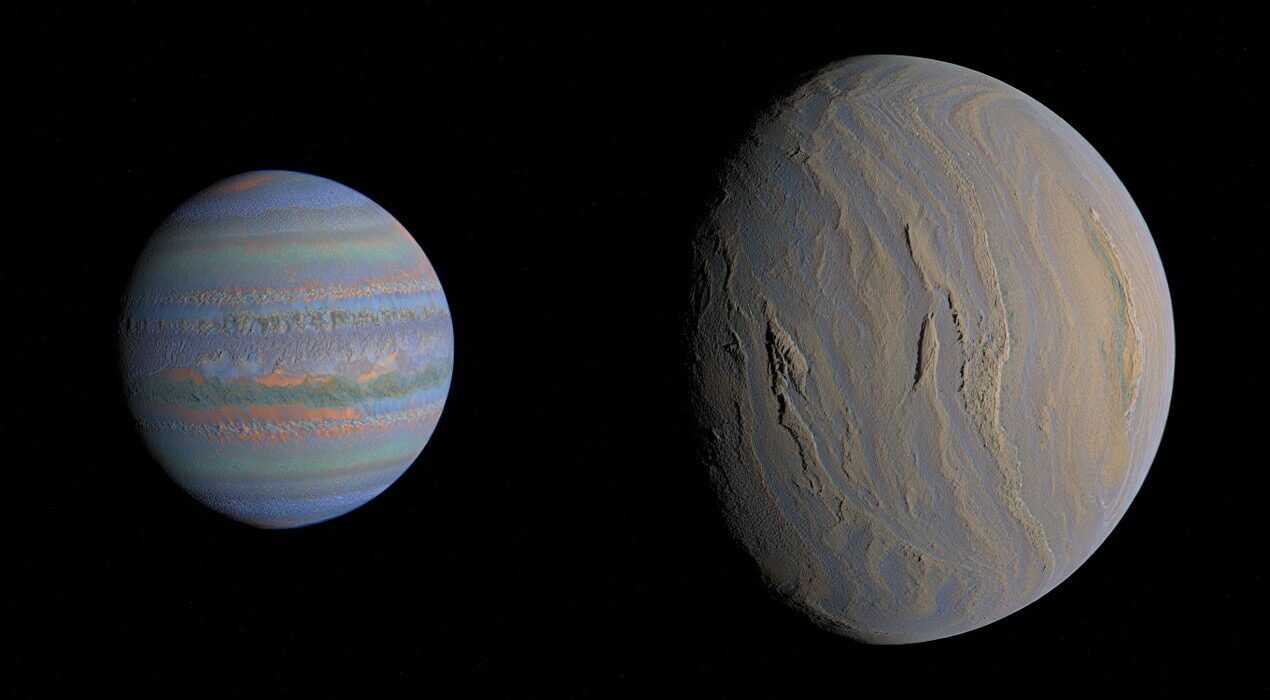
Uranus and Neptune May Be Rock-Rich Worlds, Not Just Icy Giants
Uranus and Neptune have long carried the label of ice giants. However, new research suggests that picture may be incomplete. Scientists now believe these planets could hide far more rock than expected.A Swiss-led team from the University of Zurich led the study. As a result, the findings challenge decades of assumptions about the Solar System’s outer planets.
Rethinking Planetary Categories
Scientists often group planets by composition. For example, Earth belongs to the rocky group, while Jupiter ranks as a gas giant. Uranus and Neptune usually sit in the icy category.However, the new study questions this simple view. Instead, researchers argue that both planets could be rich in rock or ice. Therefore, multiple interior structures remain possible.
A New Way to Look Inside Planets
To test their ideas, scientists created a hybrid modeling method. This approach combines physics-based data with broader, unbiased simulations. As a result, the models avoid strict assumptions.The process starts with random interior density profiles. Researchers then match these profiles to observed gravity data. They repeat this cycle until the model aligns with known measurements.
Clues From Strange Magnetic Fields
Uranus and Neptune have unusual magnetic fields. Unlike Earth, their fields feature multiple poles. This odd behavior puzzled scientists for years.The new models offer an explanation. For example, layers of ionic water could create off-center magnetic dynamos. In addition, Uranus may generate its magnetic field deeper than Neptune.Despite the progress, many uncertainties remain. Scientists still struggle to understand matter under extreme planetary pressures. Therefore, current models cannot deliver final answers.Even so, the study opens exciting possibilities. Ultimately, dedicated missions to Uranus and Neptune will reveal what lies beneath their blue clouds.