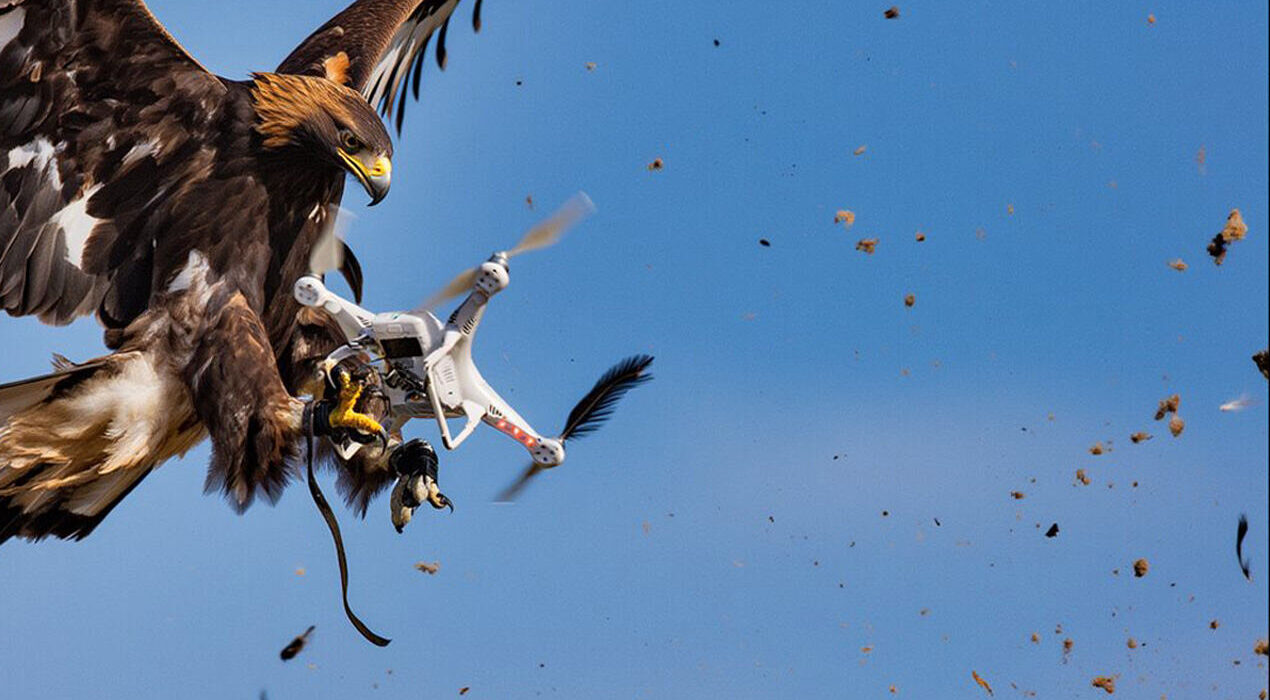
Eagle Drone Defense Trial Launches Innovative Security Approach
Pakistan has launched a unique security experiment using nature instead of machines. The eagle drone defense pilot aims to stop unauthorized UAVs through trained birds of prey. As a result, the project has drawn attention from security and conservation circles alike.
Royal Eagle Leads the Pilot Project
The first royal eagle now operates from East Continental Falconry Pakistan. Trainers house and condition the bird at a specialised facility in Gujranwala. Therefore, experts can closely monitor its behaviour and progress.
The falconry centre works under the Ornithology Research Initiative led by Prof Dr Aurangzeb Hafi. It focuses on research and conservation of rare raptors. In addition, the facility ranks among South Asia’s leading observatories.
The selected royal eagle stands out for its exceptional size and strength. It has a wide wingspan, strong talons, and an unusually long hallux claw. According to specialists, no comparable bird currently exists in nearby regional falconries.
Trainers chose this eagle for its ability to intercept fast-moving objects mid-air. However, the programme remains cautious and controlled. Experts continue to assess safety for both the bird and surrounding areas.
Global Experience Shapes Local Planning
International examples have influenced Pakistan’s approach. The Netherlands once tested trained eagles through its national police. However, officials later stopped the effort due to safety and operational limits.
France continues similar training near military sites. The French Air Force conditions golden eagles from a young age. As a result, birds learn to treat drones as prey while wearing protective gear.
India also uses trained birds under its Garuda Squad. These teams support security during large events and high-profile movements. Meanwhile, the UK and Spain have tested related ideas with limited adoption.
Pakistan’s programme remains in an exploratory phase. Authorities will review feasibility, safety, and effectiveness before any expansion. Therefore, decisions will rely on evidence rather than novelty.