Islamabad Court Awards Rs5.4bn in Airblue Crash Compensation After 15 Years
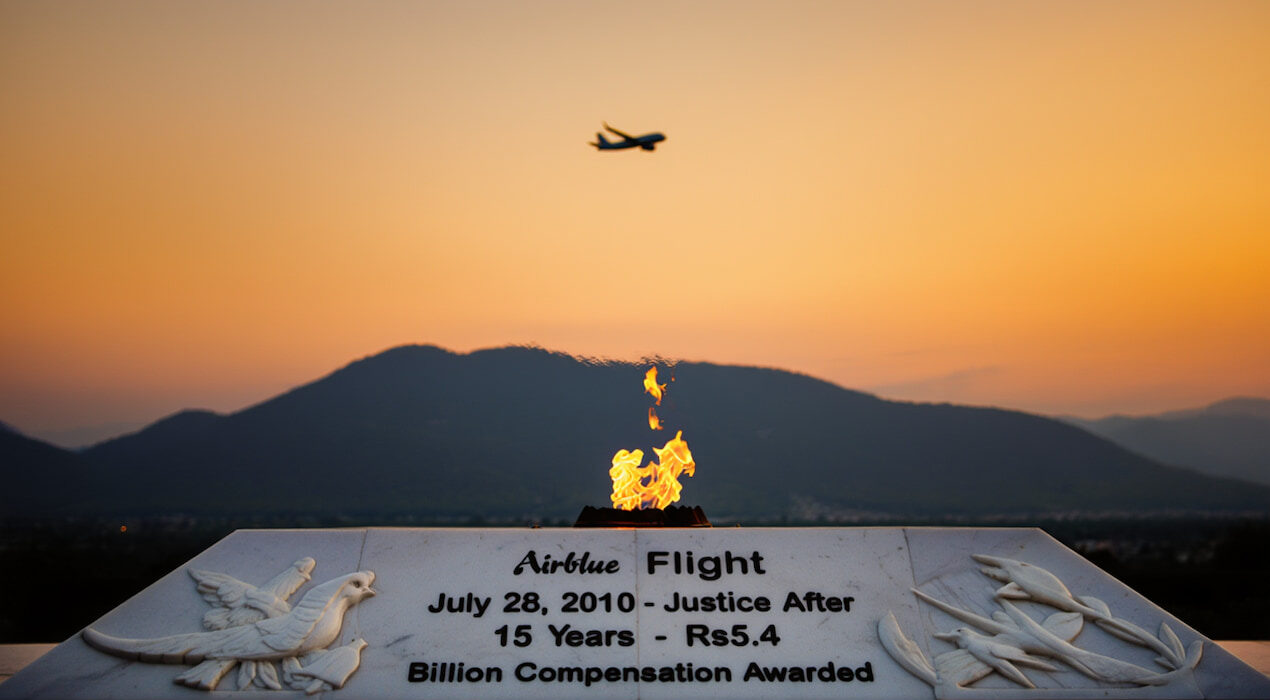
An Islamabad court has delivered long-awaited relief to families affected by the Airblue tragedy.The court awarded Airblue crash compensation worth Rs5.4 billion to the families of eight victims. As a result, the ruling brought partial closure to a painful chapter that lasted 15 years.
Court Holds Airblue Liable
An additional district court in Islamabad announced the verdict on Tuesday. Judge Rasool Bashir Mirjat dismissed Airblue’s appeal against earlier compensation claims. In addition, the court upheld the airline’s liability for the 2010 crash.
The judge also penalised Airblue for delaying the case. Therefore, the court imposed a fine of Rs1 million on the airline. The ruling strengthened demands for accountability in aviation cases.
Airblue Flight 202 had departed from Karachi on July 28, 2010. However, it crashed into the Margalla Hills while approaching Islamabad. All 152 passengers and crew members lost their lives.
Findings Highlight Errors and Delays
Investigations linked the crash to serious operational failures. For example, reports cited pilot error and poor decision-making. The aircraft descended below the safe altitude during bad weather.
In addition, investigators highlighted weak cockpit coordination. Low visibility, rain, and cloud cover further worsened the situation. Air traffic control errors also contributed to unsafe conditions before the crash.
The Civil Aviation Authority classified the incident as a Controlled Flight into Terrain. As a result, investigators blamed violations of standard procedures and flying discipline.
For years, families demanded justice and timely relief. However, prolonged litigation increased their emotional and financial stress. Most families accepted limited compensation under pressure.
Still, a few families chose to continue the legal fight. They rejected unfair settlements and pursued rightful claims. Their persistence finally led to fair compensation.
Legal experts say the ruling may set a strong precedent. Therefore, it could influence future aviation liability and compensation cases in Pakistan.