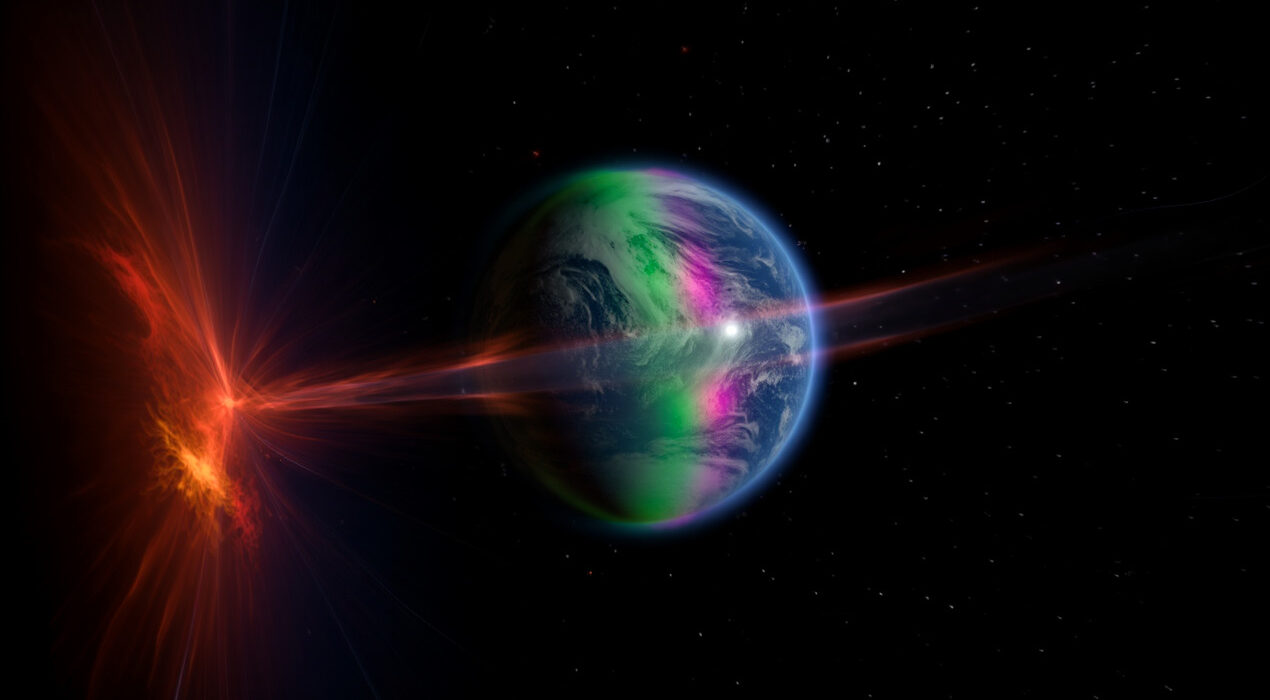
NASA’s New Mission Will Reveal Earth’s Invisible Atmospheric Halo
NASA is preparing to reveal a part of Earth most people never see. The agency will study a faint glow surrounding our planet. This glow marks the outer edge of the atmosphere. Scientists call this region the exosphere. However, it remains difficult to observe from Earth. As a result, many questions still remain.
Earth’s Invisible Halo
The exosphere starts about 300 miles above Earth’s surface. It contains mostly hydrogen atoms. These atoms slowly drift into space over time.This region shines with a weak ultraviolet light called the geocorona. Therefore, scientists need special cameras to see it. Until now, images have been rare and incomplete.
The Carruthers Mission Matters
NASA named the mission after Dr. George Carruthers. He captured the first geocorona images during Apollo 16 in 1972. However, his camera could not see the entire halo.Today, scientists believe the exosphere reaches halfway to the Moon. In addition, it plays a key role in space weather. Solar storms hit this layer first.Understanding these reactions helps protect astronauts and satellites. Therefore, the mission supports future Moon and Mars travel.
A New View From Deep Space
The Carruthers Geocorona Observatory launched in September 2025. It will travel to Lagrange Point 1, about one million miles from Earth. From there, it gets a constant view. The spacecraft carries two ultraviolet cameras. One focuses close to Earth. The other captures the full halo. Together, they will create the first continuous movies of the exosphere. As a result, scientists can track hydrogen loss in real time. Hydrogen loss links directly to water survival.
Therefore, this research may explain why Earth kept its water. It may also guide the search for habitable exoplanets. By studying Earth’s atmosphere, scientists learn how planets support life. Ultimately, this mission helps us understand our place in the universe.