USA Brain Computer Skills Transfer Breakthrough Signals Future of Learning
Medical science is entering a new phase as brain–computer skills transfer moves closer to reality. Researchers in the United States are developing technology that allows machines to send structured signals directly into the human brain. As a result, learning complex tasks could become faster and more efficient.
For decades, skill development relied on repetition and practice. However, this new approach works differently. Instead of memorizing steps, the brain receives guided electrical patterns. Therefore, neural circuits learn through direct stimulation.
How the Technology Works
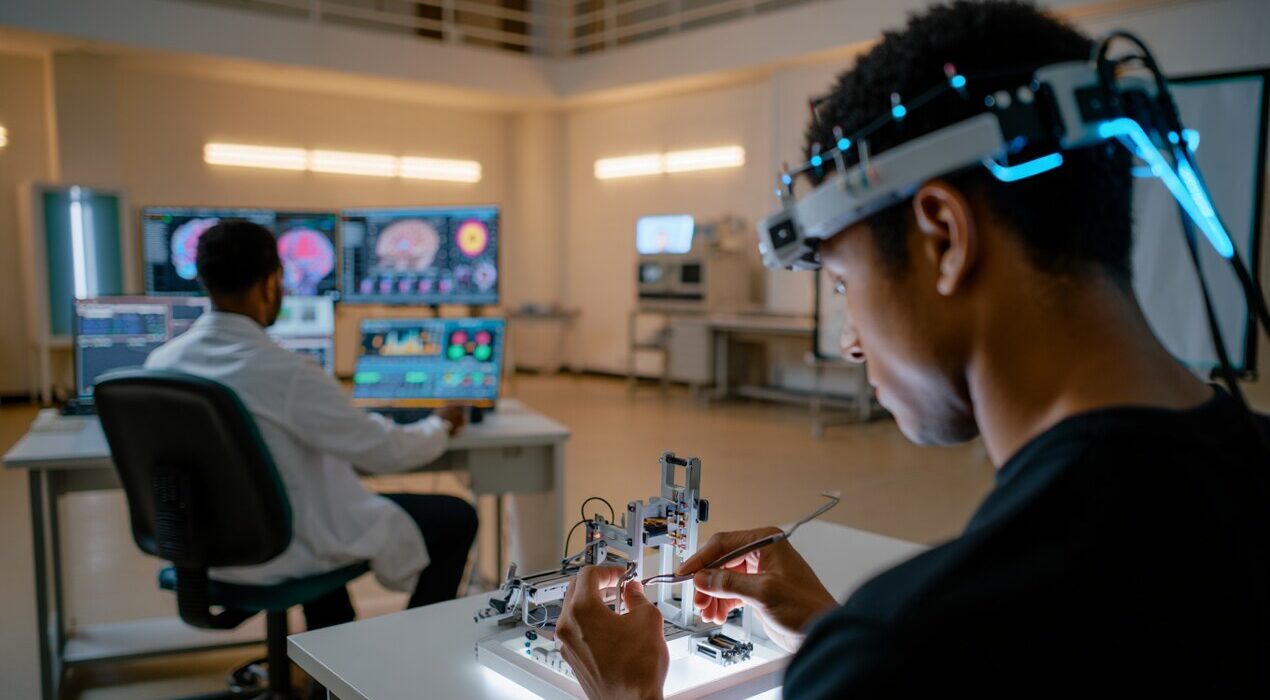
Scientists use both non-invasive devices and implanted brain–computer interfaces. These tools send electrical signals to specific brain areas. In addition, the brain’s natural plasticity allows it to interpret these signals as instructions.
Early experiments show promising results. For example, participants demonstrated faster reaction times and improved motor control. However, the system does not upload memories like science fiction suggests. Instead, it helps the brain learn more efficiently.
Medical applications remain the main focus. Researchers are testing this method to help patients recover after strokes or spinal injuries. As a result, people with paralysis may regain movement sooner than expected.
Future Impact and Ethical Questions
Beyond healthcare, the implications are wide-ranging. Education and workforce training could change significantly. Therefore, learning technical or physical skills may require less time.
However, experts urge caution. Ethical concerns, safety risks, and long-term effects need thorough study. In addition, scientists want clear regulations before public use.
Despite these challenges, the progress is undeniable. Brain computer skills transfer shows how human intelligence and machines may work together. What once felt like science fiction is now entering real laboratories. As research continues, this technology could reshape how people learn, heal, and interact with intelligent systems.