Fungus Outsmarts Bark Beetles b
Spruce bark beetles usually outsmart trees using stolen chemical defenses. However, a common fungus has learned how to fight back. As a result, the balance shifts in favor of spruce forests.
How Spruce Trees Build Chemical Defenses
Spruce trees produce phenolic compounds to block harmful fungi. These natural chemicals protect tree tissue from infection. In addition, they influence interactions across the forest ecosystem.Scientists studied how these chemicals move through the food web. They focused on the spruce bark beetle, Ips typographus. The goal was simple but important.
Bark Beetles Reuse Tree Chemicals
Bark beetles absorb phenolic compounds while feeding on spruce tissue. Inside their bodies, the chemicals change form. Therefore, they become stronger weapons.The beetles convert these compounds into toxic aglycones.These new forms kill microbes more effectively. As a result, beetles gain protection from fungal attacks.
A Fungus Finds a Clever Workaround
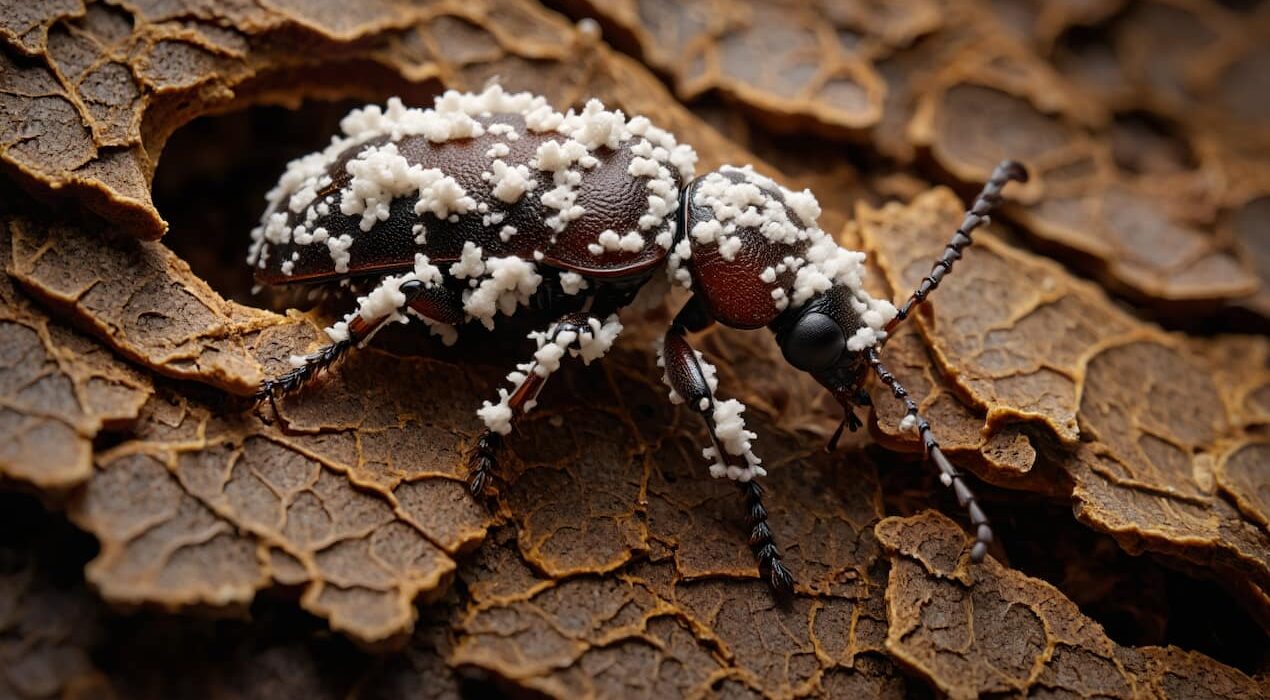
Researchers then examined the fungus Beauveria bassiana .This fungus can infect and kill bark beetles. However, past results showed mixed success. The fungus uses a precise two-step detox process. First, it adds a sugar molecule to the toxin. Next, it attaches a methyl group. These changes neutralize the beetle’s chemical shield. Surprisingly, infection becomes easier afterward. Therefore, beetles feeding on defended trees become more vulnerable. Scientists disabled key fungal genes linked to detoxification. Without them, infections dropped sharply. This confirmed the pathway’s importance. This research highlights a true forest arms race. Trees, insects, and fungi constantly adapt. Each step reshapes the ecosystem.