A “Dead” Star Shines Again as NASA’s IXPE Reveals a White Dwarf in Action
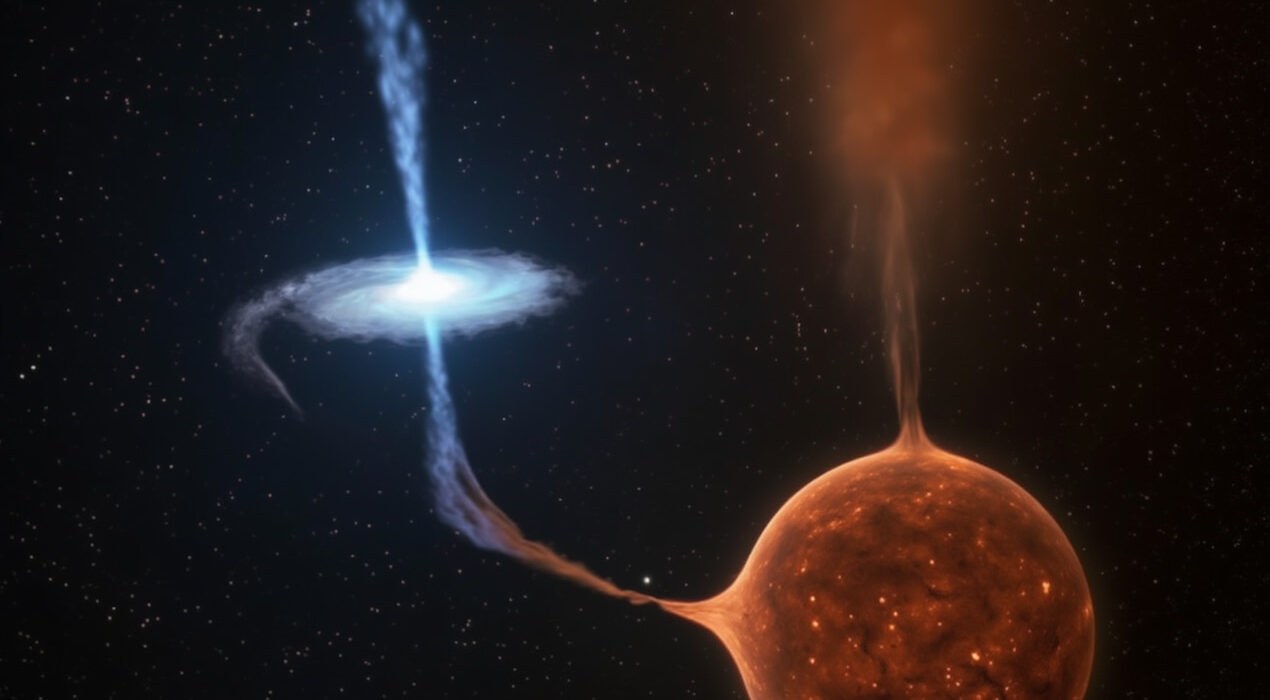
White dwarf stars often seem calm and inactive. However, a new NASA study tells a different story. Using X-rays, scientists watched one such star come alive. NASA’s Imaging X-ray Polarization Explorer, or IXPE, studied a system called EX Hydrae. This system sits about 200 light-years away. The results revealed details no telescope had seen before. A white dwarf forms when a star runs out of fuel. It collapses into a dense core about Earth’s size. Despite its small shape, it holds the Sun’s mass. EX Hydrae belongs to a binary system. A normal star orbits close by. As a result, gas constantly flows toward the white dwarf.
A Cosmic Feeding Process
The white dwarf pulls gas from its companion. This process is called accretion. Magnetic forces control where the gas lands. In this case, the magnetic field is moderate. Therefore, some gas forms a spinning disk. Other material flows toward the star’s magnetic poles. Scientists call such systems “intermediate polars.” They produce extreme heat and intense X-rays. That makes them ideal targets for IXPE.
Seeing the Invisible With X-Rays
IXPE observed EX Hydrae for nearly one week in 2024. It measured how X-rays scatter and polarize. This method reveals structure, not just brightness. The data showed plasma columns almost 2,000 miles tall. These columns glow at millions of degrees. They also reflect X-rays off the star’s surface. This study helps scientists understand extreme cosmic systems. In addition, it proves the power of X-ray polarimetry. Future missions may uncover similar systems across the universe. What once seemed like a “dead” star now tells a dynamic story.