Adventure and Glamping Are Redrawing Kyrgyzstan’s Tourist Map
Forget the well-worn tourist trails. Kyrgyzstan, the Central Asian nation famed for its nomadic heritage and celestial mountains, is undergoing a quiet revolution in how the world sees it. A powerful surge in demand for adventure, ecotourism, and luxury camping—or ‘glamping’—is transforming the country into a new frontier for discerning travelers.
Industry leaders confirm the trend is not a fluke but a fundamental market shift. Driven by global desires for immersive, sustainable, and Instagram-worthy experiences, visitors are trading crowded resorts for the raw beauty of the Tian Shan mountains and the serene expanse of Lake Issyk-Kul.
“We are witnessing a rapid development in these sectors,” said Adilet Januzakov, Director of the Tourism Support and Development Foundation, in a recent statement. “Tourists are no longer passive observers. They seek active engagement with our nature and culture in a way that is both comfortable and respectful.”
Adventure: The Call of the Wild
Kyrgyzstan’s rugged landscape is its greatest asset. The new wave of tourism is built on accessing it directly.
Trekking & Horse Riding: Ancient silk road trails and high-altitude passes, once the domain of serious mountaineers, are now welcoming guided hiking and horse-trekking tours, allowing travelers to traverse landscapes unchanged for centuries.
Skiing & Heli-Skiing: Resorts like Karakol are expanding, while remote powder fields are attracting heli-skiing enthusiasts looking for untouched runs.
White-Water Rafting: The roaring rivers cutting through alpine valleys offer world-class rafting and kayaking opportunities that are just beginning to be commercialized.
Glamping: Luxury Under the Stars
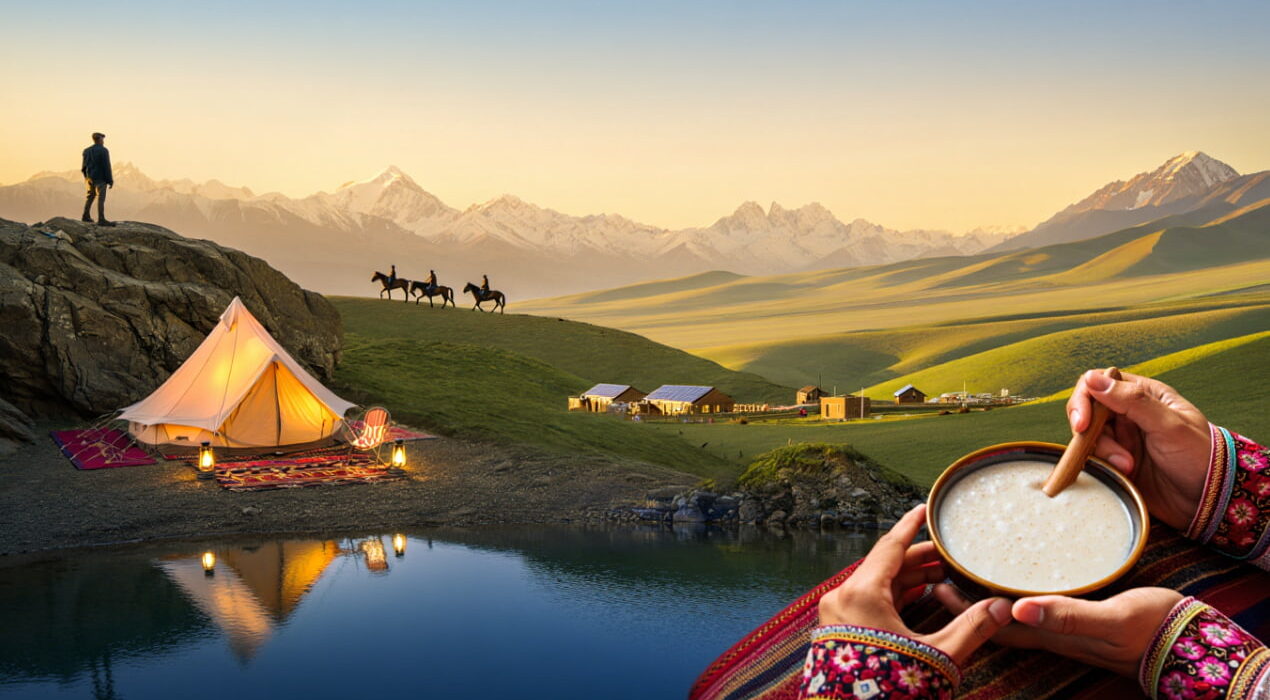
The concept of “glamorous camping” has found its perfect home here. It answers the desire for deep wilderness immersion without sacrificing comfort. Visitors can now fall asleep under a blanket of stars to the sound of a mountain stream, yet awake in a heated, beautifully furnished tent with a proper bed and ensuite facilities.
These glamping sites, often solar-powered and built with sustainable materials, are popping up in pristine locations on the shores of Song-Kul lake, in walnut forests near Arslanbob, and in the valleys around the alpine jewel of Lake Kol-Suu. They offer a seamless blend of nomadic spirit and modern luxury.
Ecotourism: A Pledge to Preserve
Critically, this growth is increasingly framed by a strong ethos of ecotourism. The focus is on low-impact travel that supports conservation and benefits local communities.
Community-Based Tourism: Travelers stay in family-run guesthouses (not just yurts), participate in daily life, and buy directly from local artisans and food producers.
Conservation Partnerships: Some tour operators partner with parks and NGOs, with a portion of fees funding anti-poaching patrols or habitat restoration projects.
Leave-No-Trace Ethics: Operators and guides are increasingly trained to minimize waste and environmental impact, educating visitors on preserving the very beauty they come to see.
The Road Ahead: Sustainable Growth
The challenge for Kyrgyzstan will be to manage this growth thoughtfully. The government and tourism bodies are now tasked with developing infrastructure from improving mountain roads to ensuring waste management in remote areas without spoiling the natural allure.
The goal is clear: to position Kyrgyzstan not as a cheap alternative, but as a premium destination for transformative, responsible travel. For the adventurous soul seeking both the thrill of the wild and the comfort of a warm bed at 3,000 meters, Kyrgyzstan’s moment has arrived.