Hubble Solves Mystery: Betelgeuse’s Hidden Companion Star Revealed
Astronomers have solved a major stellar mystery. The famous star Betelgeuse has a hidden companion. NASA’s Hubble Space Telescope found clear proof. This discovery explains Betelgeuse’s strange behavior. For example, the star famously dimmed in 2019. Now, scientists understand why.
A Stellar Wake Reveals the Secret
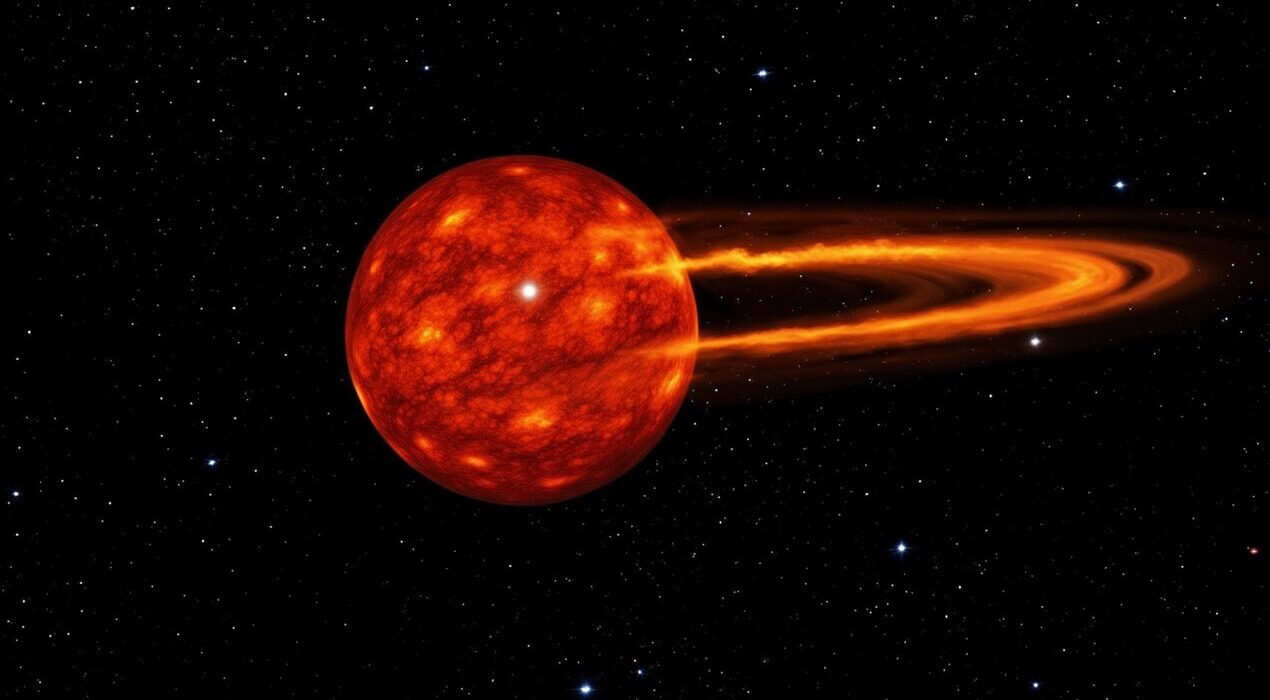
Researchers analyzed nearly eight years of data. They combined Hubble observations with ground telescope data. The team found a “wake” in Betelgeuse’s atmosphere. This wake is like a boat’s trail in water. A small star, named Siwarha, creates it. The companion orbits within Betelgeuse’s vast outer layers. “It creates a ripple effect we can see,” said lead astronomer Andrea Dupree.
Solving a Decades-Long Puzzle
Betelgeuse is a red supergiant in Orion. It is about 650 light-years away. The star has shown unpredictable brightness changes for decades. Scientists tracked two major cycles. A 400-day pulse comes from within the star. However, a longer 2,100-day cycle puzzled them. Now, they know the companion star causes it.The hidden star orbits about every six years. Its gravitational pull disrupts Betelgeuse’s atmosphere. This action shapes the gas and dust around the giant star.
This Discovery Matters
This finding helps us understand giant stars. Betelgeuse will explode as a supernova one day. Studying its changes teaches us about stellar life cycles. Additionally, it shows how binary star systems interact. The companion star is much smaller. Yet, it significantly impacts its giant neighbor. From Earth, Betelgeuse is currently eclipsing its companion. Astronomers plan more observations for 2027. Then, the companion will become visible again. This research opens a new window. We can now watch a giant star evolve in real-time. The universe just got a little less mysterious.