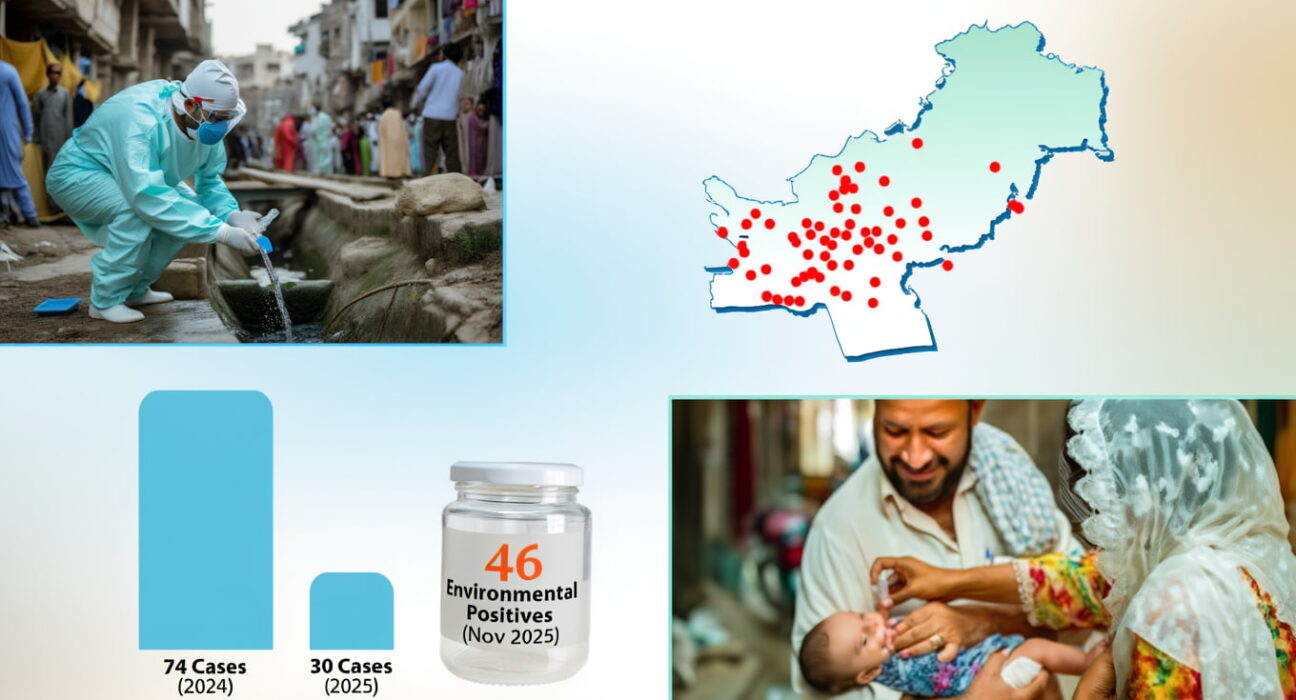
Polio Virus Detected in 46 Environmental Samples Across Pakistan, Threat Persists
In a stark reminder that the fight is far from over, the polio virus has been detected in 46 environmental samples collected across Pakistan in November 2025. While official polio cases have dropped dramatically from 74 in 2024 to 30 in 2025, these widespread environmental traces signal the stubborn persistence of the virus in the population.
The positive samples highlight continued transmission, particularly in key urban areas including Karachi, Lahore, Peshawar, and Quetta. This comes despite significant progress: vaccination coverage reportedly reached 98% of eligible children in 2025, a major public health achievement.
Persistent Pockets of Vulnerability Challenge Eradication
The Pakistan Medical Association (PMA) warns that significant challenges remain. Pockets of unvaccinated children and persistent trust issues within certain communities continue to hinder final eradication efforts. Health officials emphasize that environmental detection often precedes human cases, serving as an early warning system.
“The detection of the virus in the environment is a critical indicator that the virus is still circulating in our communities,” said a PMA representative. “Without addressing the final barriers to 100% vaccination, we risk a resurgence in transmission.”
A Critical Juncture in the Long-Running Battle
The country finds itself at a critical juncture. On one hand, no new polio cases have been reported since September 2025, showing the positive impact of intense vaccination campaigns. On the other hand, the latest environmental data proves the virus has not been eliminated.
Public health authorities are intensifying efforts, focusing on micro-targeting the remaining unvaccinated populations and continuing robust surveillance. The goal is clear: to break the final chains of transmission and eliminate the virus from Pakistan for good, contributing to global eradication.