A “Living Sensor Display”: Biohybrid Glowing Skin Graft Acts as Living Health Monitor
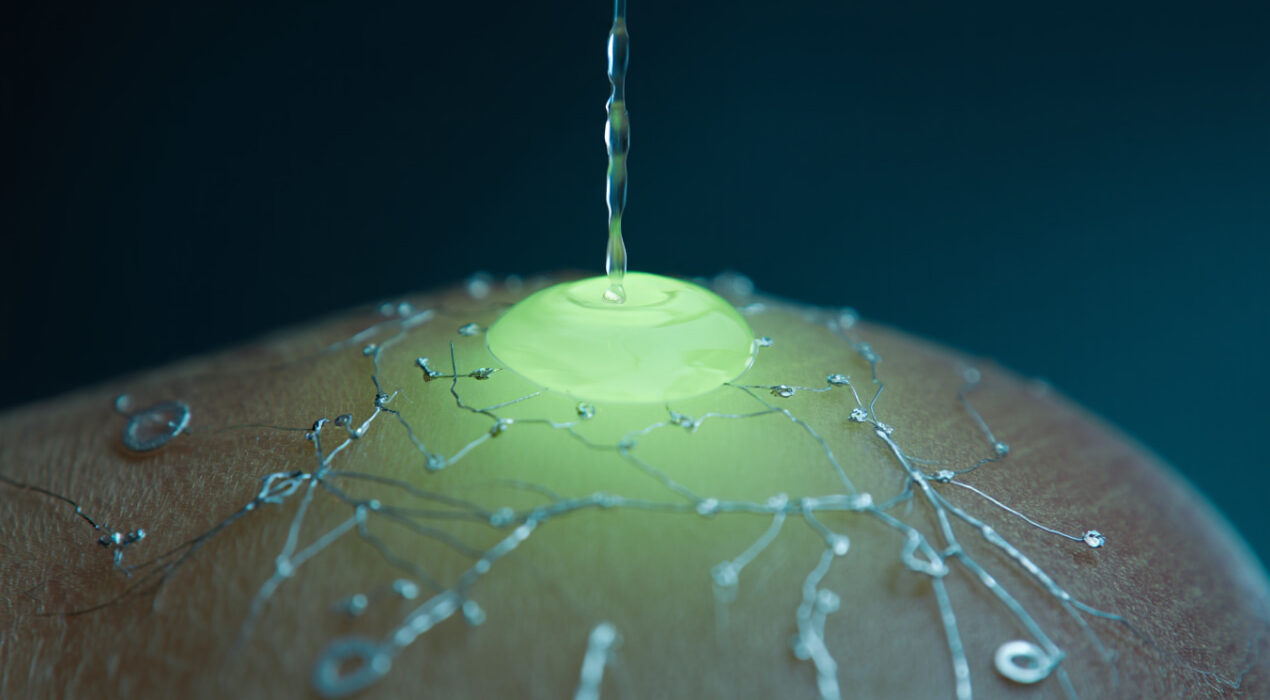
A revolutionary new approach to health monitoring is on the horizon, moving beyond smartwatches to something far more integrated. A Japanese research team has developed a biohybrid skin graft that acts as a living sensor, glowing with fluorescent light in response to internal inflammation. This breakthrough offers a long-term, non-invasive “window” into the body’s biological states.
The research, led by Tokyo City University and the University of Tokyo in collaboration with RIKEN and Canon Medical Systems, was published in *Nature Communications*. The team genetically engineered human epidermal stem cells to respond to inflammatory signals by producing a green fluorescent protein (EGFP). When transplanted onto mice, the graft successfully integrated and emitted a visible green glow upon the induction of inflammation, translating internal chemistry into an external, intuitive signal.
Self-Renewing and Maintenance-Free: A Biologically Integrated System
The most significant advancement is the system’s longevity and self-sufficiency. Unlike battery-powered wearables, this living sensor is maintained by the body’s natural skin regeneration processes. “Because the sensor comprises living epidermal stem cells, it is maintained through the skin’s natural turnover,” explained Professor Shoji Takeuchi. In experiments, the graft maintained its sensing functionality for over 200 days.
“The goal was to explore a biologically integrated system that enables continuous sensing and intuitive interpretation, even at home,” said Distinguished Professor Hiroyuki Fujita. This approach eliminates the need for repeated blood draws or external hardware, providing a constant visual readout.
Future Applications: From Human Healthcare to Veterinary Medicine
While the current proof-of-concept focuses on inflammation, the platform is highly adaptable. By reprogramming the stem cells to target different biomarkers, similar grafts could monitor a wide range of conditions, from metabolic diseases to organ stress. The researchers also note potential applications in veterinary medicine, where a visual indicator could help detect illness in animals that cannot communicate symptoms.
This technology, though in early preclinical stages, represents a major leap in blurring the lines between biological systems and medical devices, paving the way for a future where our own tissues help us monitor our health.