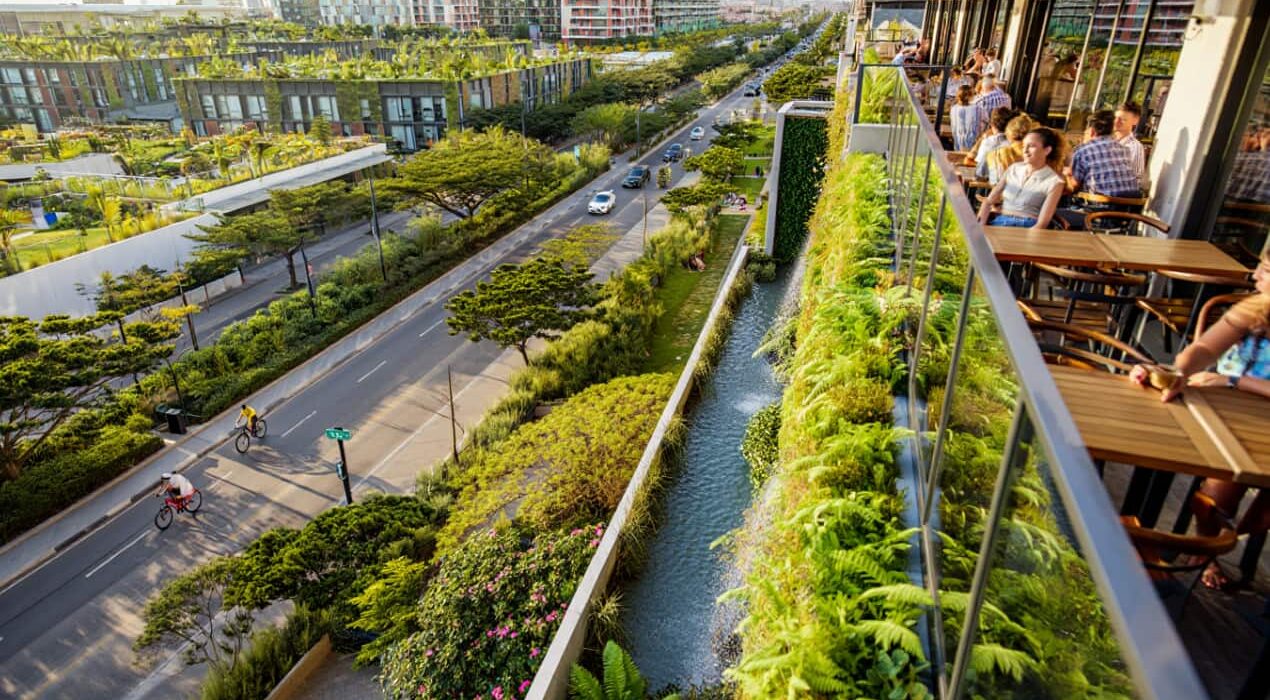
Health, Habitat, and Civic Infrastructure: Designing the City as a National Park
Cities worldwide want to become greener and healthier. The challenge is moving from policy to practice. Designers and planners must create everyday comfort and long-term ecology.
Imagine treating a city like a national park. This bold reframe changes everything. It means protecting the urban environment as a connected, living system.
Wellbeing as a Core Urban Metric
Wellbeing must be a primary design goal, not a hopeful side effect. It should shape streets, squares, and daily routes. Design decisions directly impact public health.
For example, shade, clean air, and noise reduction become baseline requirements. These elements determine if people walk, linger, or retreat indoors. A healthy city invites public life year-round.
Rethinking Mobility, Air, and Biodiversity
Mobility is more than moving people from A to B. Streets are critical public spaces. They should prioritize comfort, safety, and access to nature for everyone.
Clean air and water are fundamental to public space performance. They must be treated as shared civic assets. Furthermore, biodiversity is essential infrastructure.
It connects parks, streets, and waterways into habitat corridors. This supports urban wildlife and long-term climate resilience.
London: A Living Case Study
London demonstrates this National Park City framework at a neighborhood scale. Change happens along daily routes: walks to school, bus stops, and local high streets.
The city’s canals and green spaces show how blue-green infrastructure supports both ecology and civic life. Success depends on accessible, well-maintained networks.
London proves that ecological protection is a design discipline. It requires standards that outlast political cycles and a culture of collective care.