Liver Protein’s Role in Male Bone Health Reveals New Osteoporosis Link
New research reveals the liver’s surprising role in bone health. A McGill University study shows liver protein helps regulate bone strength. However, this critical function appears specific to males.
The protein is called plasma fibronectin. It is naturally more abundant in the blood of men than women. Consequently, men may rely on it more heavily to maintain strong bones.
A Direct Biological Link Found
The findings explain a known medical puzzle. Men with liver disease are far more likely to experience bone loss. The research, published in Matrix Biology, now identifies a probable biological link.
“We know women often lose bone due to hormonal changes at menopause. However, the reasons for bone loss in men have been less clear,” said senior author Dr. Mari Kaartinen. She is an Associate Professor at McGill’s Faculty of Dental Medicine. She explained that about 60% of osteoporosis cases in men are secondary to other conditions.
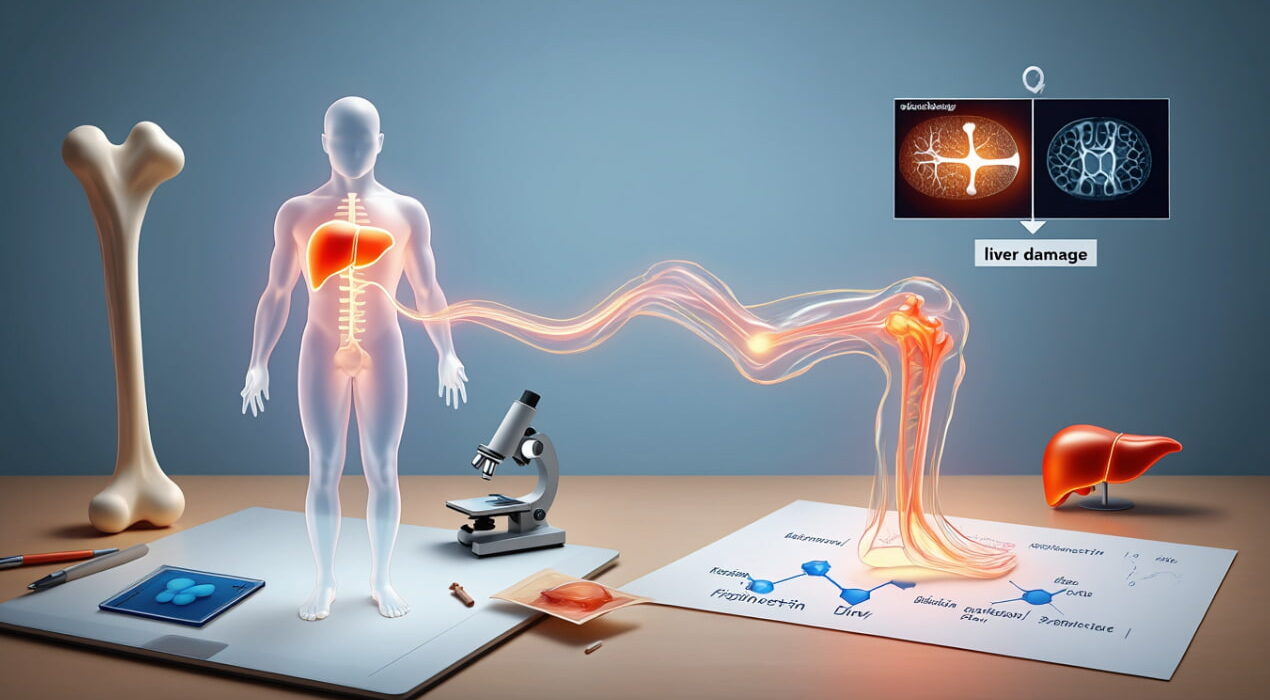
The protein’s behavior is key. It declines when the liver is damaged. It also builds up in bone to directly modulate bone formation. This creates a clear pathway from liver health to bone strength.
A Clear Sex-Specific Difference
Lab experiments confirmed the sex-specific mechanism. Researchers turned off the fibronectin gene in the livers of mice. Only the male mice were then less able to build strong bone without the protein. Female mice were unaffected.
“This is a powerful example of how diseases can develop differently between the sexes,” Dr. Kaartinen stated. She emphasized that better accounting for these biological differences is essential. It leads to more precise and effective medical care.
Overall, the study re-frames osteoporosis. It is increasingly seen as a whole-body condition rather than one that originates in bone alone. Therefore, understanding these organ connections is crucial for future treatments.