Low Back Pain Strikes 84.8% of Healthcare Workers in Saudi Qassim Study
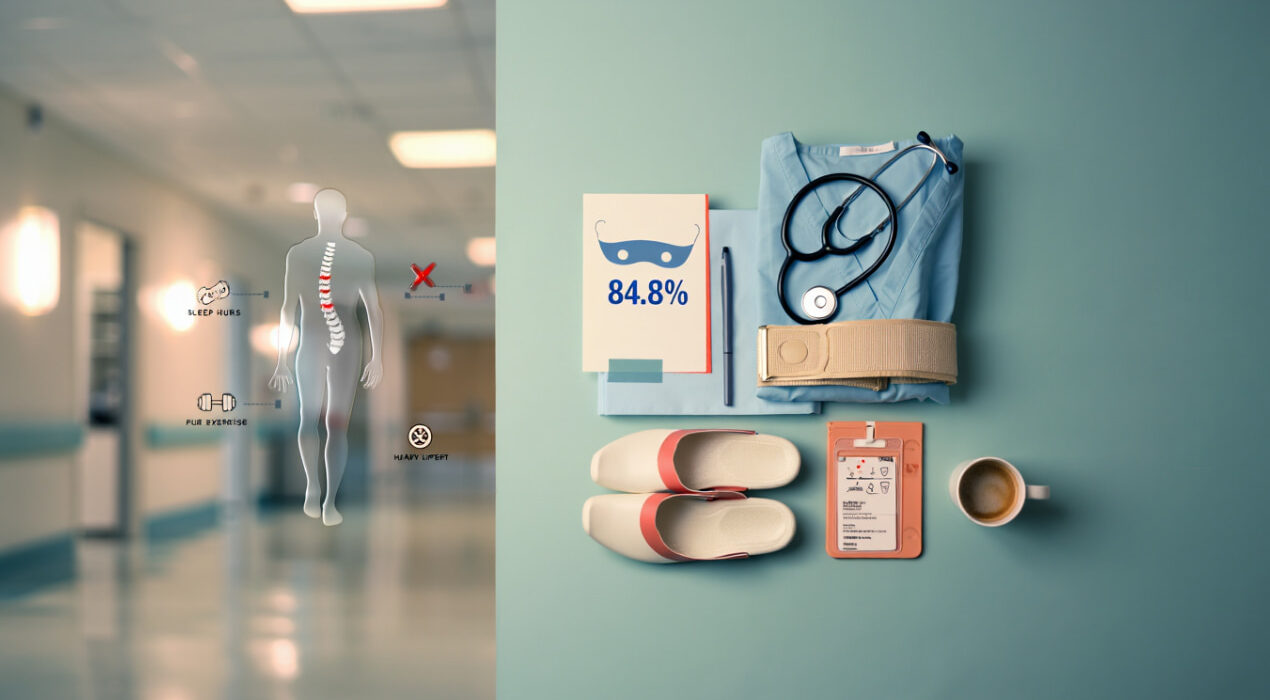
Low back pain is alarmingly common among healthcare staff. A new study from Saudi Arabia reveals striking numbers. Nearly 85% of workers in the Qassim Health Cluster report experiencing it.
Researchers surveyed 323 employees, including doctors, nurses, and administrative staff. The study, published in Cureus, examined prevalence, patterns, and predictive factors. It used the Visual Analog Scale for pain and the Oswestry Disability Index for disability.
The findings are a clear call to action. Healthcare workers are suffering, and their pain directly affects productivity and quality of life.
Who Is Most Affected?
Nurses and doctors aged 31 to 50 face the highest risk. These professionals carry heavy physical and emotional loads. Their roles demand prolonged standing, lifting, and repetitive movements.
The study identified several significant contributing factors. Lack of regular exercise topped the list. Inadequate sleep, lifting heavy weights, and being female also strongly correlated with higher pain and disability scores.
Interestingly, no significant association was found for sitting or standing duration alone. This suggests that how workers move matters more than simply how long they remain stationary.
The Strongest Predictors of Disability
Researchers built a regression model to identify independent predictors. Three factors stood out clearly.
Current pain intensity was the strongest predictor. For every increase on the pain scale, disability scores rose significantly. Pain radiating down the leg also strongly predicted higher disability. This symptom often indicates nerve involvement, which is more debilitating.
Daily sleeping hours had a protective effect. Workers who slept less than six hours per night had significantly higher disability scores. Those with longer, quality sleep fared better.
Together, these factors explained nearly 37% of the variance in disability. This is a substantial proportion for occupational health research.
What This Means for Hospitals and Health Systems
Healthcare workers are the backbone of any health system. Yet they are suffering from a preventable, manageable condition at crisis levels.
The study’s authors call for immediate, planned interventions. They recommend structured exercise programmes tailored to shift workers. They also emphasize the critical importance of sleep hygiene education.
Ergonomics training must go beyond theory. Hospitals need practical, enforced policies on safe lifting and patient transfer. Work schedules should allow adequate rest and recovery.
Work-life balance is not a luxury. It is a direct contributor to physical health and professional productivity. Addressing low back pain is not just about employee comfort. It is about sustaining a functional, effective healthcare workforce.
The Qassim Health Cluster now has clear, data-driven targets. The next step is action.