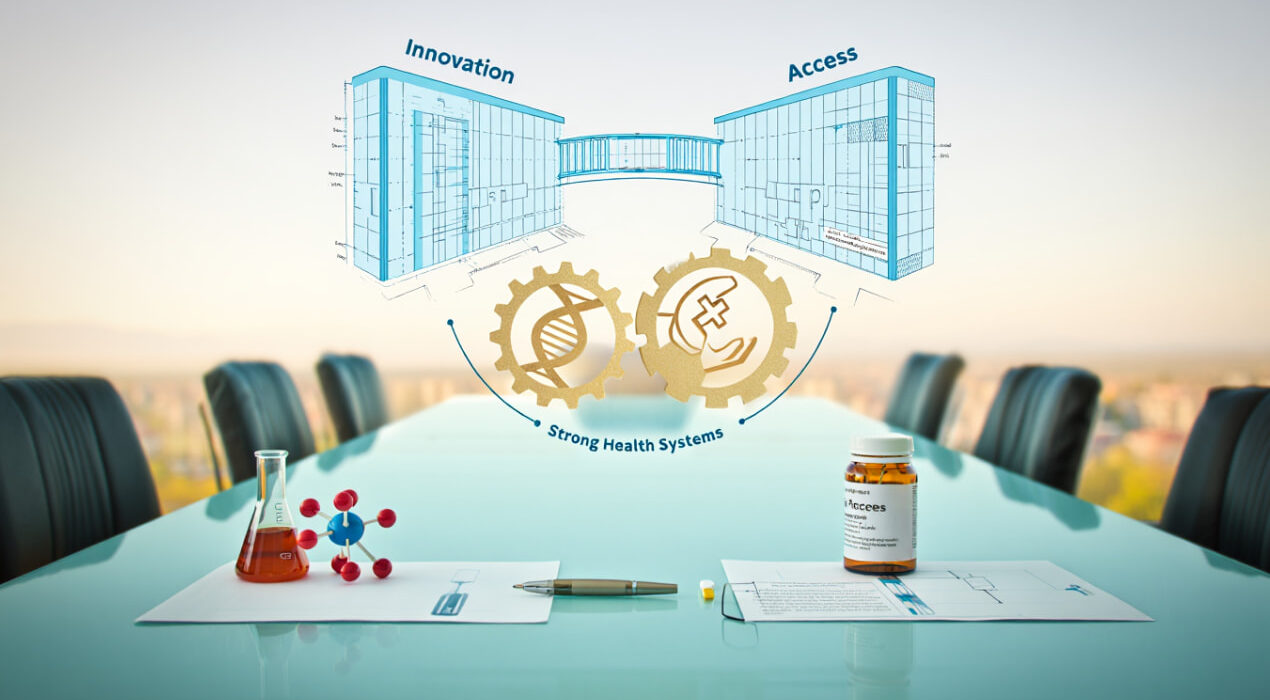
Better Global Health Architecture Must Deliver Both Innovation and Access
Last year fundamentally challenged global health thinking. Now, a rare moment for meaningful reform has arrived. The question is whether we will seize it.
David Reddy, Director General of IFPMA, argues for a new approach. He represents the innovative pharmaceutical industry globally. His central message is clear: innovation and access are complementary, not competing, objectives.
Public debate now questions the effectiveness of multilateral cooperation. Conflict, fiscal challenges, and a new geopolitical reality fuel this doubt. Some wonder if global health collaboration is weakening.
However, a growing consensus suggests otherwise. This is a rare opportunity to reshape the global health architecture. We can build systems that better support countries to prioritize and invest in strong healthcare.
Innovation Without Access Is Incomplete
Medical breakthroughs alone are not enough. History shows that scientific progress does not automatically translate into patient care. The gap between discovery and delivery remains stubbornly wide.
A reformed architecture must change this equation. It must strengthen the conditions for future medical breakthroughs. Simultaneously, it must ensure medicines and vaccines reach people faster and more efficiently.
This requires intentional design, not hope. Innovation pipelines and access pathways must be built together. They cannot be afterthoughts added once a product is approved.
A System That Delivers Both
What would a better architecture look like? It would treat access as a core design principle from the very start of research and development. It would align incentives across the entire product lifecycle.
It would also recognize that strong health systems are not passive recipients. They are active partners in delivering access. Countries must be empowered to prioritize and invest in their own healthcare infrastructure.
This is not a zero-sum game. Choosing innovation does not mean abandoning access. Prioritizing access does not mean stifling discovery. When the system works well, both objectives reinforce each other.
The moment to act is now. Fiscal pressures will not wait. Geopolitical shifts will not pause. A better global health architecture is possible, but only if we build it deliberately and together.