Physicists Capture Quantum Interference in a Rare Positronium Atom
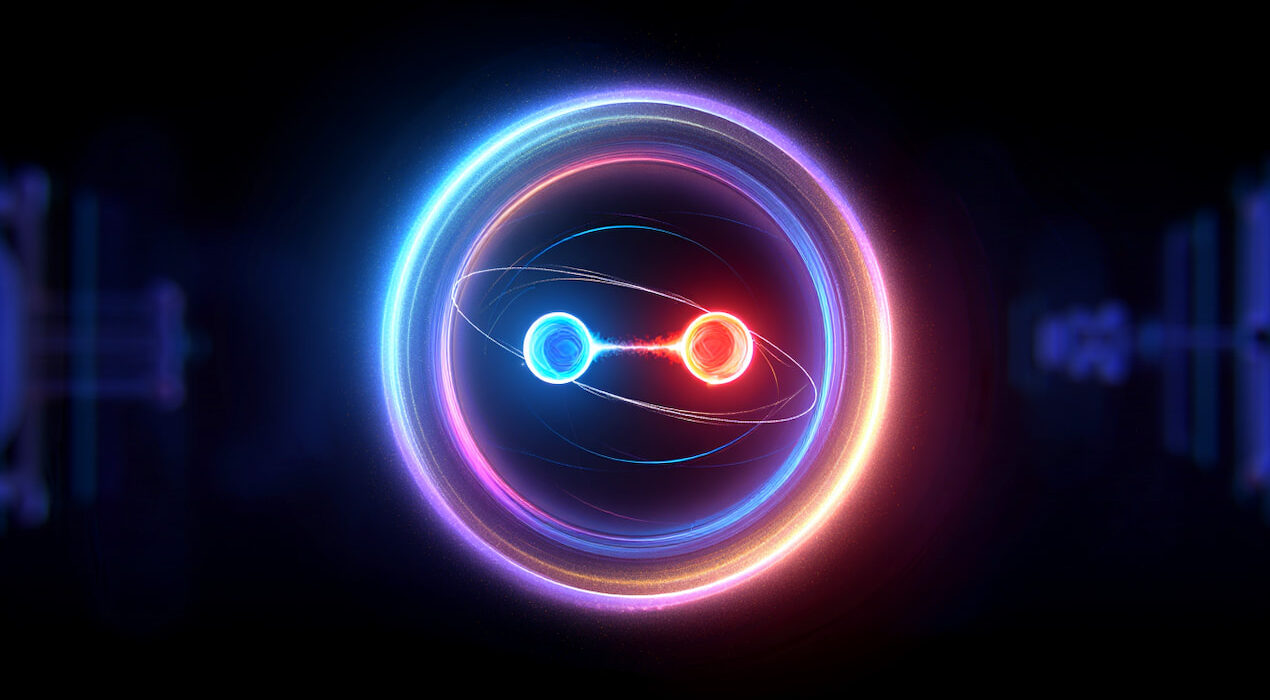
Quantum physics says matter can act like a wave. The famous double-slit experiment proved this with electrons. However, scientists had never observed this effect in positronium. Positronium is a strange, short-lived atom. It pairs an electron with its antimatter twin, the positron.
How Researchers Made It Possible
Researchers from Tokyo University of Science built a special beam. First, they created negatively charged positronium ions. Then, they used a precise laser pulse to remove an extra electron. As a result, they produced a fast, neutral, and well-focused positronium beam. Next, they fired this beam at a thin graphene sheet. The graphene’s atomic spacing matched the positronium’s wavelength perfectly. Therefore, the team saw a clear diffraction pattern. This pattern proves that positronium behaves like a single quantum object, not two separate particles.
Why This Breakthrough Matters
“Positronium is the simplest equal-mass atom,” explains Professor Yasuyuki Nagashima. “For the first time, we have observed its quantum interference.” The study appears in Nature Communications. This discovery opens new doors. For example, positronium has no electric charge. That makes it ideal for non-destructive material analysis. It can study insulators and magnetic surfaces where charged beams fail.In addition, this work may finally test how antimatter responds to gravity. No direct measurement exists yet, even for electrons. Therefore, positronium interference offers a promising path forward.