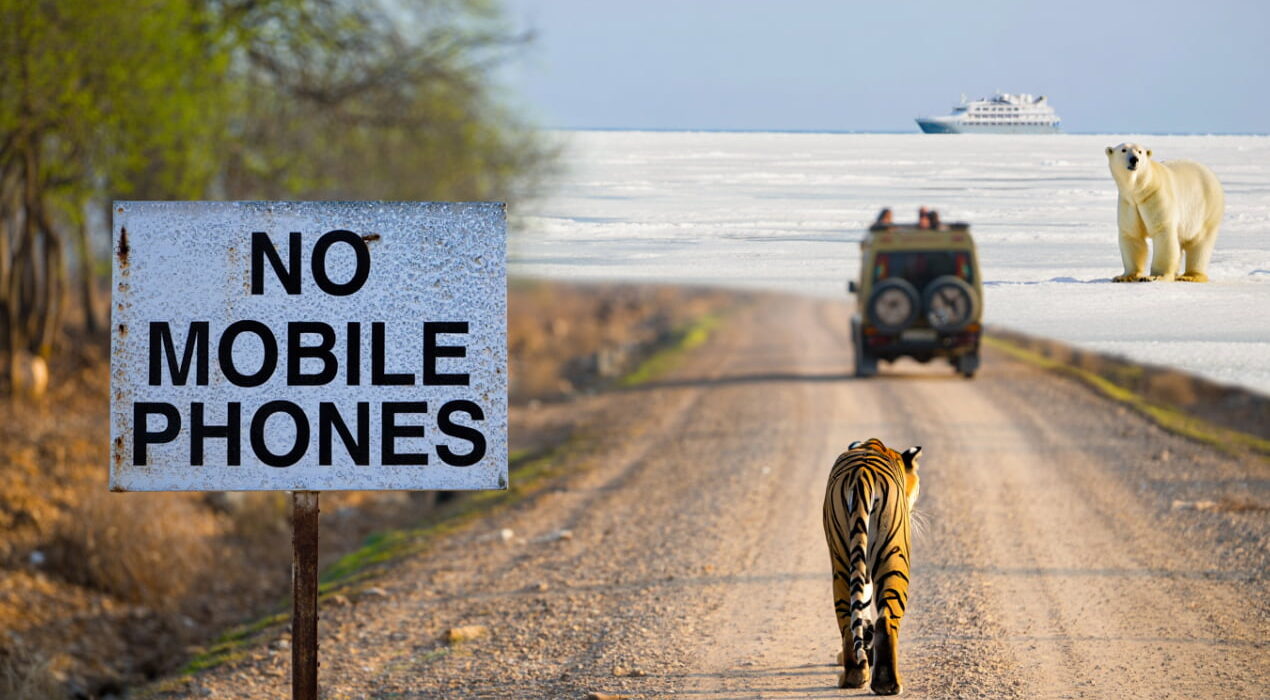
New Safari Rules: No Phones, No Selfies, No Geotagging
Wildlife destinations are rethinking tourism rules. Rising threats to endangered species have sparked action. Therefore, conservation now takes priority over close encounters. Online footage showed tourists shouting at tigers in India. The Supreme Court banned mobile phones in some tiger reserves. Consequently, Ranthambore and Sariska now forbid devices on safaris.
Kenya and Svalbard Introduce New Rules
Kenya’s Ministry of Tourism announced new standards. Tourists must remain in their vehicles except in designated areas. Rangers will increase enforcement at sensitive spots. Rebecca Miano is the Tourism and Wildlife Cabinet Secretary. She says visitor safety and wildlife protection are paramount. Therefore, preventing dangerous interactions safeguards lives and conservation integrity. In Svalbard, new regulations restrict wildlife watching cruises. Ships must stay 300 to 500 metres away from polar bears. The distance depends on the season.
The Rise of Poor Tourist Behaviour
Tour operators describe visitors who ignore warnings. Some try to take selfies and approach animals for better angles. Geotagged posts tell others where animals are, drawing more crowds. One safari-goer in South Africa witnessed poor behaviour. Teenage children deliberately faked coughs to disturb resting cheetahs. The organisers split them into separate vehicles. Adult women also wandered off from the group. They showed no interest in birds, only elephants. Therefore, instructions were ignored.
Technology Creates New Problems
Mobile technology allows operators to share animal locations instantly. Jeep drivers converge on the same places. Consequently, large numbers of vehicles and people surround animals. This prevents animals from slinking quietly away. The balance between tourist experiences and protection is becoming harder to achieve. Sharad Kumar Vats is CEO of Nature Safari India. He told the BBC: “When there is no tiger, there will be no tiger tourism.” Therefore, rules are essential for long-term survival.
A Delicate Line to Tread
Spreading the message about biodiversity is important. Promoting conservation is a key aspect of wildlife tourism. However, behaviour must change. One lodge in South Africa banned geotagging photos. It managed three years with no black rhino poaching. Therefore, small policies can make a big difference.
In conclusion, wildlife destinations are acting decisively. New rules protect both animals and visitors. The future of wildlife tourism depends on responsible behaviour.