Sindh Boards Split Raises Questions Over Exam System
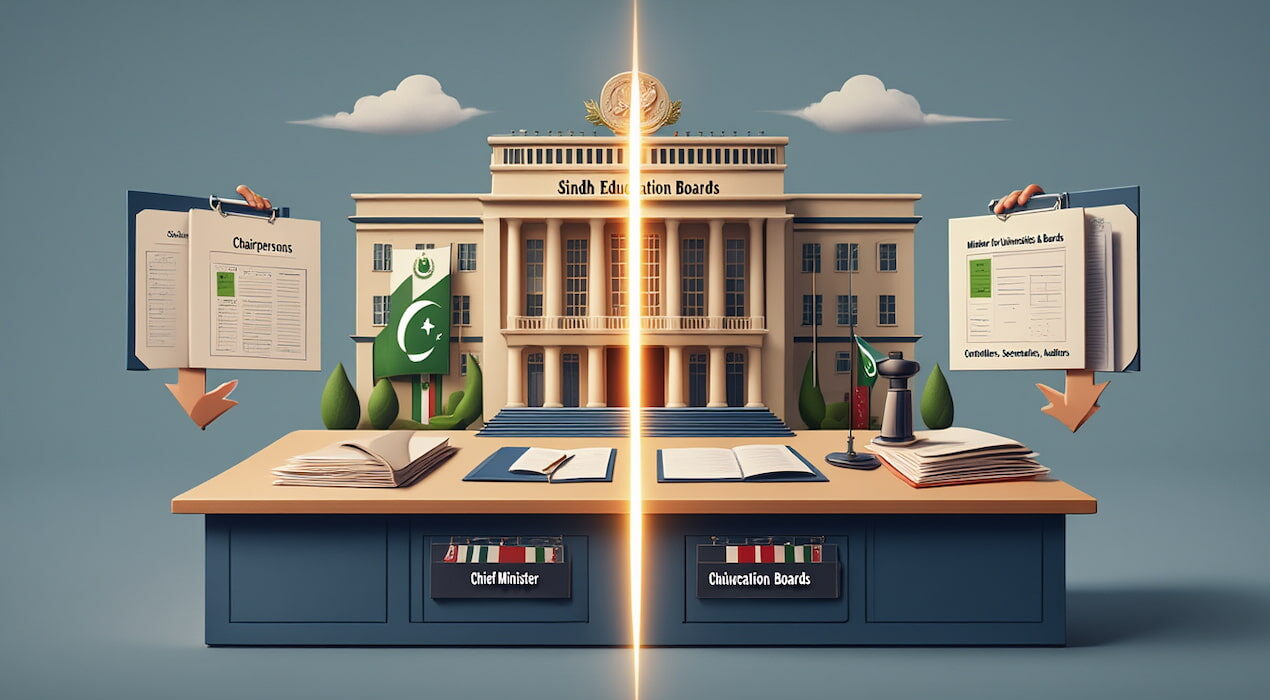
Sindh Boards Split has triggered debate across education and government circles. The Sindh government recently approved a major change in the province’s examination system. Under the new policy, educational board chairpersons will now report directly to the chief minister. Previously, the minister for universities and boards managed all senior board officials.
However, the government has now divided those responsibilities. The minister will continue supervising controllers of examinations, board secretaries, and audit officers. Meanwhile, chairpersons will work under the chief minister. As a result, officials describe the arrangement as a dual-command structure. Many experts fear this system could create confusion in administrative matters.
Officials Raise Concerns Over New Structure
Several officials have questioned the government’s decision. They believe the authorities removed only partial powers from the Universities and Boards Department. However, they left many important responsibilities unchanged.
In addition, education experts worry about delayed decisions and weak coordination. Some officials also fear the split may reduce accountability in the examination system. Therefore, many stakeholders now await the official notification and cabinet meeting details.
The decision comes at a sensitive time for Sindh’s educational boards. Several boards already face criticism over alleged irregularities and poor administration.
Examination Boards Face Fresh Scrutiny
The Board of Intermediate and Secondary Education Mirpurkhas remains under investigation. Authorities arrested the controller of examinations over alleged result tampering and other irregularities. Investigators also reportedly linked some officials to financial misconduct.
Sources claim officials transferred nearly Rs200 million as “gifts” to the department. Meanwhile, some individuals have reportedly secured protective bail from courts.
The Board of Secondary Education Karachi also faces strong criticism. An inquiry committee identified irregularities in examination centre allocations during matric exams. In addition, officials reportedly shifted more than 100 examination centres during the ongoing exams.
Following the inquiry report, the BSEK chairman resigned from his post. The Sindh government may now appoint a senior bureaucrat to temporarily manage the board’s affairs.