Tokyo Robot Labs Transform Medical Research in Japan
Tokyo Robot Labs are changing the future of medical research in Japan. A university in Tokyo has opened a new laboratory where robots perform experiments once handled by humans. As a result, researchers expect faster and more accurate scientific work.
The new facility operates at the Institute of Science Tokyo’s Yushima campus. It includes 10 robots and works without human staff inside the lab. In addition, the university plans to combine robotics with artificial intelligence to improve research efficiency.
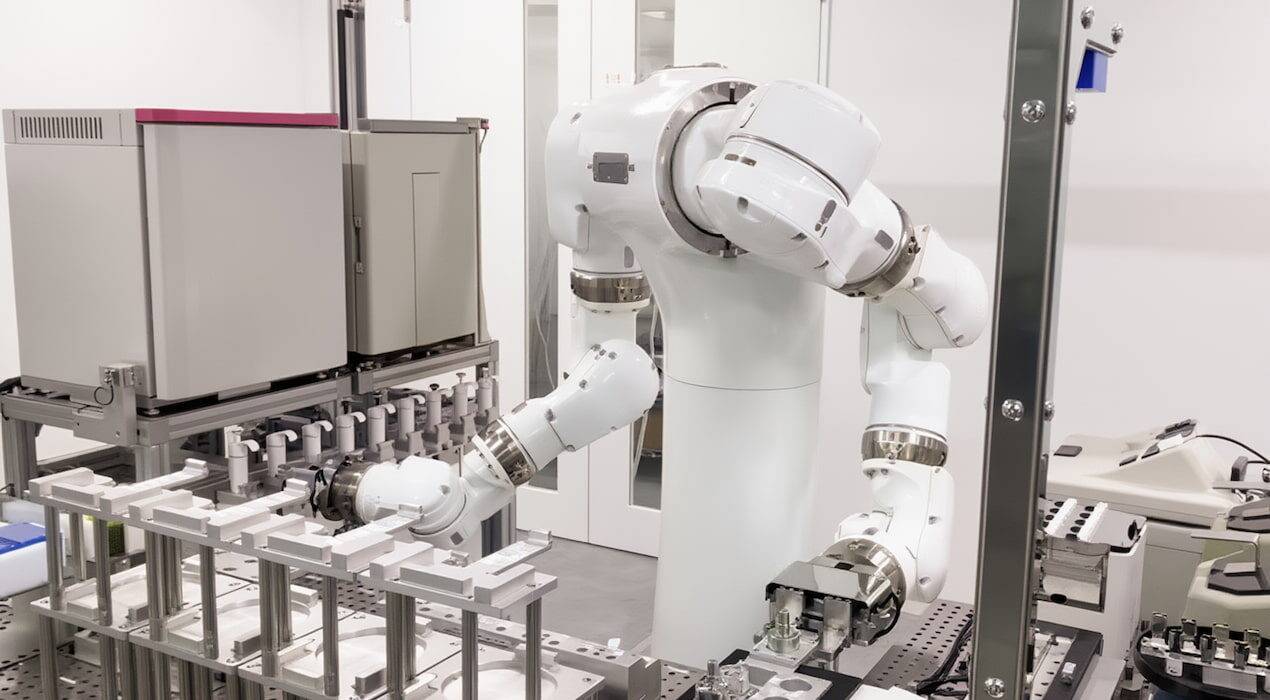
One of the main robots is a humanoid machine called Maholo LabDroid. Using two robotic arms, it handles delicate laboratory tasks with precision. For example, the robot transfers chemical reagents, opens temperature-controlled equipment, and manages laboratory samples carefully.
Robots Improve Accuracy and Speed
The robots also perform cell cultivation automatically through pre-programmed systems. Consequently, researchers can reduce mistakes caused by human fatigue or manual handling. The technology also helps laboratories deal with worker shortages in the scientific field.
Furthermore, automation allows experiments to continue without interruption. Scientists believe this system can save time and increase research productivity. Therefore, the university plans to expand the project in the coming years.
By 2040, the university aims to increase the number of robots to nearly 2,000. These robots could eventually handle almost every research task. They may even support hypothesis generation and experimental verification through AI systems.
Japan Expands AI Research Technology
Professor Keiichi Nakayama, head of the center, described AI and robotics as important tools for Japan’s scientific future. During the opening ceremony, robots even participated in the ribbon-cutting event.
Maholo has already supported medical research at a hospital in Kobe, western Japan. The robot assists researchers in ophthalmology and stem cell studies. In addition, it performs important cell culture tasks with high precision.
Tokyo Robot Labs show how technology can reshape modern science. Japan now aims to lead global innovation through robotics, automation, and artificial intelligence.