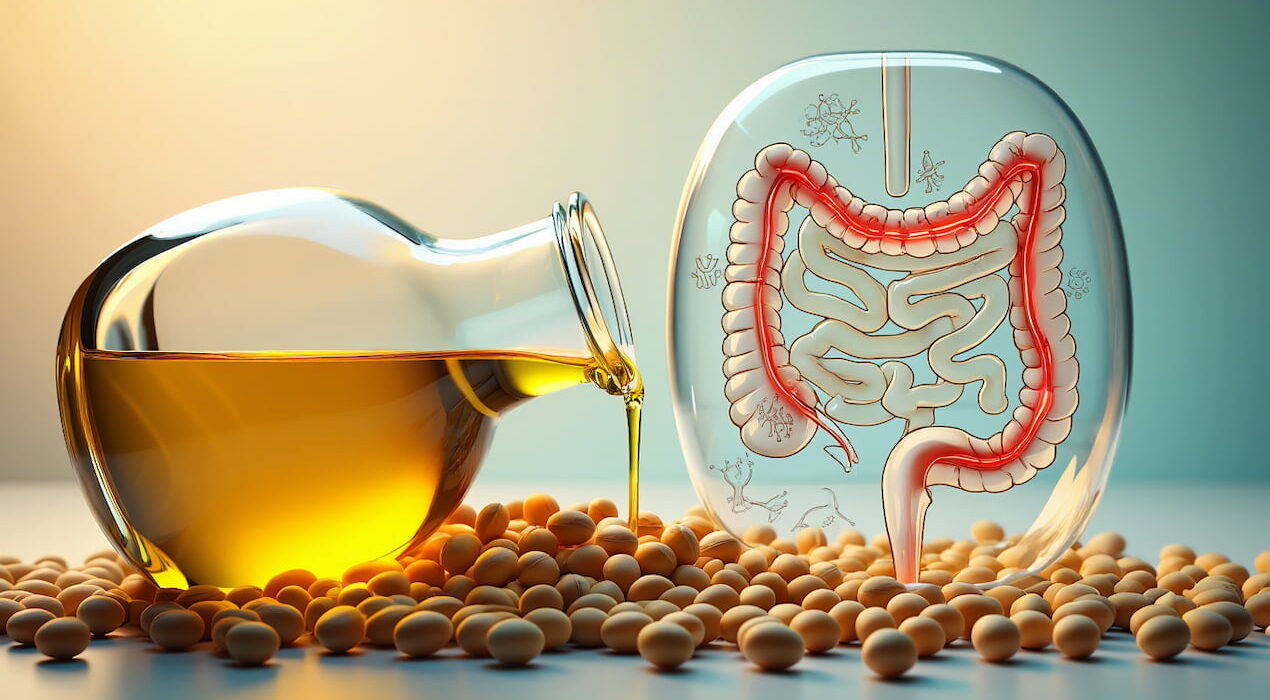
Soybean Oil May Harm Gut Health, Scientists Warn
Soybean oil risks are gaining attention after new research from University of California, Riverside. Scientists found that high soybean oil intake may damage gut health in mice. The oil appears in many processed foods, snacks, sauces, and restaurant meals. As a result, many people may consume large amounts without realizing it. Researchers linked the oil to harmful gut bacteria, intestinal inflammation, and weaker gut barriers. However, the study does not prove the same effects happen in humans.
Soybean Oil Affects the Gut
Researchers studied mice fed a diet high in soybean oil for several months. They discovered major changes in the gut microbiome. Helpful bacteria declined, while harmful bacteria increased rapidly.Scientists focused on linoleic acid, the main fat found in soybean oil. The body needs small amounts of this fatty acid for normal function. However, researchers believe excessive intake may create health problems.The study showed that harmful E. coli bacteria used linoleic acid as fuel. At the same time, beneficial bacteria struggled to survive. As a result, the gut became more vulnerable to inflammation.Researchers also found that soybean oil weakened the intestinal barrier. This barrier normally blocks toxins and microbes from entering the bloodstream. When it becomes porous, inflammation may increase throughout the body.
Experts Suggest Healthier Cooking Choices
Scientists explained that not all plant oils affect the body the same way. Many people assume all unsaturated fats are healthy. However, researchers say different oils can produce different results.The team compared soybean oil with olive oil. Unlike soybean oil, olive oil did not increase colitis risk in mice. In addition, olive oil contains much lower levels of linoleic acid.Researchers also mentioned avocado oil and coconut oil as possible alternatives. Meanwhile, corn oil contains similar linoleic acid levels as soybean oil.Experts recommend reducing processed food intake whenever possible. Reading nutrition labels may also help people lower soybean oil consumption. Although more human studies are needed, researchers believe moderation remains important.