Pakistan Solar Boom Reshapes Business Energy Strategy Amid Rising Power Costs
The Pakistan solar boom has transformed the country’s energy landscape in just a few years. Once known for power shortages and frequent load-shedding, Pakistan now ranks among the fastest-growing solar markets in the world. Businesses have played a major role in this shift as they search for reliable and affordable energy solutions.
For years, companies struggled with rising electricity costs and an unstable power supply. Many relied on expensive generators to keep operations running. However, falling global solar prices changed the equation and made solar energy a practical option for commercial users.
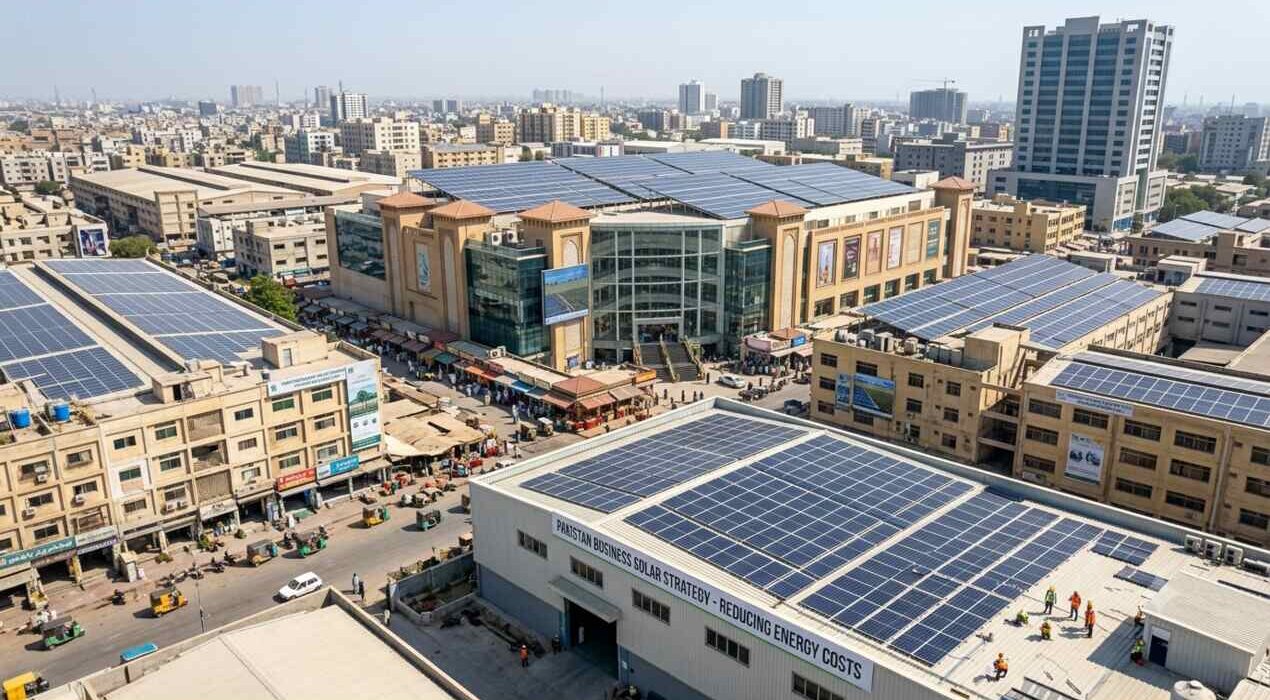
As a result, factories, offices, and retail businesses began installing solar panels on their rooftops. They did not wait for large government programmes or national energy reforms. Instead, they adopted solar because it reduced costs and improved operational reliability.
Businesses Drive Pakistan’s Solar Growth
The Pakistan solar boom gained momentum as electricity tariffs increased significantly over the past three years. Businesses that invested early now enjoy lower energy costs and greater protection from future tariff hikes.
Solar systems also help companies maintain productivity during periods of grid instability. Therefore, many commercial and industrial operators now view solar power as a long-term business investment rather than an alternative energy source.
The growth has been remarkable. In 2025, solar energy became Pakistan’s largest source of electricity generation, contributing 21 percent of the national power mix. Just six years earlier, solar accounted for only 2 percent.
Challenges Remain Despite Rapid Adoption
Despite its success, Pakistan’s solar transition faces several challenges. Fossil fuels still dominate much of the country’s energy system. In addition, rapid and unplanned solar expansion has placed pressure on grid infrastructure.
Experts warn that voltage fluctuations, reverse power flows, and outdated network systems could create future challenges. Meanwhile, smaller businesses often struggle to afford the upfront investment required for solar installations.
Industry leaders believe the next phase requires careful planning and energy storage solutions. Businesses that combine solar power with battery storage can reduce grid dependence and improve energy security.
The Pakistan solar boom has already changed how businesses consume energy. The focus now must shift from rapid adoption to sustainable and efficient integration that delivers long-term value.