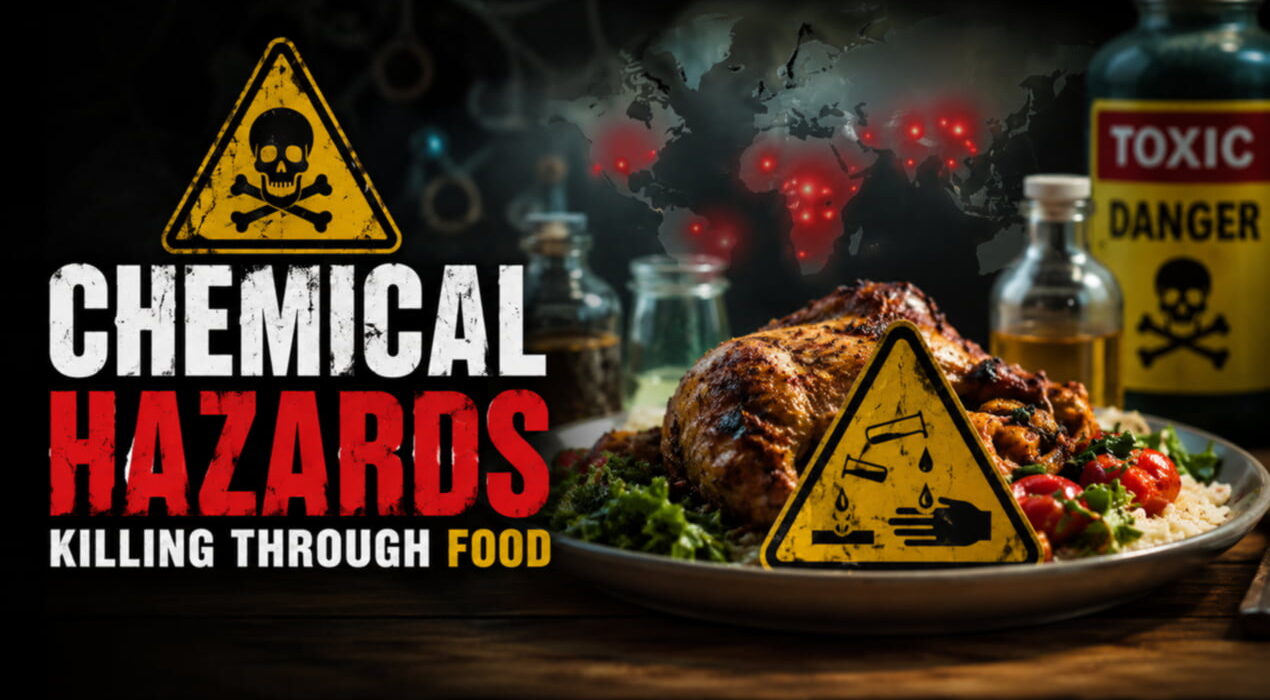
Chemical Hazards Food Deaths Rise as Children Face Highest Risk
Chemical hazards are responsible for most foodborne deaths worldwide, according to new research. Health experts warn that contaminated food continues to threaten millions of lives each year. In addition, climate change and antimicrobial resistance are making the problem more difficult to control.
Experts say climate change increases the risk of food contamination. At the same time, antimicrobial resistance makes foodborne infections harder to treat. Therefore, health authorities are calling for stronger action to improve food safety.
One Health Approach Needed
Dr Moez Doraid Minato stressed the importance of a One Health approach. This strategy connects human, animal, plant, and environmental health. According to experts, countries must work together to reduce food-related illnesses.
They also urge governments to invest in surveillance systems. Better monitoring can help identify risks earlier and prevent outbreaks. Furthermore, cooperation between health, agriculture, and environmental sectors can improve public safety.
Children Face the Greatest Burden
Young children remain the most vulnerable group. Although children under five represent only 9% of the global population, they account for nearly one-third of all foodborne disease cases.
Diarrhoeal diseases pose a serious threat to this age group. These illnesses can become life-threatening if not treated quickly. In addition, exposure to toxic substances such as methylmercury and lead can harm brain development. As a result, children may experience lifelong neurological and developmental challenges.
Regional Gaps Remain Significant
Africa and South-East Asia continue to carry the highest burden of foodborne diseases. People living in low-income communities face greater risks due to limited resources and weaker food safety systems.
However, researchers noted some progress. Foodborne illnesses and deaths have declined since 2000, especially in Africa, where diarrhoeal diseases have decreased.
WHO Director-General Dr Tedros Adhanom Ghebreyesus said food safety affects every family and every meal. He added that new country-level data will help governments identify risks and take targeted action. Consequently, policymakers can better protect public health and reduce future foodborne disease burdens worldwide.