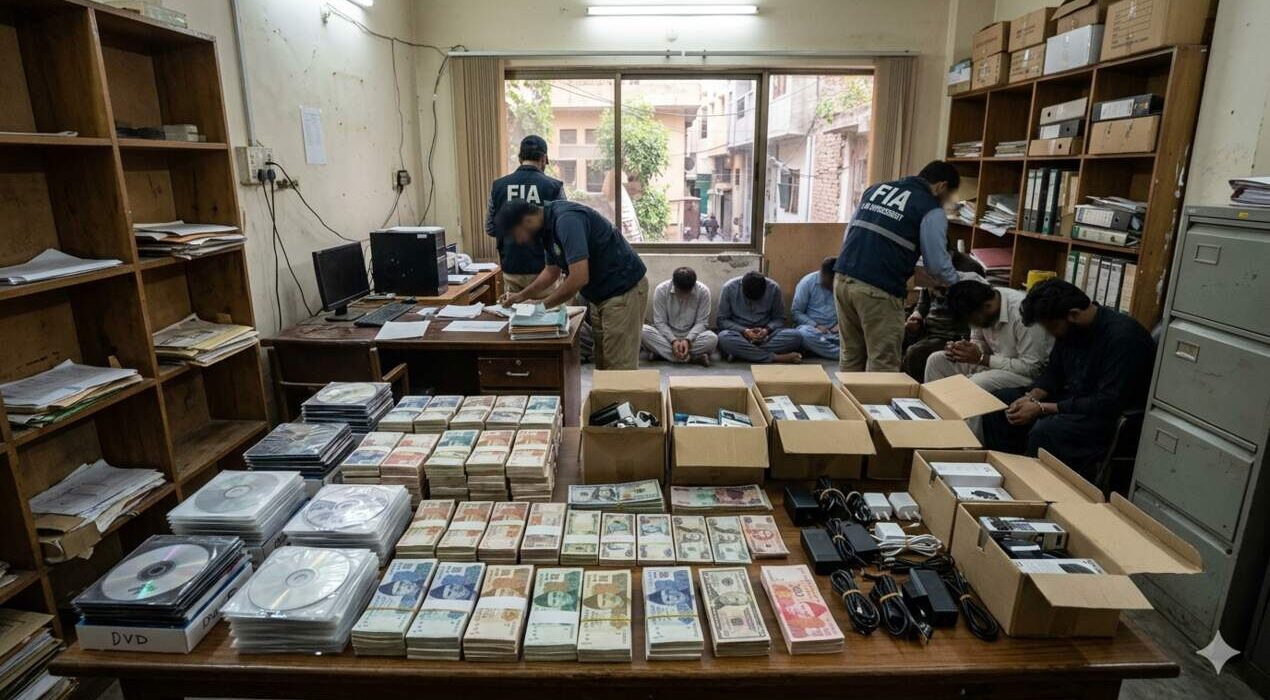
FIA Arrests Four Suspects in Lahore Over Hawala Hundi and Counterfeit Goods
The FIA Lahore Raids led to the arrest of four suspects during separate operations against alleged hawala/hundi activities and copyright violations in Lahore. The Federal Investigation Agency (FIA) conducted the raids through its Corporate Crime Circle as part of ongoing efforts to curb financial crimes and the sale of counterfeit products.
According to an FIA spokesperson, investigators arrested two suspects for allegedly operating illegal currency exchange and hawala/hundi businesses. During the operation, officials recovered Rs20.4 million in cash from the suspects. They also seized foreign currencies, including 1,080 US dollars, 320 Australian dollars, 4,015 UAE dirhams, 85 British pounds, and 160 Saudi riyals.
In addition, FIA teams recovered documentary records and digital evidence linked to suspected hawala/hundi transactions. Officials believe the material could help identify additional individuals involved in the illegal network. Therefore, investigators have expanded their inquiry to trace the flow of funds and determine the full scope of the operation.
Crackdown on Illegal Financial Networks
The FIA Lahore Raids form part of a wider national campaign against illegal money transfer systems. Authorities have increased efforts to dismantle hawala/hundi networks because such operations often bypass official financial channels. Earlier this year, the Interior Ministry and the Finance Ministry announced a nationwide crackdown on money laundering and hawala/hundi activities. The initiative aims to strengthen financial regulations and prevent illegal transactions.
Interior Minister Mohsin Naqvi also directed law enforcement agencies to ensure strict and indiscriminate action against those involved in unlawful financial practices. As a result, enforcement agencies have intensified operations across the country.
Action Against Counterfeit Products
In separate operations, FIA officials arrested two additional suspects for allegedly violating the Copyright Act, 1962. Investigators found a large quantity of counterfeit products bearing the names and trademarks of well-known registered companies.
According to the FIA, the suspects allegedly stored and sold falsely branded products in local markets. Officials seized the counterfeit goods and initiated legal proceedings against the accused. The agency said investigations into all four cases remain underway. Authorities expect further developments as they examine the recovered evidence and identify possible links to broader criminal networks.