Pakistan Army’s Services for AJK Deserve to Be Written in Golden Words
The Pakistan Army AJK role has come under renewed discussion following remarks by political activist Umar Nazir Kashmiri, who described the military as a “foreign army” in Azad Jammu and Kashmir (AJK). Supporters of the military strongly reject this claim and argue that the army has played a vital role in the region’s defense, development, and disaster response for decades.
According to supporters, Pakistan assumed responsibility for the defense of AJK under the 1949 Karachi Agreement. Therefore, they view the army’s presence as part of an established constitutional and administrative arrangement rather than an external deployment.
They also point to the deep connection between AJK and Pakistan’s armed forces. Thousands of Kashmiris have served in the military, including in the Azad Kashmir Regiment. As a result, many residents consider the army an institution that includes and represents local communities.
Security and Disaster Response
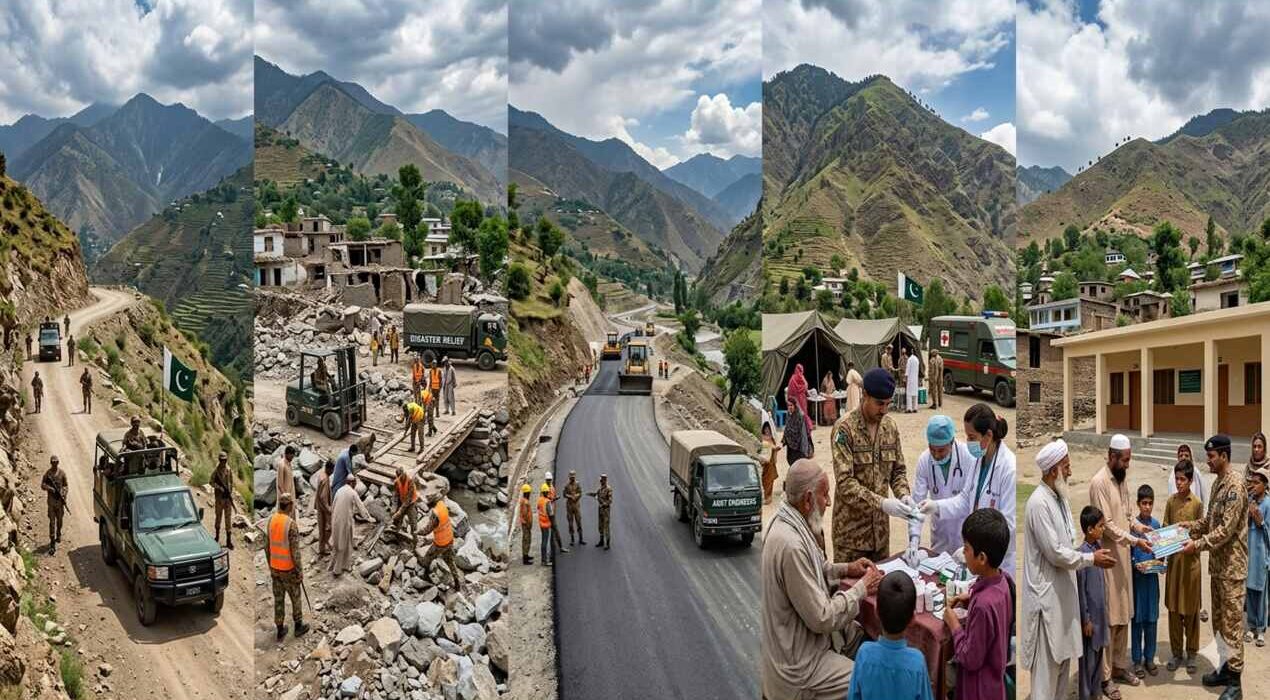
Supporters argue that the Pakistan Army AJK presence remains essential for maintaining security along the Line of Control (LoC). They believe the military protects border communities and helps prevent cross-border threats. The army has also played a major role during emergencies. Following the devastating 2005 earthquake, military personnel launched large-scale rescue and relief operations across affected areas.
They evacuated survivors, delivered medical assistance, and supported reconstruction efforts in damaged towns and villages. In addition, military teams regularly respond to landslides, heavy snowfall, and other natural disasters in remote areas of AJK. These efforts have helped save lives and restore access to isolated communities.
Development and Public Welfare
Supporters also highlight the military’s contribution to development projects. Military-run hospitals provide healthcare services in several areas, while educational institutions help students access quality education. Furthermore, engineering units have assisted in building and maintaining roads in mountainous regions. Telecommunications services provided through the Special Communications Organization (SCO) have also improved connectivity and internet access in remote valleys.
While political activists continue to raise concerns about economic rights and public policy, supporters maintain that discussions should focus on governance issues. They argue that the army’s longstanding contributions to security, disaster management, and development remain an important part of AJK’s modern history.