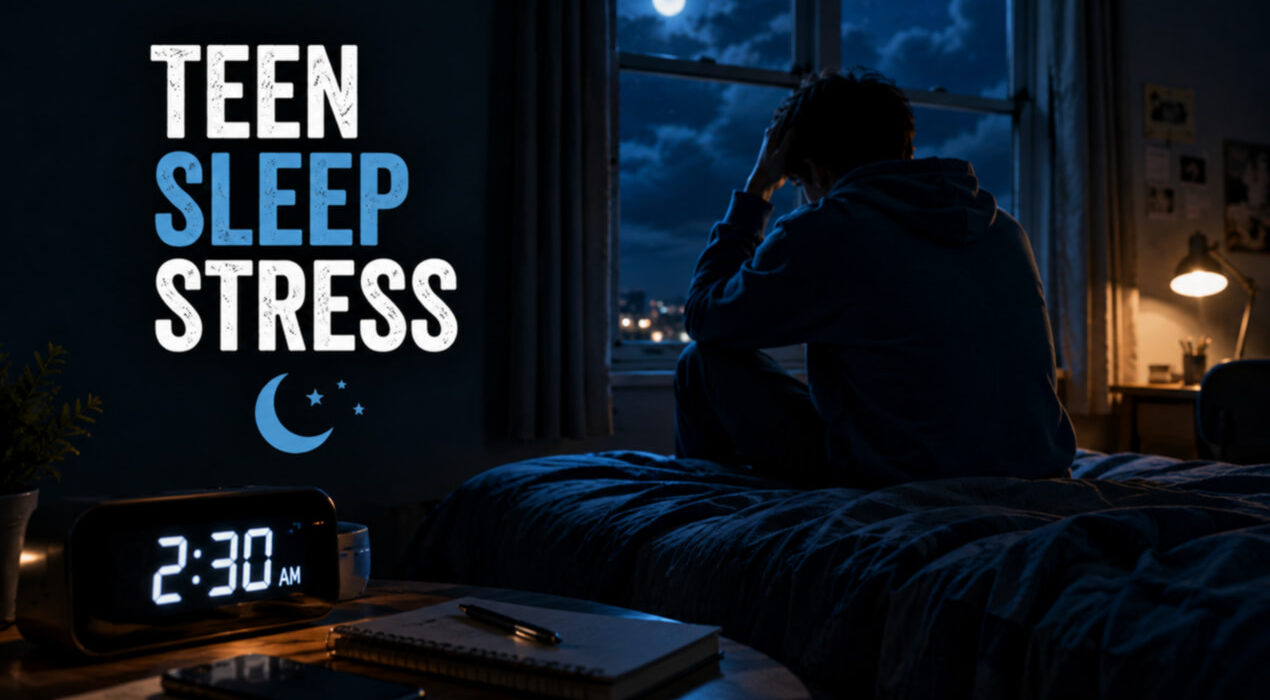
Teen Sleep Stress: How Stress-Induced Insomnia Affects Adolescents
Stress can affect many parts of a teenager’s life. One common issue is Teen Sleep Stress, which can make it difficult to fall asleep or stay asleep. School pressure, social expectations, family concerns, and online activity often increase stress levels. As a result, many teens struggle to get enough quality rest.
Sleep plays a vital role in physical and emotional health. However, ongoing stress can disrupt healthy sleep patterns. When teens lose sleep, they may find it harder to concentrate, manage emotions, and perform daily tasks. Therefore, recognizing the signs early is important.
How Stress Impacts Teen Sleep
Stress activates the body’s natural alert system. This response can keep the mind active long after bedtime. As a result, teens may spend hours worrying instead of sleeping. Lack of sleep can create a difficult cycle. Poor sleep increases stress, while higher stress makes sleep even harder. In addition, sleep deprivation may affect academic performance, relationships, and overall well-being.
Signs Parents Should Watch For
Several warning signs may suggest stress-induced insomnia. For example, a teen may have trouble falling asleep, wake up often during the night, or feel tired throughout the day. Mood changes can also appear. Some teens become irritable, anxious, or withdrawn. Others may lose interest in activities they once enjoyed. Therefore, open communication is essential when these changes occur.
When Professional Support Can Help
Sometimes, families need additional support. Therapy provides a safe outlet where teens can discuss concerns and learn healthy coping skills. In addition, professional guidance can help them manage emotions and social challenges more effectively.
Teens should have a voice in choosing their therapist. A strong and comfortable connection often improves treatment outcomes. Helping teens overcome Teen Sleep Stress requires patience and understanding. With the right support, they can develop healthier habits, improve sleep quality, and build resilience for future challenges while maintaining emotional well-being and confidence.