Pakistan Literacy Rate 2026 Climbs to 63% Amid Regional and Gender Gaps
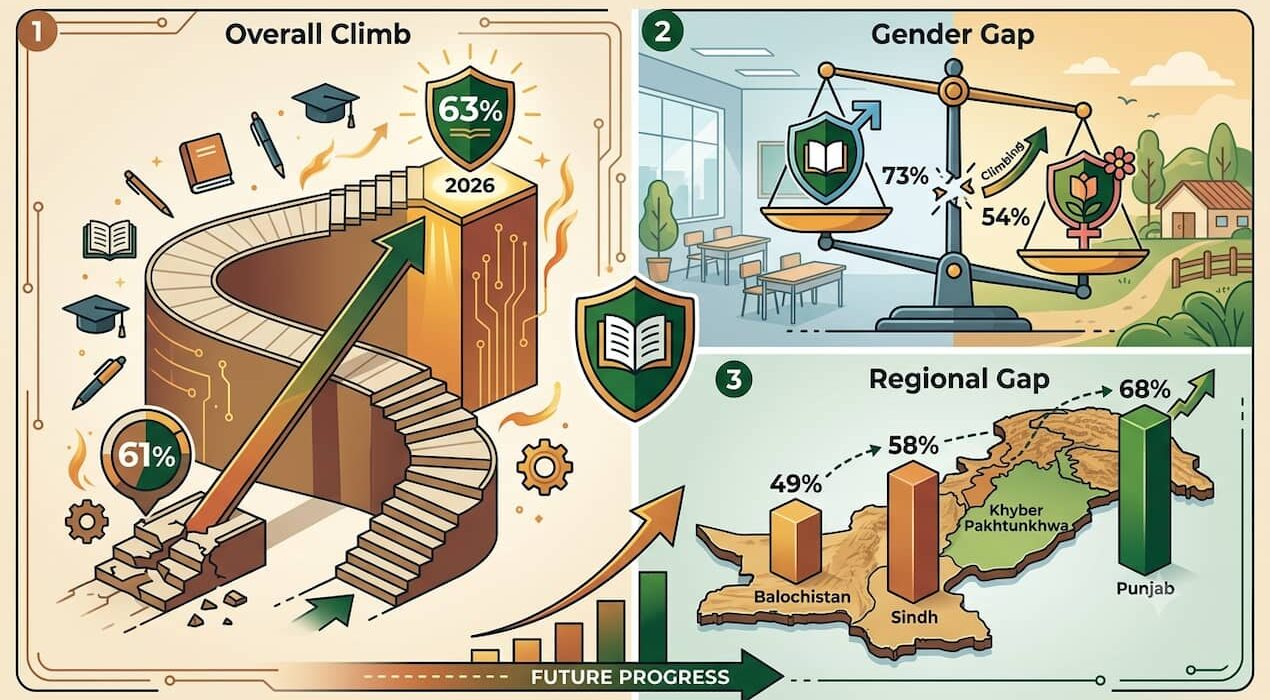
Pakistan Literacy Rate reached 63% in the Pakistan Economic Survey 2025-26 released on Thursday, 11 June 2026. The report shows improvement from 60.6% in FY 2024-25. However, it also highlights major inequalities across regions and genders.
The data comes from the 2025 Population and Housing Census. It appears in the education section of the national economic survey. Moreover, it shows that Pakistan still faces serious challenges in expanding equal access to education.
Punjab Leads While Other Provinces Lag
Punjab records the highest literacy rate at 68%. The province benefits from better school availability, stronger infrastructure, and higher enrollment levels. As a result, it maintains a leading position in national education performance.
Sindh and Khyber Pakhtunkhwa (KPK) both report a literacy rate of 58%. However, both provinces continue to struggle with rural access, teacher shortages, and student dropouts.
Balochistan records the lowest literacy rate at 49%. This reflects long-standing structural issues. For example, many remote communities still lack nearby schools. In addition, poverty, weak infrastructure, and limited teaching staff continue to affect education quality.
Gender and Urban-Rural Gaps Remain Wide
Pakistan’s male literacy rate stands at 73%, while female literacy remains at 54%. As a result, a clear gender gap continues to limit equal opportunities in education and employment. This gap affects women’s access to higher education, jobs, and digital skills. Moreover, it reduces financial independence and slows social progress in many regions.
Urban literacy stands at 74%, while rural literacy remains at 55%. Therefore, rural communities continue to lag behind in both access and quality of education.
Budget Focus on Education Reform
The survey comes just before the Budget 2026-27. As a result, education spending and reforms are expected to gain attention in policy discussions. The government reports Rs. 962 billion in education spending for FY2025, equal to 0.8% of GDP. However, experts argue that Pakistan needs higher investment and stronger reforms. Overall, the Pakistan Literacy Rate shows progress, but it also confirms that deep structural gaps still exist in the education system.