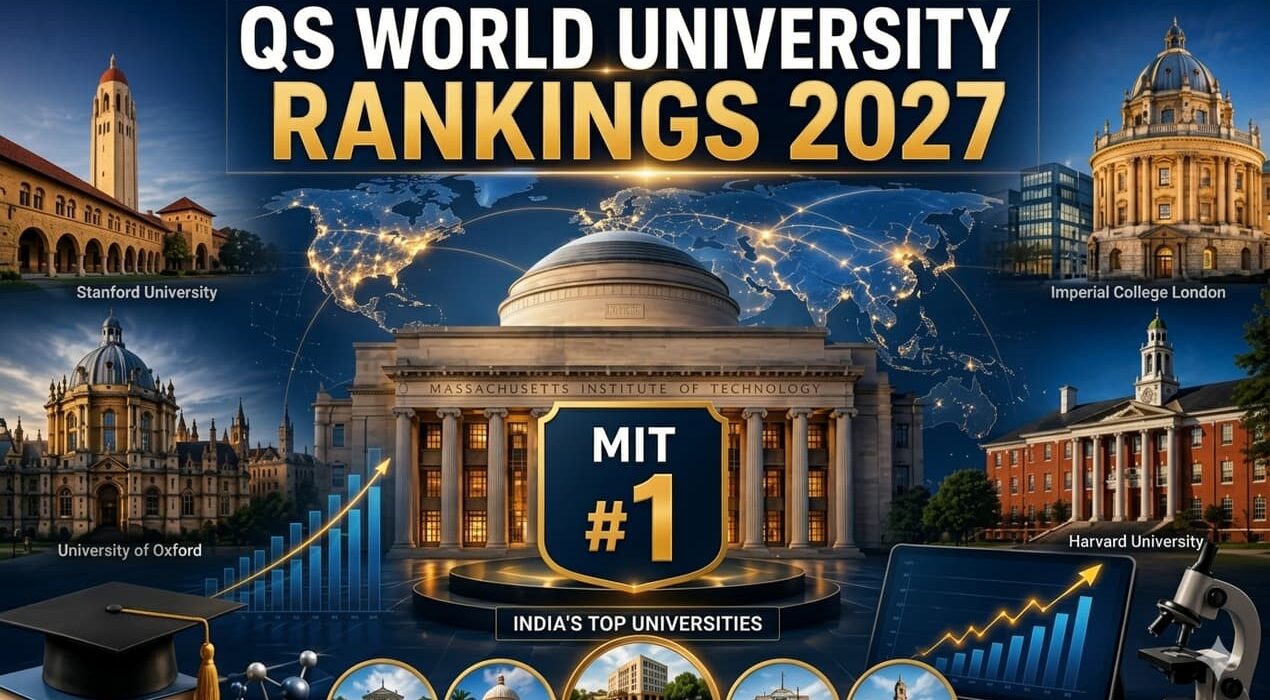
QS World Rankings 2027: MIT Leads List of Top Global Universities
The QS World Rankings 2027 have revealed the latest list of the world’s top universities. The rankings help students, educators, and researchers compare institutions across different countries. As a result, many universities closely monitor their position each year. The latest edition highlights academic excellence, research performance, and international reputation. It also reflects the growing competition among leading institutions worldwide.
Massachusetts Institute of Technology (MIT) secured the number one position in this year’s rankings. Meanwhile, Imperial College London and Stanford University shared second place. Interestingly, the ranking did not assign any institution to the third position. This outcome demonstrates the high level of competition among top universities.
Leading Universities Maintain Strong Performance
The University of Oxford ranked fourth in the latest list. Harvard University followed in fifth place, while the University of Cambridge secured the sixth position. These institutions continue to attract talented students and faculty members from around the world.
In addition, the California Institute of Technology claimed seventh place. ETH Zurich earned the eighth position because of its strong research output and innovation record. However, the rankings did not award any university the ninth spot. This unusual result attracted attention from education experts and observers.
Global Competition Continues to Grow
University College London (UCL) and the National University of Singapore completed the top ten rankings. Both institutions strengthened their global standing through quality education and impactful research. Therefore, they remained among the most respected universities in the world.
The latest rankings show how universities continue to invest in innovation and academic development. Many institutions now focus on research partnerships, technology, and student success. As a result, competition in higher education has become more intense than ever.
Students often use these rankings when choosing study destinations and academic programmes. Likewise, universities use them to evaluate their global performance. Although rankings do not measure every aspect of education, they offer a useful benchmark. Consequently, institutions around the world continue to strive for excellence and higher positions in future editions of the QS rankings.