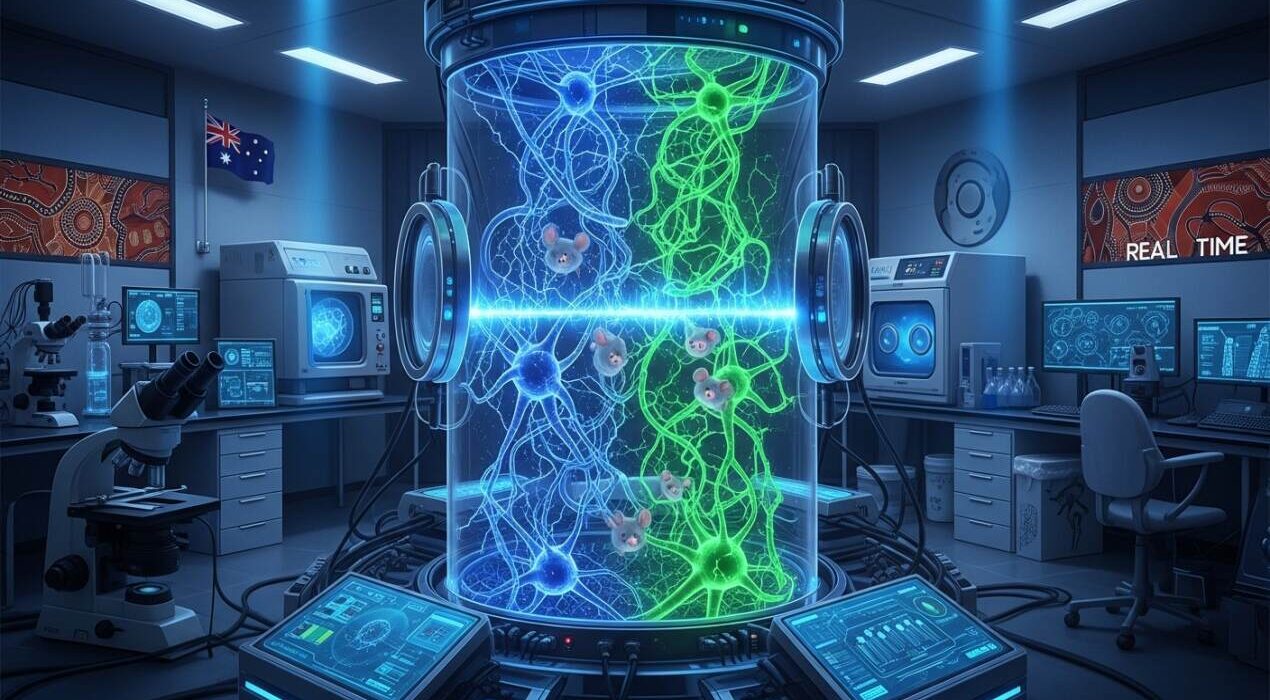
In a groundbreaking leap for science and technology, Australian startup Cortical Labs has developed the world’s first living biocomputer — a system that integrates living brain cells with silicon chips. The project, named DishBrain, combines human and mouse neurons with traditional computing hardware, creating a platform that can sense, process, and respond much like a biological brain.
What makes DishBrain extraordinary is its ability to learn through feedback. In one experiment, the neuron-powered system was trained to play the video game Pong. Over time, it adapted and improved its performance, demonstrating a hallmark of real intelligence: the capacity to learn from experience.
The neurons are cultivated in a dish on a multi-electrode array, which serves as both an input and output system. This setup allows signals to be read from and written into the neural network, forming a real-time feedback loop. The result is a living system that can be trained to perform tasks and adapt to changing conditions.
Researchers believe DishBrain could open new horizons in multiple fields. By studying how living neurons interact with digital systems, scientists may gain critical insights into neurodegenerative diseases such as Alzheimer’s and Parkinson’s. At the same time, the technology points toward a future of energy-efficient, brain-inspired computing, potentially transforming artificial intelligence by mimicking the way humans think and remember.
While still in its early stages, DishBrain signals a dramatic shift in how we approach AI and computing. Instead of machines that merely simulate intelligence, researchers are now experimenting with machines that are, in part, alive.
Australian Startup Creates World’s First Living Biocomputer Powered by Human and Mouse Neurons