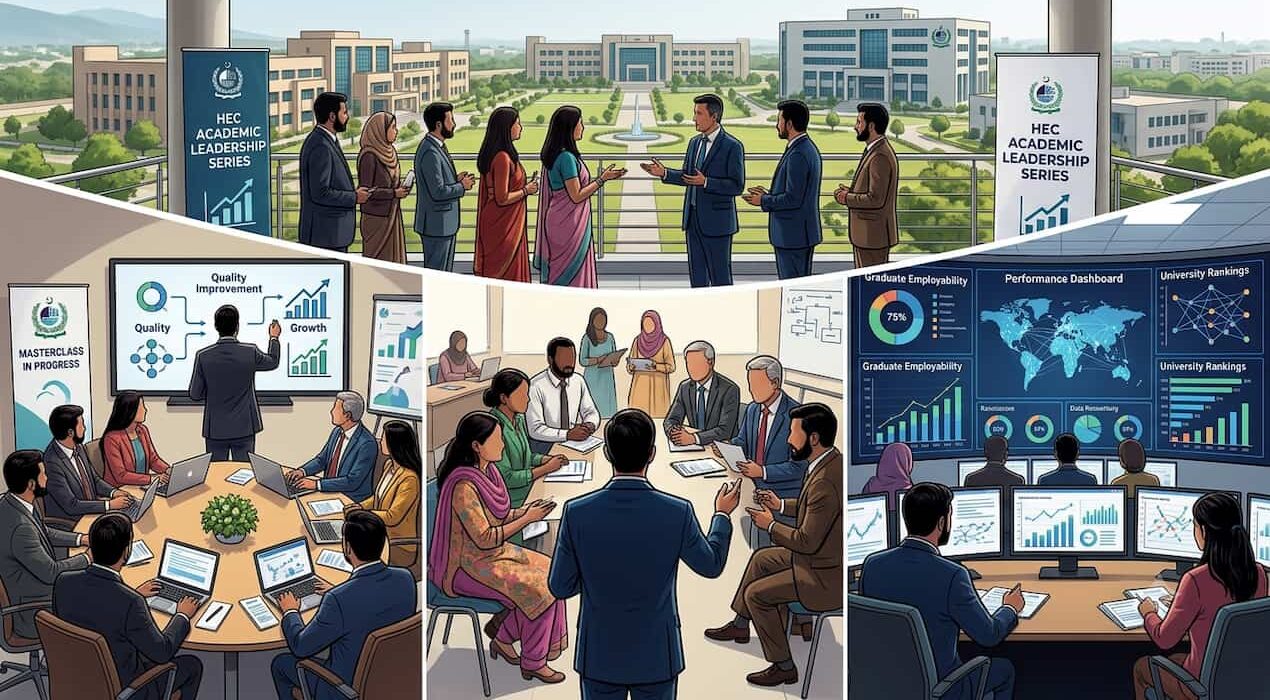
Academic Leadership Series Aims to Improve Higher Education Quality in Pakistan
The Higher Education Commission (HEC) has launched an Academic Leadership Series to strengthen university standards across Pakistan. The initiative comes at a crucial time for the country’s higher education sector. Although universities have expanded rapidly, concerns about graduate quality and academic performance continue to grow. Therefore, education experts view the new programme as an important step toward improving learning outcomes and institutional effectiveness.
Pakistan’s higher education system has grown significantly over the last two decades. New universities have opened across the country, and student enrolment has increased steadily. As a result, thousands of graduates enter the job market every year. However, many employers still report skill gaps among university graduates.
Focus Shifts from Quantity to Quality
Many universities concentrate on meeting regulatory requirements. However, they often pay less attention to the quality of education students receive. Consequently, graduates may struggle to meet the demands of a changing job market.
Outdated curricula remain a major challenge. In many institutions, teachers still rely heavily on rote learning methods. Therefore, students often miss opportunities to develop critical thinking, creativity, and problem-solving skills.
Education experts believe universities should focus on practical learning and innovation. For example, institutions can strengthen partnerships with industry to provide students with real-world experience. In addition, regular curriculum reviews can help ensure that academic programmes remain relevant and competitive.
Strong Leadership Can Drive Reform
The HEC believes the Academic Leadership Series can help universities improve governance and academic planning. The programme also supports quality assurance measures and digital monitoring systems. As a result, institutions may receive clearer guidance on achieving educational excellence.
However, successful reform requires commitment from university leaders. No framework can produce meaningful results without active participation from institutions. Therefore, universities must place student learning at the centre of their strategies.
Higher education institutions also play a key role in addressing national challenges. They can contribute research on climate change, public health, technology, and water management. Ultimately, Pakistan’s future depends on graduates who can think critically, solve problems, and contribute positively to society.