Pakistan Prison Reform Conference Overshadowed by Political Prison Debate
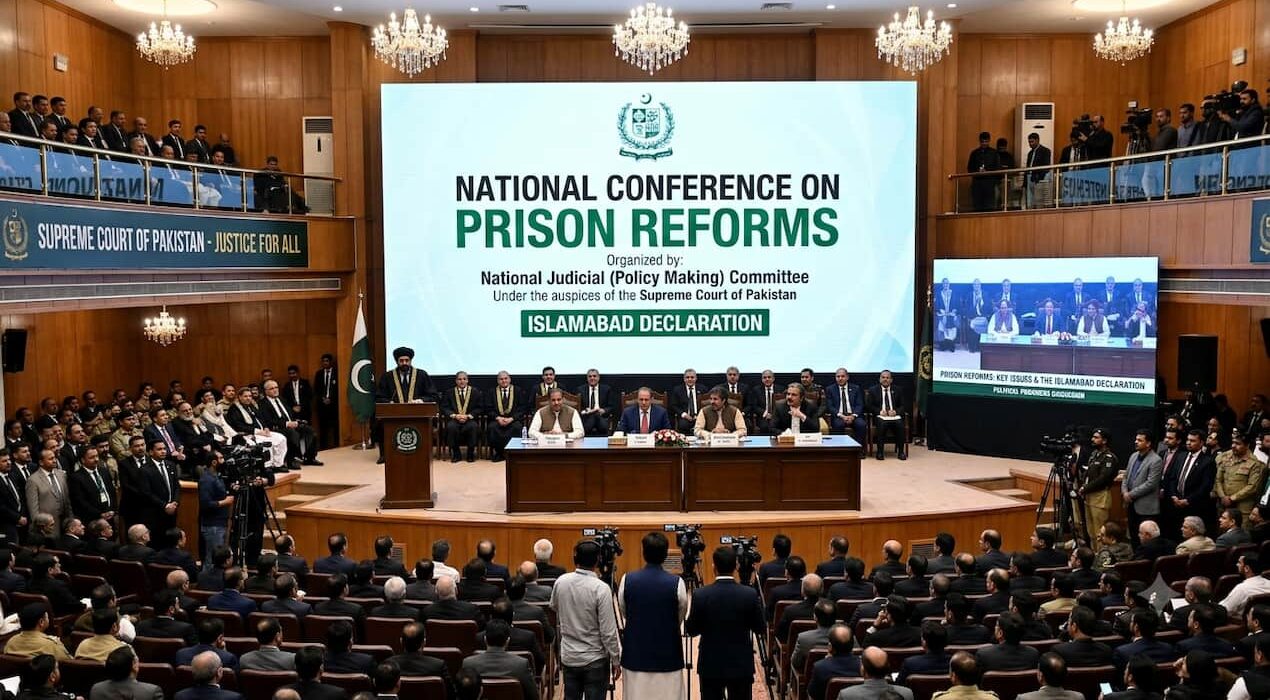
Pakistan prison reform remained the main topic at a national conference on Thursday. However, political prisoner issues dominated much of the discussion. The Supreme Court hosted the event under the National Judicial (Policy Making) Committee. All four chief ministers attended and endorsed the Islamabad Declaration. Chief Justice Yahya Afridi urged every province to improve prison conditions through practical reforms. He said meaningful progress requires cooperation and long-term commitment from all institutions.
Political Debate Overshadows Reform Agenda
Khyber Pakhtunkhwa Chief Minister Sohail Afridi urged the chief justice to review the conditions of former prime minister Imran Khan in Adiala Jail. He requested better medical treatment, regular family meetings and video calls with Khan’s sons. In addition, he asked authorities to provide proper waiting areas for visitors. He also opposed the use of water cannons against Khan’s sisters during prison visits.
Meanwhile, Punjab Chief Minister Maryam Nawaz recalled her own imprisonment. She said the experience changed her understanding of prison life forever. Maryam remembered being unable to meet her seriously ill mother before her death. Therefore, she stressed that prison reforms should protect the dignity of every inmate. She also highlighted severe overcrowding in Punjab prisons, where nearly 69,000 inmates live in facilities built for about 39,000 people. Moreover, she said her government has installed emergency call systems in prison cells to improve inmate safety.
Islamabad Declaration Sets Reform Goals
The conference concluded with all four chief ministers signing the Islamabad Declaration. The agreement promises to reduce unnecessary detention, especially for undertrial prisoners. It also supports stronger bail, parole, probation and legal aid systems. Furthermore, the declaration calls for better healthcare, mental health services, education and vocational training inside prisons.
Provincial governments also agreed to prepare time-bound reform plans and regularly report their progress. However, former federal minister Fawad Chaudhry criticised the declaration. He argued that Pakistan already has enough prison laws and policies. Instead, he said authorities should enforce existing rules before making fresh promises. As a result, many observers believe the success of Pakistan prison reform will depend on implementation rather than declarations.