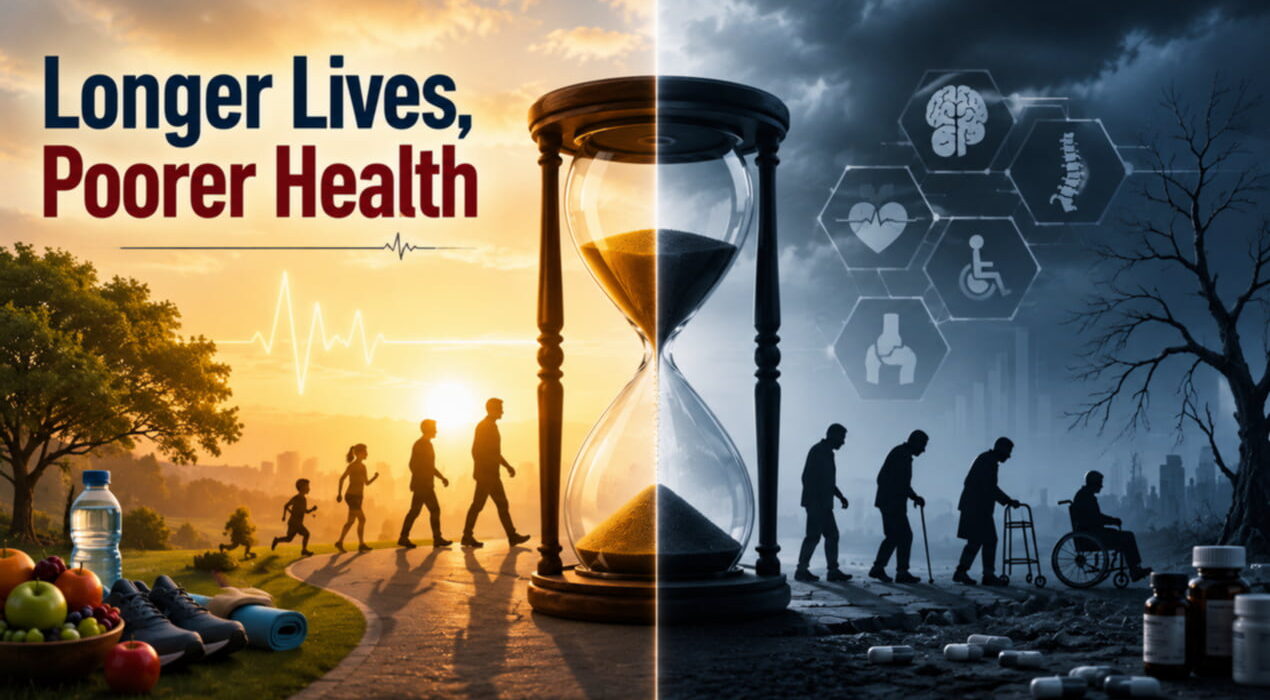
Healthy Ageing Study: People Live Longer but Spend More Years in Poor Health
The Healthy Ageing Study reveals that people are living longer than ever before. However, many of those extra years are spent with illness or disability instead of good health. Researchers published the findings in The Lancet Public Health after analyzing data from 204 countries and territories.
Life expectancy reached 73.8 years worldwide. However, healthy life expectancy did not improve at the same pace. Therefore, experts say healthcare systems should focus on improving quality of life instead of only increasing lifespan.
Longer Lives, More Health Challenges
Researchers found that people spent an average of 14.5% of their lives in poor health during 2023. Wealthier countries recorded larger health gaps despite longer life expectancy. For example, the Netherlands experienced a noticeable increase in unhealthy years since 1990.
Meanwhile, the United States, Australia, and Canada showed some of the biggest morbidity gaps. In contrast, Nauru, the Solomon Islands, and Laos recorded fewer unhealthy years. These findings suggest longer lives do not always mean healthier lives.
Key Factors Behind Poor Health
The study identified non-fatal illnesses as the main reason for the growing health gap. Common conditions included back pain, mental health disorders, hearing loss, and injuries. In addition, lower-income countries faced nutritional deficiencies, tuberculosis, and respiratory infections.
Researchers also highlighted several risk factors. These included obesity, tobacco use, high blood sugar, air pollution, and poor maternal nutrition. Furthermore, alcohol misuse and drug use affected wealthier nations, while unsafe sex remained a major concern in sub-Saharan Africa.
Why Healthy Ageing Matters
Experts believe prevention should receive greater attention. They recommend better rehabilitation, mental health services, chronic disease management, and long-term care. As a result, people could enjoy healthier and more independent lives.
The researchers concluded that future success should measure both lifespan and healthspan. Investing in healthy ageing could strengthen healthcare systems, improve wellbeing, and deliver lasting economic benefits worldwide.