Cetirizine Recall: FDA Warns of Ranitidine Contamination Risk
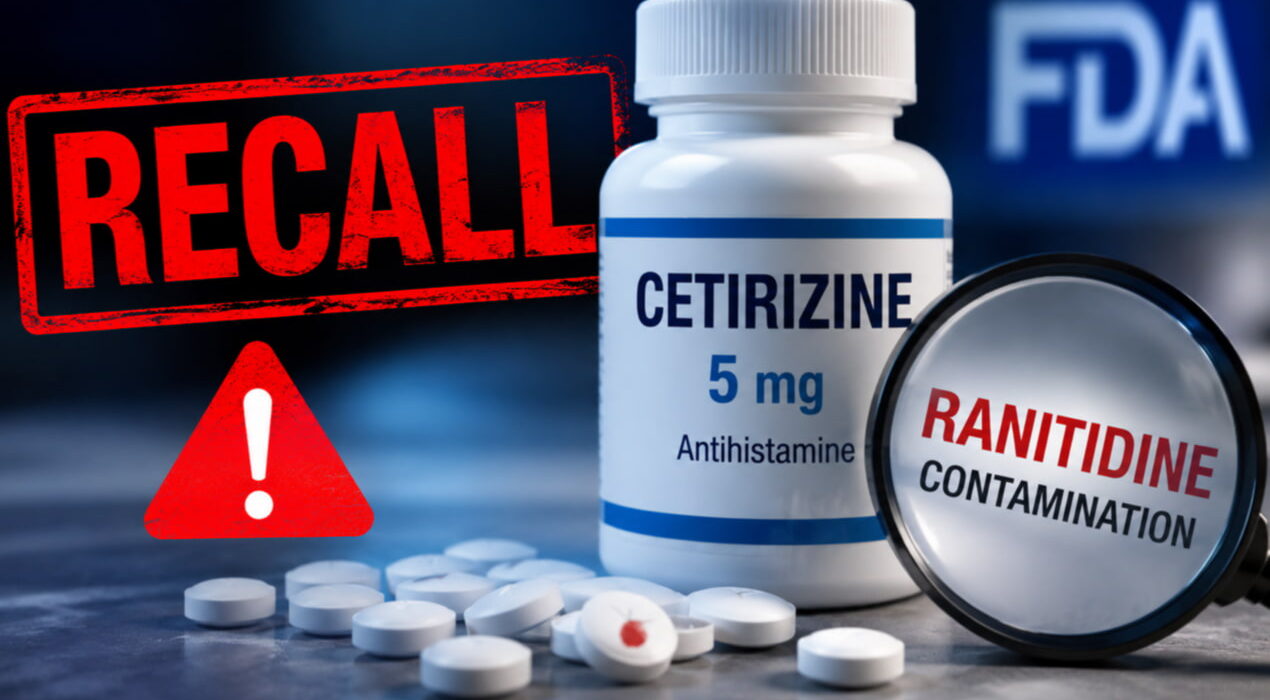
The Cetirizine Recall has raised concerns after the U.S. Food and Drug Administration announced a nationwide recall of selected 5 mg allergy tablets. The affected medicine may contain traces of ranitidine because of cross-contamination during production. Therefore, consumers should check their medicine bottles immediately and follow the recommended safety steps.
Affected Tablets and Possible Health Risks
The recall affects four production lots of Cetirizine Hydrochloride Tablets USP, 5 mg. Rising Pharma Holdings distributes the medicine, while Unique Pharmaceutical Laboratories manufactures it. The issue surfaced after a pharmacy technician noticed unusual red spots and discoloration on white tablets during routine dispensing.
The affected product comes in 100-count HDPE bottles with NDC 16571-401-10 and an expiry date of October 2028. The recalled lot numbers are GY825029, GY825030, GY825031, and GY825032. Although cetirizine treats allergies, ranitidine was previously used for stomach acid. As a result, people allergic to ranitidine could face serious reactions after taking contaminated tablets. These reactions may include breathing difficulty, low blood pressure, swelling, hives, itching, or even loss of consciousness.
What Consumers Should Do Now
Consumers should check the lot number on every 100-count bottle before using the medicine. If the bottle matches one of the recalled lots, stop using it immediately. In addition, contact Rising Pharma Holdings for refund or return instructions.
Anyone who experiences unexpected side effects should seek medical care without delay. Patients and healthcare professionals should also report adverse reactions through the FDA MedWatch reporting system. Furthermore, people with concerns should consult their pharmacist or healthcare provider before switching medicines. Taking these simple steps can reduce health risks and help protect patients from accidental exposure to contaminated tablets. Staying informed and checking medicines regularly supports safer treatment for everyone.