Europe Heatwaves Increase Infectious Disease Risk Across the Region
As summers become hotter and longer, Europe heatwaves diseases are becoming a growing public health concern. The European Centre for Disease Prevention and Control has warned that rising temperatures create better conditions for infections to spread. Therefore, health experts encourage people to take simple precautions and stay informed during the warmer months.
Climate change continues to increase health risks across Europe. In addition, experts say countries should work together to predict and control future outbreaks. They also stress that cooperation between health, environmental, and animal sectors will improve public safety. Simple preventive actions can lower the chance of infection and protect vulnerable communities.
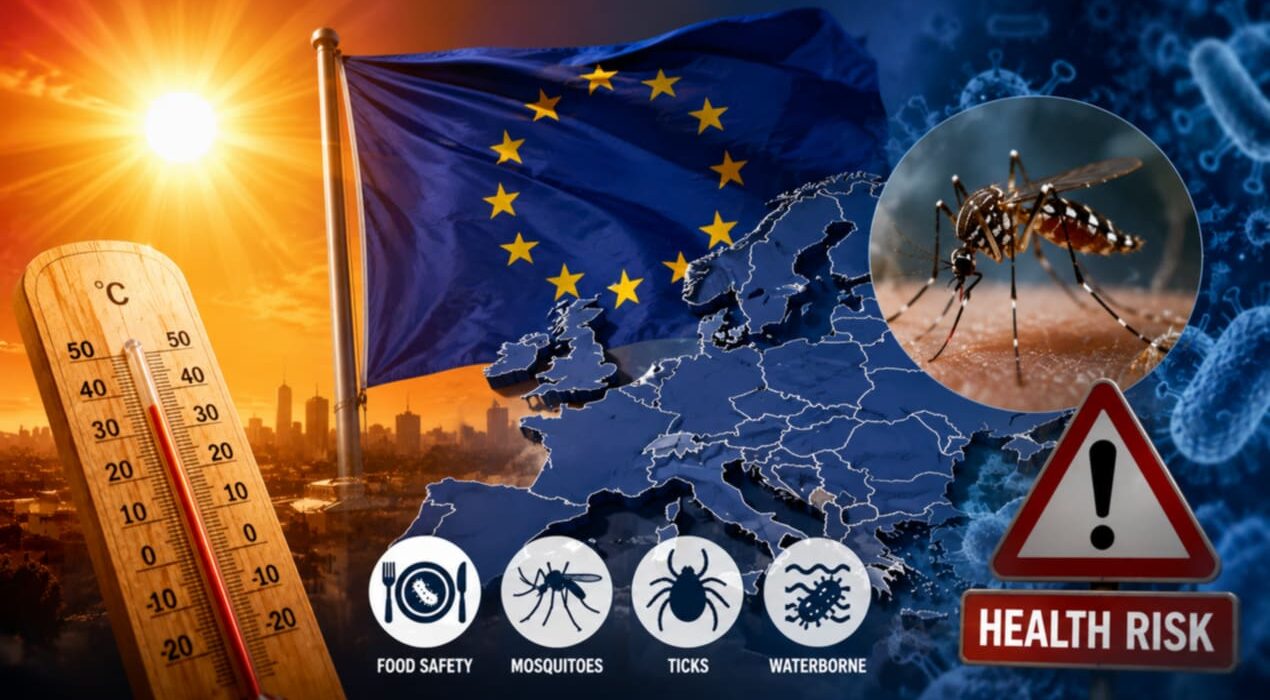
Food Safety Risks
Foodborne illnesses remain common during summer because bacteria multiply faster in warm weather. Hot and humid conditions can spoil food without changing its smell or appearance. Therefore, people should wash fruits and vegetables before eating. They should also separate raw and cooked foods, cook meals thoroughly, and keep food at safe temperatures. Good hygiene greatly reduces infection risks.
Mosquitoes and Ticks
Warmer weather allows mosquitoes and ticks to survive in more areas across Europe. As a result, diseases such as dengue, chikungunya, West Nile virus, Lyme disease, and tick-borne encephalitis are becoming more common. Health experts recommend using insect repellent and wearing protective clothing outdoors. Window screens, mosquito nets, and removing standing water also help prevent mosquito breeding. In addition, checking the body for ticks after outdoor activities lowers the risk of illness. Vaccination remains an effective option against tick-borne encephalitis in high-risk regions.
Waterborne Infections
Higher sea temperatures can increase harmful bacteria in coastal waters. People may become ill after swimming with open wounds or eating contaminated seafood. However, proper precautions reduce this risk. Avoid entering seawater with fresh cuts and cook seafood completely before eating. The ECDC also monitors bacterial activity through daily forecasts. Following public health advice helps families enjoy summer safely while reducing the spread of seasonal infections across Europe.