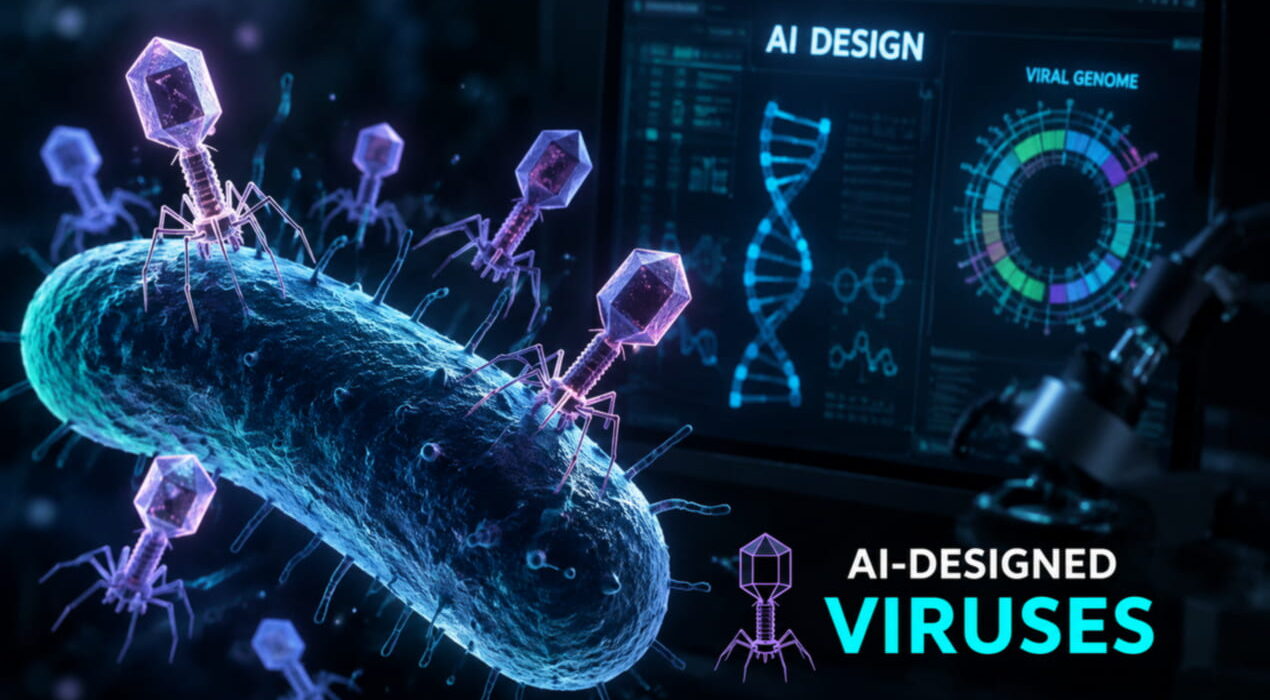
AI-Designed Viruses Mark Major Biotechnology Breakthrough
Scientists have created the first functional viruses designed with artificial intelligence, marking a biotechnology breakthrough. The AI-designed viruses are bacteriophages, which attack bacteria instead of humans. The work could support treatments for drug-resistant infections.
AI Designs Working Viral Genomes
Dr Brian Hie of Stanford University and his team used genome language models to create bacteriophage genomes. These systems process genetic sequences like language models process words.
Researchers produced the computer-designed genomes in a laboratory. They then tested the viruses against E. coli bacteria. A combination successfully killed bacteria that had resisted natural bacteriophages.
Bacteriophages already have a role in treating persistent bacterial infections in some countries. Therefore, faster genome design could help researchers develop phages for specific bacterial targets.
The approach could expand phage therapy and give researchers new tools against bacterial resistance. It could also support future research into difficult bacterial infections.
Scientists Raise Safety Concerns
However, the breakthrough also raises major biosafety, biocontainment and biosecurity concerns. The researchers urged teams working on genome design to involve safety experts throughout their projects.
Experts from the Johns Hopkins Center for Health Security warned about generative AI. They said governance systems have not yet fully caught up with these advances.
Tom Ellis called the research impressive. However, he noted that bacteriophages have small and simple genomes. Designing more complex organisms is much harder.
Stronger Safeguards May Help
Ellis warned that AI trained on genetic information from dangerous organisms could create additional risks. However, restricting sensitive genetic data and screening suspicious DNA synthesis requests could reduce potential harm.
Dr Filippa Lentzos supports layered regulation. This approach should cover AI model access, research oversight, DNA synthesis screening, and laboratory safety procedures.
Overall, the study shows AI can now help create functional viral genomes. Therefore, researchers say responsible development and strong safeguards must advance alongside this technology.