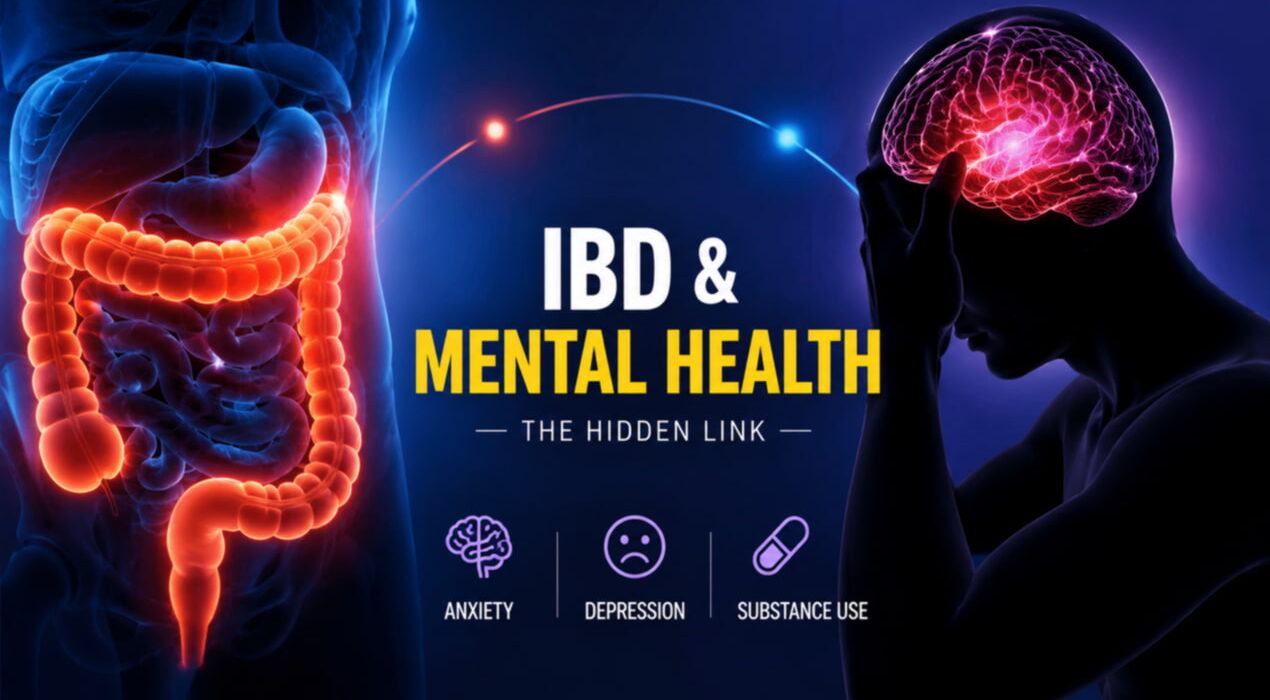
Chronic IBD Raises Mental Health Risk
People with chronic inflammatory bowel disease may face a higher risk of mental health problems. A large Swedish study found that this risk can begin years before diagnosis.
Researchers studied Crohn’s disease, ulcerative colitis, and unspecified inflammatory bowel disease. They found higher rates of depression, anxiety, and substance use among affected people.
The risk increased about two to three years before diagnosis. It reached its highest level around the time of diagnosis. Afterward, the risk declined but remained elevated for years.
Study Findings
Researchers examined Swedish health records involving nearly 44,000 people with newly diagnosed IBD. They compared them with about 179,000 people from the general population.
The team also studied more than 26,000 siblings. This comparison helped assess the possible influence of shared genes and family factors.
During an average follow-up of 7.4 years, 16.5 percent of IBD patients developed mental illness. The figure was 12.8 percent among comparison participants.
Anxiety affected 7.3 percent of patients, compared with 5.3 percent in controls. Depression affected 4.6 percent, compared with 3.2 percent.
Risk Beyond Diagnosis
The strongest links involved anxiety and depression. However, researchers found no significant increase for schizophrenia, psychosis, personality disorders, or ADHD.
Some additional risks appeared after diagnosis. Autism spectrum disorders showed increased risk soon after diagnosis. Eating disorders showed higher risk from the fifth year onward.
The sibling analysis showed a similar pattern. Therefore, shared family factors alone cannot explain the findings.
Children and teenagers diagnosed with IBD also face important long-term mental health risks. Their absolute risk appears particularly high.
Why Early Support Matters
The study cannot prove that IBD directly causes mental illness. It also lacked some information about medications, disease activity, lifestyle, and primary care visits.
However, the findings support earlier mental health screening. Doctors could discuss mood, anxiety, and emotional wellbeing during initial IBD assessments.
Previous research from Denmark and Britain found similar patterns. Together, these findings suggest that psychological support should form part of comprehensive IBD care.