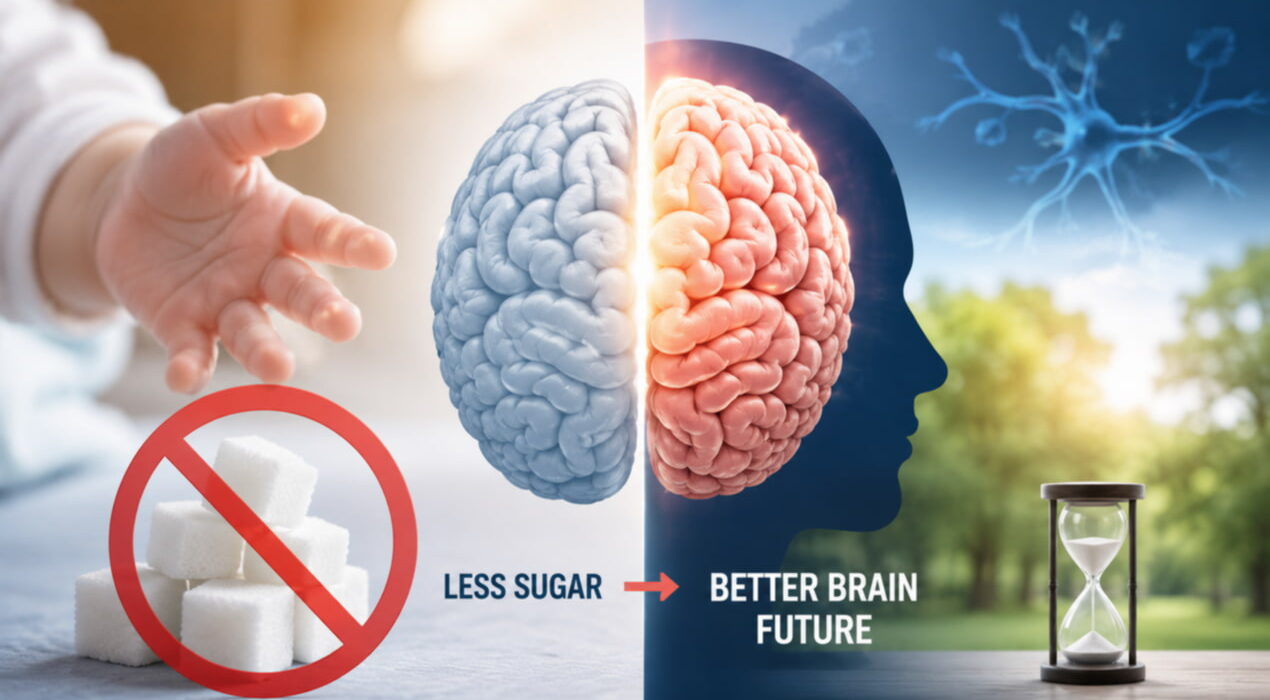
Early Sugar Restriction Linked to Lower Dementia Risk
Sugar restriction during the first 1,000 days of life may lower dementia risk later. This period begins at conception and continues through early childhood.
Researchers from The Hong Kong University of Science and Technology studied this possible link. Jiazhen Zheng, Ph.D., and colleagues analyzed data from 64,737 UK Biobank participants.
The participants were born around the end of sugar rationing in the United Kingdom. About 40,963 people experienced rationing during fetal development or early childhood.
Lower Dementia Risk
The researchers found important differences between exposed and unexposed groups. Sugar rationing during pregnancy and the first year was linked with lower dementia risk.
The risk of all-cause dementia was 21 percent lower. Alzheimer’s disease risk was also 23 percent lower among those exposed.
Similar results appeared among people exposed during pregnancy and their first two years. Dementia risk was 23 percent lower in this group.
Alzheimer’s disease risk fell by 28 percent. Therefore, limiting sugar early in life may influence brain health decades later.
Brain Health and Early Nutrition
The study also found differences in brain structure. People exposed to early sugar rationing had greater total gray matter volume.
They also had lower white matter hyperintensity volume. These brain differences may indicate better long-term brain health.
In addition, the exposed group performed better on processing speed and reasoning tests. Researchers also found a delayed dementia onset among those with early exposure.
All-cause dementia appeared about 2.55 years later. Alzheimer’s disease onset was delayed by about 2.87 years.
Vascular dementia onset was delayed by about 2.49 years. These findings suggest that early nutrition could have lasting effects.
Diabetes and Blood Pressure
The researchers found another possible explanation for the results. Type 2 diabetes and hypertension partly mediated the association.
Together, these conditions explained 25.5 percent of the observed link. However, the study does not prove that sugar restriction prevents dementia.
Instead, it highlights the possible importance of nutrition during early development. Healthy eating may support brain health throughout life.
Researchers say further studies should explore this connection. Meanwhile, balanced nutrition remains important during pregnancy and childhood.