Low Sugar Intake Linked to 23% Lower Dementia Risk
Lower sugar intake early in life may be linked to lower dementia risk later in life. A new study suggests early nutrition could influence brain health decades later.
Researchers examined health records from more than 64,000 people. They compared people born before and after sugar rationing ended in 1953.
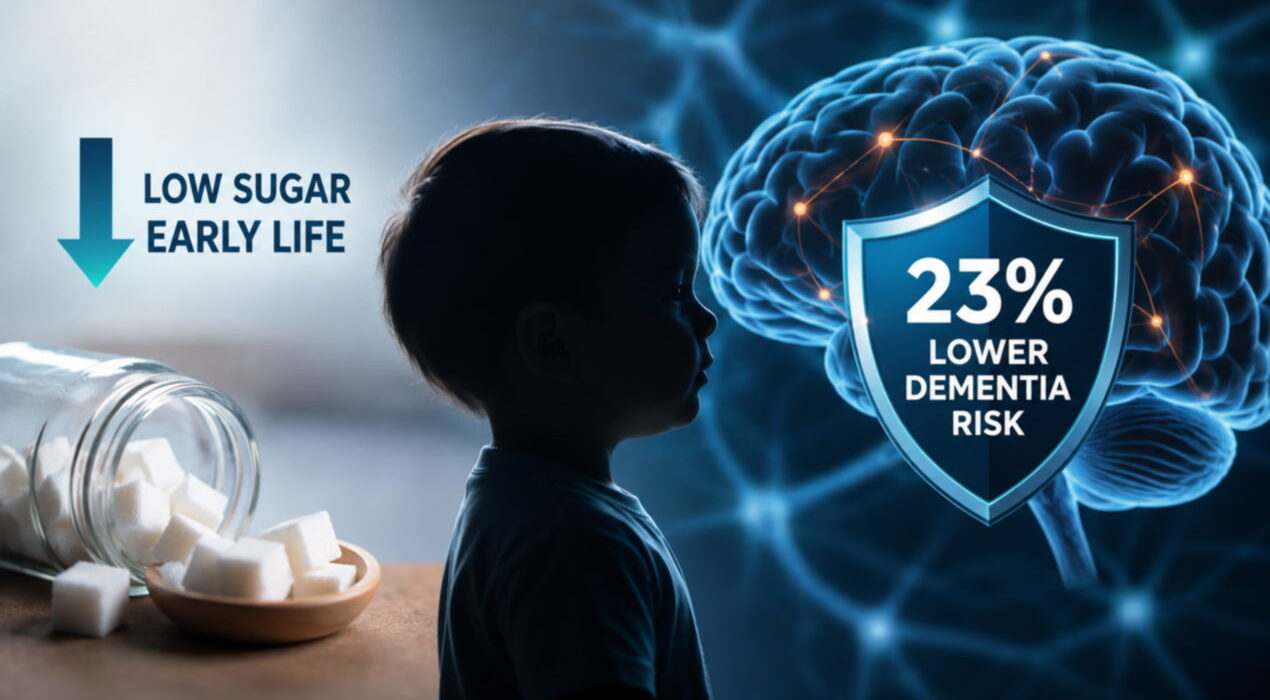
The study found that people exposed to lower levels before birth and during their first year had a 21% lower dementia risk. Those exposed through age two had a 23% lower risk.
Dementia appeared later
The lower-exposure group also received dementia diagnoses about 2.6 years later. However, researchers stressed that the findings show an association.
The study cannot prove that lower consumption directly prevented dementia. Other differences between the groups could have affected the results.
For example, people may have differed in diet, calorie intake, living conditions, and nutrition. Therefore, researchers say the results need careful interpretation.
Jiazhen Zheng said early dietary exposure could affect brain health. Still, researchers called for more studies.
Experts recommend balanced nutrition
Dariush Mozaffarian of Tufts University said the research raises an important question. However, he noted that it does not prove sugar caused the difference in dementia risk.
Experts recommend a balanced diet during pregnancy. It includes fruits, vegetables, legumes, nuts, seeds, fortified cereals, dairy products, and fish.
Families can also limit highly processed foods with added sugar, starch, and salt. Such foods provide nutrients for growth.
More research is needed
Researchers used sugar rationing history to estimate exposure. They did not have direct measurements of each person’s intake.
As a result, social, dietary, and health differences may have influenced the findings. Further research must determine whether early dietary exposure directly affects dementia risk.
For now, the findings support eating habits. They do not suggest that one food or nutrient determines brain health.