KP Dengue Risk Rises as Officials Warn of Poor Coordination
Officials have warned that a weak response from Medical Teaching Institutions (MTIs) could worsen dengue in Khyber Pakhtunkhwa. They fear the disease could become a major crisis if hospitals fail to share timely information.
Peshawar has remained endemic to dengue for about a decade. The city has reported cases almost every year in KP. However, Charsadda recorded the highest number of patients last year during a severe outbreak.
Peshawar Faces Continued Risk
Peshawar is the most populated city in KP and remains a dengue hotspot. Officials said the virus continues to circulate in the city.
More than a dozen villages have reported dengue patients every year. Therefore, health teams need timely information to identify affected areas and control transmission.
Officials said the health department wants MTIs to report confirmed cases. This information would help teams take preventive measures around affected homes.
Data Sharing Remains Important
Officials said MTIs currently do not share enough case data. As a result, health teams may struggle to reach patients quickly.
An infected person can contribute to transmission when mosquitoes bite them. Those mosquitoes can then spread the virus.
Therefore, timely reporting can help officials locate risk areas and begin mosquito-control measures. Better coordination could improve surveillance across districts.
Surveillance and Prevention Intensify
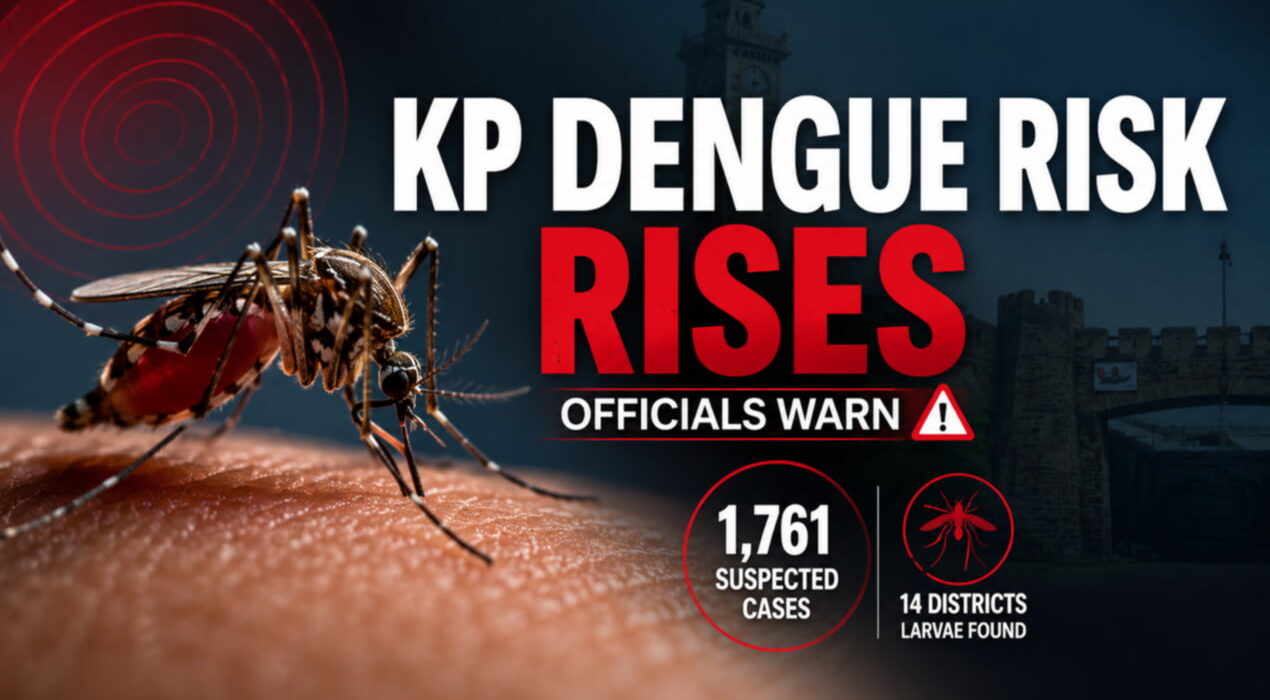
The department has recorded 1,761 suspected dengue cases so far. In addition, teams found mosquito larvae in 14 districts and destroyed the breeding sites.
Officials said dengue outbreak protocols have been strengthened. Larval source management activities have also increased to reduce mosquito breeding.
However, poor coordination with MTIs remains a major concern. Officials stressed that hospitals and health teams must work together to control dengue.
Regular reporting can support faster action. Residents can help by removing standing water. These steps can reduce mosquito breeding and support dengue prevention across communities today.