Harvard Study Finds Aviation Health Risk for Flight Crews
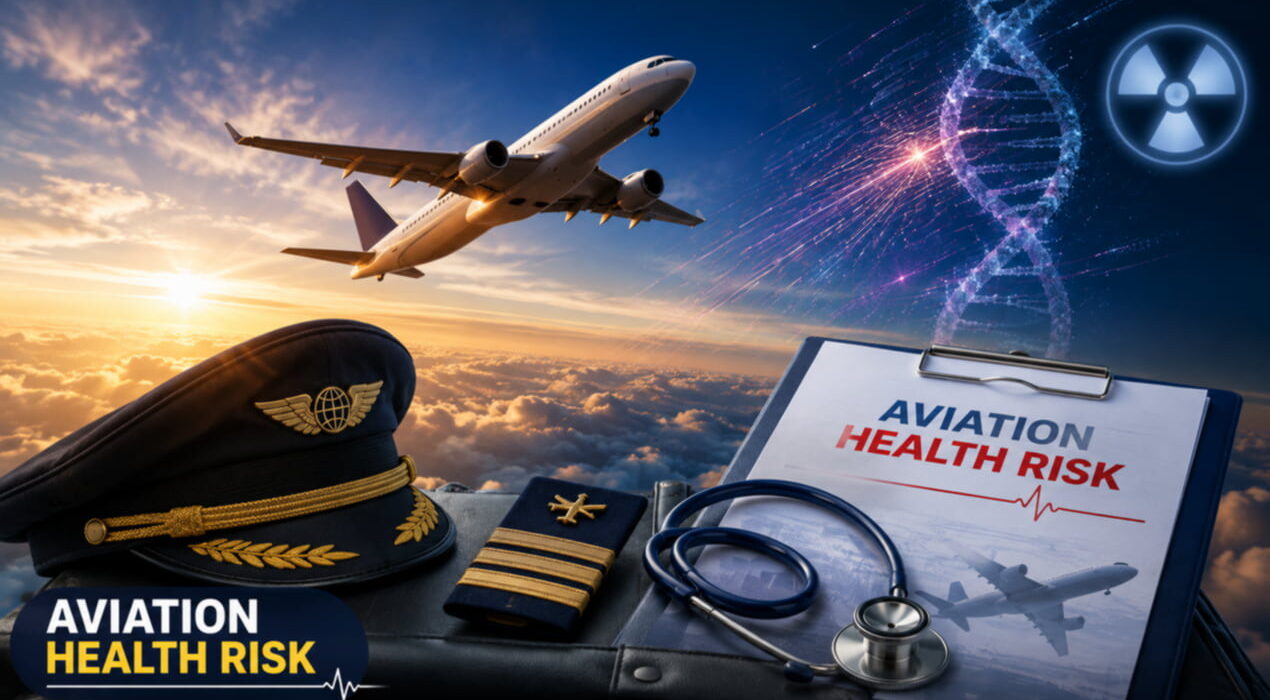
Pilots and flight attendants face aviation health risk, according to a Harvard University study. Researchers linked the concern to repeated exposure to cosmic radiation during flights.
The study appeared in JAMA Internal Medicine and reviewed 13 million U.S. death certificates from 2020 to 2024. The records included about 14,000 pilots and 7,000 flight attendants.
Cosmic Radiation Exposure
Cosmic radiation comes from deep space and the sun. Some ionizing radiation reaches aircraft at cruising altitude because the atmosphere provides less protection.
As a result, airline crews can receive about 3 to 6 millisieverts (mSv) each year. In comparison, passengers taking 10 cross-country round trips annually receive about 0.4 mSv.
Therefore, crew members may receive eight to 15 times more cosmic radiation than passengers. Exposure can build over many years of employment.
Lead researcher Anupam B. Jena, M.D., Ph.D., said risk increases with longer occupational exposure. However, the study does not prove radiation directly caused individual cancer deaths.
Cancer Patterns Among Crews
Researchers examined deaths linked to radiation-associated cancers. They excluded lung cancer to reduce the effect of smoking on findings.
Among flight attendants, radiation-related cancers accounted for 6.9% of deaths. Researchers found higher rates involving melanoma, central nervous system cancers, prostate cancer and breast cancer.
For pilots, radiation-related cancers accounted for 6.7% of deaths. Elevated rates appeared for central nervous system cancers, leukemia, melanoma, breast cancer and prostate cancer.
Why Flight Altitude Matters
Cosmic radiation levels vary with aircraft altitude and flight duration. Higher altitudes expose crews to more radiation because there is less atmospheric shielding.
The findings highlight an occupational health concern for airline professionals. However, researchers say more work is needed to understand the relationship between exposure and cancer mortality.
Therefore, continued monitoring and research could help improve better workplace health protections for flight crews.