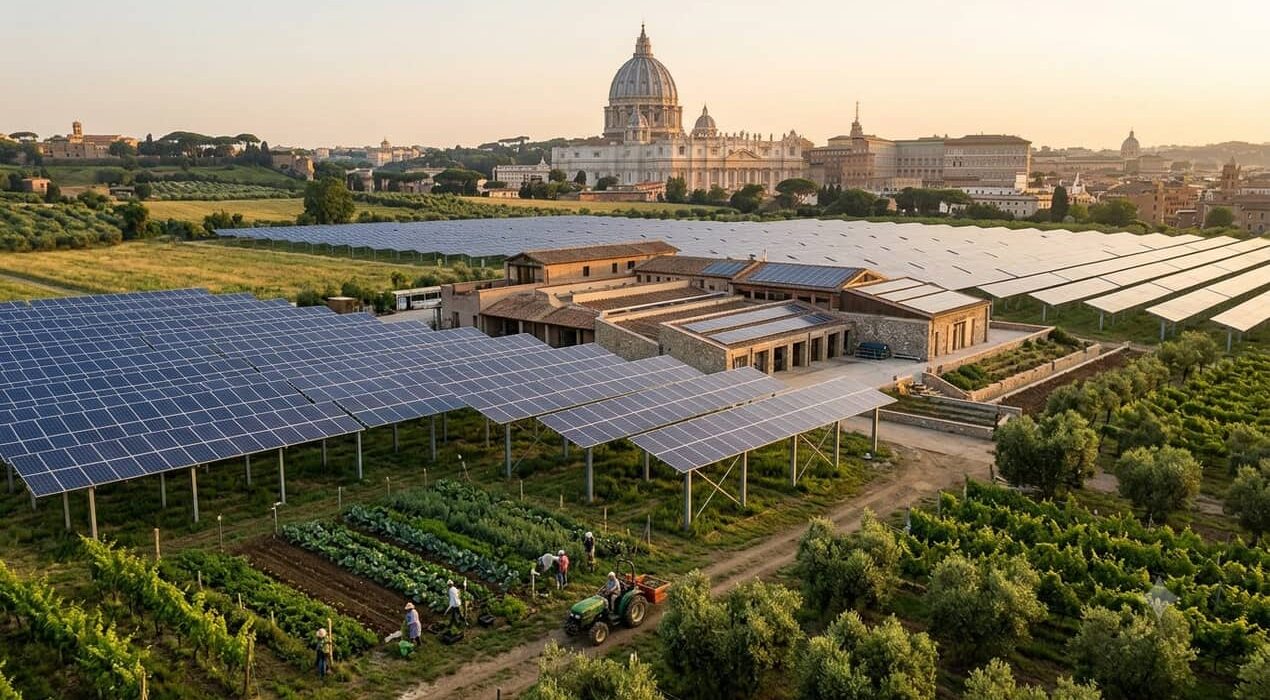
Vatican Solar Project €100M Agrivoltaic Plan to Power Holy See
The Vatican solar project is set to transform how the Holy See meets its energy needs. The plan focuses on renewable power through an agrivoltaic system. As a result, Vatican City aims to become fully energy self-sufficient within two years.The project could cost around €100 million. It may also deliver between 80 and 90 megawatts of power. Therefore, it could rank among Italy’s largest renewable installations.
How the Agrivoltaic System Works
This system combines solar energy with agriculture. Solar panels sit several meters above the ground. Meanwhile, crops grow underneath them. The design offers clear benefits. For example, the panels provide shade and reduce water loss. In addition, they protect plants from extreme weather. This makes the system both efficient and environmentally friendly. The plant will cover nearly 200 hectares of land. It will sit on the Vatican owned Santa Maria di Galeria estate. This site has hosted Vatican Radio facilities since the 1950s.
Timeline and Energy Impact
Construction could take 18 to 24 months. This timeline includes permits and administrative work. However, officials have not confirmed exact dates yet. The energy will power Vatican Radio first. It may also support properties linked to the Holy See. For instance, Rome’s Bambino Gesù hospital could benefit.
Any extra electricity will go to Italy. Therefore, the project supports both local and national energy needs.
A Step Toward Sustainability
The Vatican solar project reflects strong climate goals. The late Pope Francis supported this initiative. He often spoke about climate responsibility and clean energy. Now, Pope Leo XIV continues that vision. The project has also gained support through a special Italy Vatican agreement. This agreement provides tax exemptions and simplifies development.
Contracts for construction will open soon. As a result, companies can bid for the work in the coming weeks. Overall, the Vatican solar project marks a major step toward sustainability. It combines innovation with environmental care. Therefore, it sets an example for other nations and institutions worldwide.