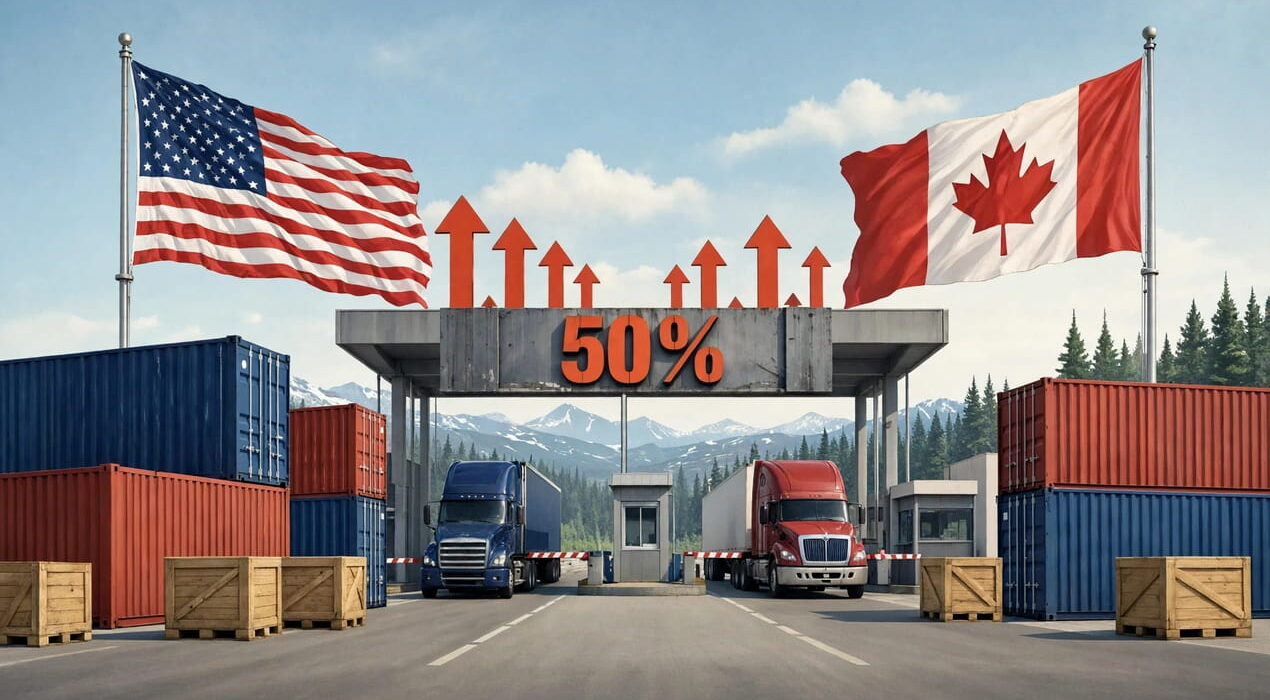
US Canada Tariffs Dispute 50% Duties Imposed After Trade Talks Fail
The US Canada tariffs dispute has intensified after trade talks collapsed. As a result, the United States imposed 50% tariffs on selected Canadian goods. These new duties took effect at midnight and targeted around $20 billion in exports. However, the move affects only a small portion of Canada’s total exports to the U.S. Even so, tensions between both nations have clearly increased. Therefore, experts believe this step could complicate future trade discussions.
Talks Collapse at the Last Minute
Negotiations between the two countries lasted several days. Initially, both sides appeared close to reaching an agreement. For example, officials discussed lowering tariffs on steel, aluminum, and automobiles. However, last minute changes disrupted progress. Canada stated that the revised U.S. terms were unfair and uneconomic. In addition, Canadian leaders said these changes weakened trust in the deal.
As a result, Prime Minister Mark Carney suspended negotiations. He also promised a “dollar for dollar” response to the new tariffs. This signals a firm stance from Canada moving forward.
US Response and Missed Opportunity
U.S. officials expressed disappointment over the outcome. They described Canada’s decision as a missed opportunity. According to them, the proposed deal offered Canada strong tariff advantages. Moreover, U.S. representatives said Canada requested additional concessions. These demands focused on key sectors like steel, autos, and lumber. Therefore, talks failed to reach a final agreement. Currently, no further negotiations are scheduled. This pause adds uncertainty to future trade relations. As a result, businesses on both sides may face challenges.
Impact on Key Sectors
The new tariffs could hurt several Canadian industries. For instance, sectors like lumber, autos, and manufacturing may face pressure. Experts warn that job losses and closures are possible. In addition, existing tariffs have already strained these industries. Therefore, the new measures could deepen the impact. While the overall economy may absorb the shock, specific sectors remain vulnerable. The dispute may affect broader trade agreements. In particular, future talks on the North American trade deal could become more difficult. However, both countries may return to negotiations later. For now, the US Canada tariffs dispute highlights growing tensions. As a result, global markets are watching closely. The coming weeks will likely shape the next phase of this trade conflict.