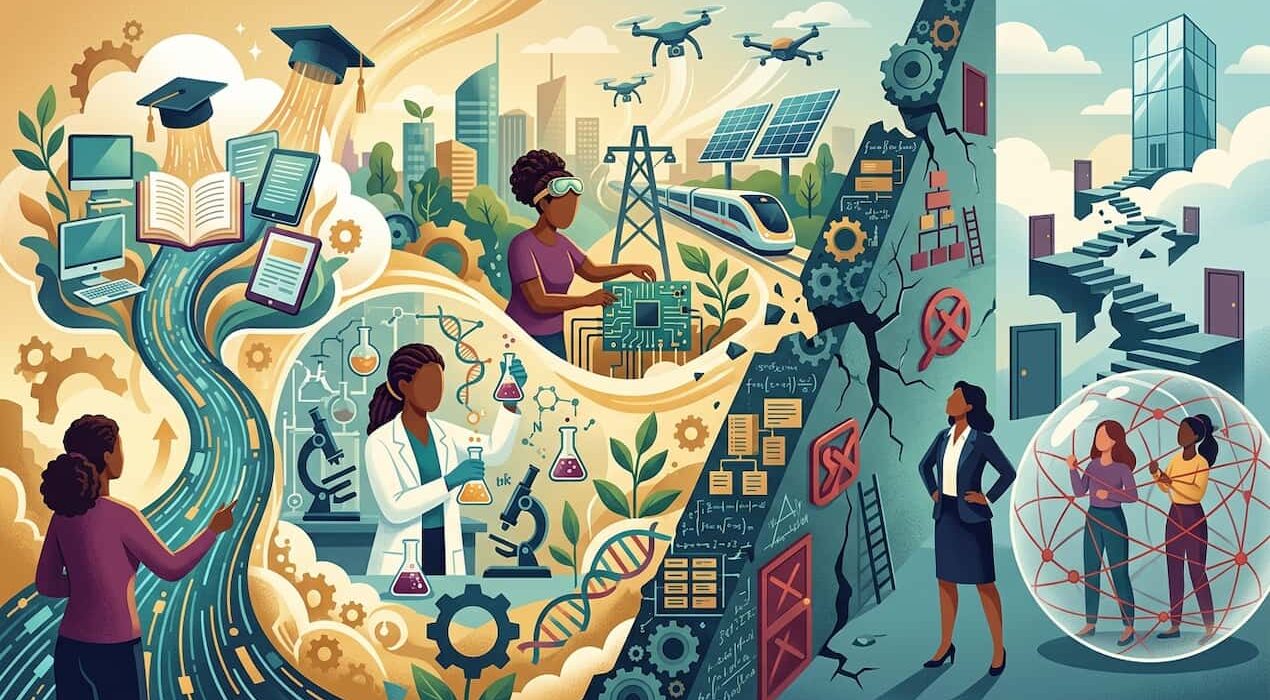
Women Shaping Education, Innovation and Global Progress
Women are playing a growing role in education, research, technology and entrepreneurship. Their progress marks a major social and economic shift in the 21st century.
Women once faced major barriers in education and science. Today, more women attend universities, conduct research and lead innovative businesses.
Women drive education and innovation
Education remains a powerful tool for social change. Global efforts have expanded access to education for millions of girls and women.In many countries, women now form the majority of higher education students. These gains can improve careers, social mobility and economic growth.
Women also contribute strongly to global research. UNESCO estimates that women represent about one-third of researchers worldwide.Female researchers work across medicine, climate science and artificial intelligence. They also contribute to public health, biotechnology and sustainable development.Diverse research teams can bring wider perspectives to complex problems. Therefore, women’s participation can improve technology, science and public policy.
Women entrepreneurs also continue to build innovative businesses. Many startups focus on healthcare, education, financial inclusion and environmental challenges.However, major barriers still limit women’s progress. Women remain underrepresented in science, technology, engineering and mathematics fields.UNESCO data show that women make up about 35% of STEM students globally. Women also represent a much smaller share of artificial intelligence professionals.
Breaking barriers to women's leadership
The “leaky pipeline” creates another major challenge. Many women enter education and research but fewer reach senior positions.Gender stereotypes can influence career choices and workplace decisions. Unequal caregiving duties can also limit professional opportunities.In addition, women may receive less access to networks, funding and promotions. Digital inequality creates further challenges, especially for women in poorer regions.
Governments and institutions must address these barriers through long-term policies. They should invest in girls’ education and improve access to STEM learning.Schools can also promote female role models in science and technology. Such examples can encourage more girls to consider these careers.Workplaces should provide fair recruitment and promotion systems. Flexible arrangements and better support can also help women build lasting careers.
Finally, women need stronger representation in leadership. Their voices should shape universities, research bodies, companies and public policy.Investing in women is not only about fairness. It can also strengthen innovation, economic growth and sustainable development worldwide.