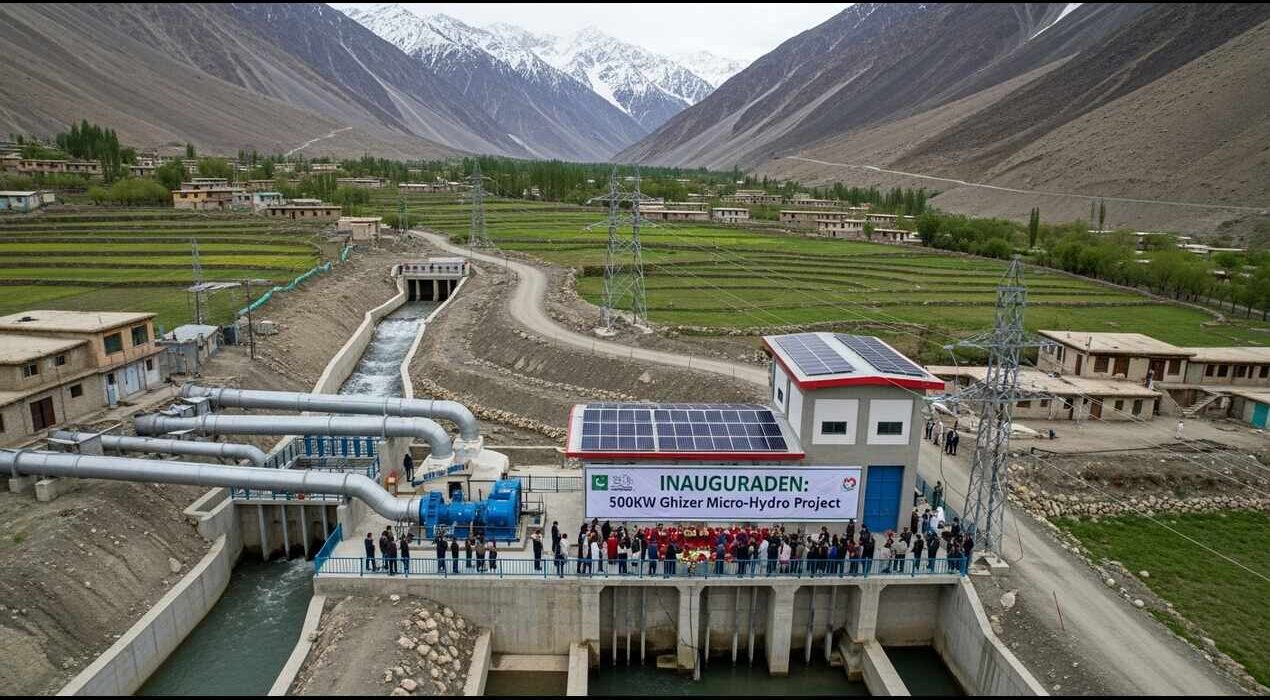
A 500-kilowatt micro-hydro power plant has begun operating in Ghizer, Gilgit-Baltistan, supplying sustainable electricity to over 700 households. This milestone marks a major step in tackling the chronic power shortages that mountain communities face.
At the inauguration ceremony, local officials, community leaders, and energy experts praised the project. They described it as a model for decentralized energy in Pakistan’s northern areas, where the national grid barely reaches. By harnessing glacier-fed streams, the plant delivers a steady and eco-friendly energy supply.
Moreover, the plant runs year-round, supporting not only households but also small businesses, schools, and health centers. These facilities often suffer from poor electricity, and reliable power is expected to boost services and economic activity.
Residents expressed hope that the project will reduce dependence on costly diesel and firewood. As a result, families will save money, forests will remain intact, and air quality will improve.
Women and children will benefit most from better lighting and access to appliances.
Officials emphasized that the project reflects the government’s focus on renewable energy for remote regions. They suggested that similar micro-hydro plants could be replicated in other valleys to expand rural electrification and improve climate resilience.
Overall, the Ghizer micro-hydro plant stands as a milestone for community-driven energy. It promises to transform daily life, promote sustainability, and empower remote mountain communities with reliable electricity.