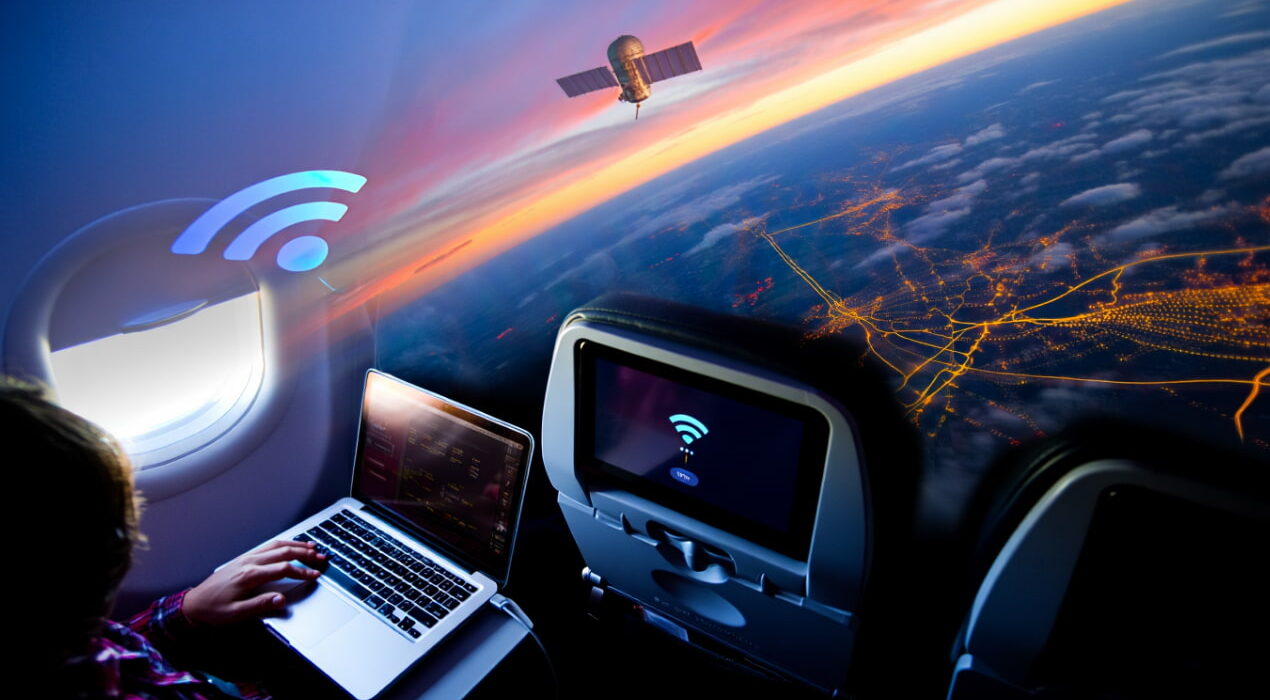
Viasat Leads the Next Wave of In-Flight Wi-Fi Innovation at Skift Global Forum 2025
Once, air travel meant disconnecting completely. No emails, no scrolling — just books and naps. Today, that silence has vanished. Passengers expect high-speed internet the moment they fasten their seatbelts.
At Skift Global Forum 2025, Viasat’s Chief Commercial Officer Meherwan Polad explained how this transformation took flight. “Tech has existed for years,” he said. “Now, everyone can use it—for free—without slowing the system.”
Viasat powers Wi-Fi on over 4,000 planes worldwide. More than 1,000 already deliver “full, fast, and free” internet. Within three years, most commercial aircraft will follow, serving over a billion travelers annually.
How Connectivity Redefines the Passenger Experience
In-flight Wi-Fi has changed the rhythm of flying. What once was a break from work now feels like an extension of it. Passengers stream movies, attend meetings, and even close major deals mid-air.
Poland noted, “Fifteen years ago, business stopped when you boarded a plane. Now, I hear from people who close seven-figure deals before landing.”
For airlines, this digital shift builds loyalty and boosts satisfaction. Reliable Wi-Fi improves traveler experience, increases brand trust, and opens new revenue channels.
Turning Connectivity into Revenue
Viasat’s latest breakthrough is dynamic, location-based advertising. Brands can reach passengers depending on where they fly and what events unfold below.
During the Boston Marathon, sports brands ran in-flight promotions. Tech giants used similar placements during CES in Las Vegas. Global advertisers are now preparing for the 2026 FIFA World Cup, eager to connect with travelers in the sky.
This model benefits everyone — passengers get free internet, while airlines and advertisers gain engagement opportunities.
Partnering for Smarter Travel Solutions
Viasat doesn’t act as a simple service provider. It partners with airlines to tailor connectivity models. Some carriers offer fully ad-supported Wi-Fi, others use hybrid systems, and a few build tiered access options through loyalty programs.
“The goal,” Polad said, “is to have most passengers online, not just a few.” Viasat also combines **geostationary (GEO)** and **low-Earth-orbit (LEO)** satellites. This blend keeps speeds steady even when every passenger streams video.
Beyond Bandwidth: The Human Connection
Connectivity is more than data speed. It touches emotion. Travelers laugh, cry, and connect at 35,000 feet — a perfect time for brands to inspire them. Polad shared, “I once cried watching a movie mid-flight. That emotion is powerful. It’s when travelers are most open to connection.”
The Future of Flying: Free, Fast, and Universal
Polad believes universal Wi-Fi is inevitable. “Internet use never goes down,” he said. “More people want more connection all the time.”
Viasat is preparing by launching new satellites and expanding partnerships. Within a few years, roughly half of all commercial aircraft will offer free access. That equals over a billion connected passengers each year.
The result is clear: in-flight Wi-Fi has moved from luxury to necessity — shaping loyalty, productivity, and emotional connection in travel.