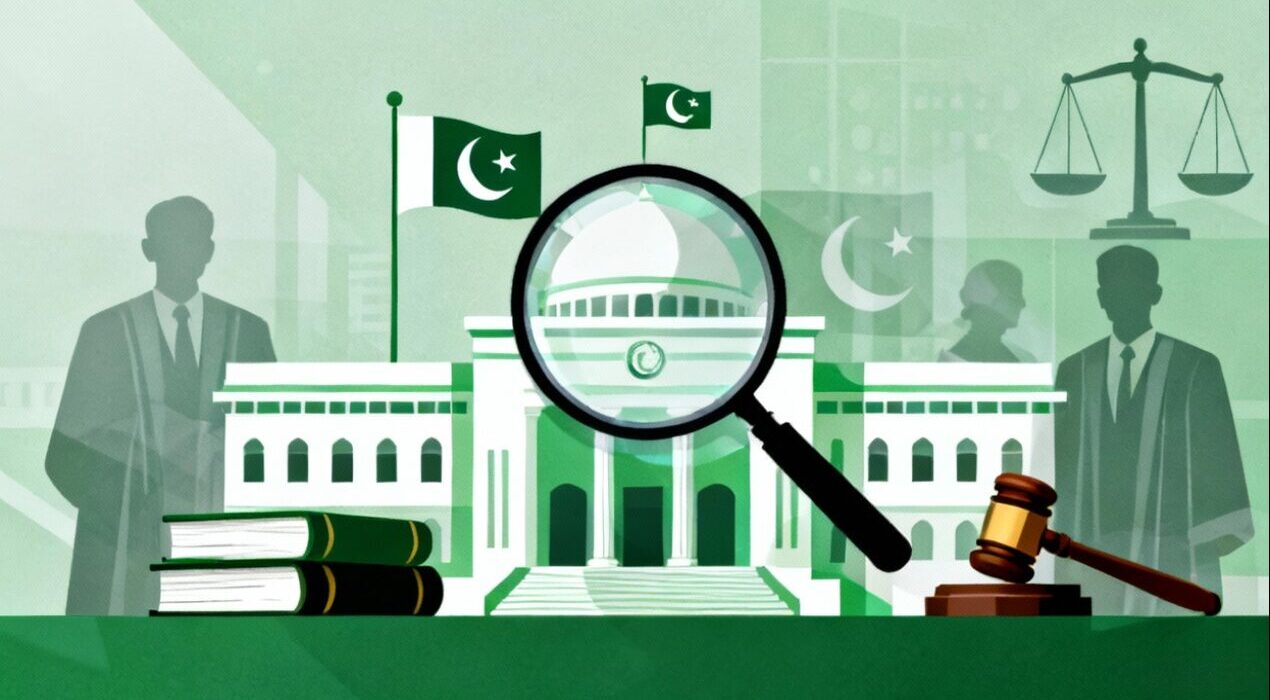
Can Pakistan’s Supreme Court Hold Itself Accountable? A Test of Trust Begins
Can the fox guard the henhouse? For Pakistan’s top court, it’s the question of whether it can judge itself. The Supreme Court now faces growing scrutiny over its internal accountability. As debates deepen, many Pakistanis are asking if the institution that defines justice can apply the same standards to its own conduct. The issue cuts beyond legal boundaries. It challenges the credibility of one of the country’s most powerful institutions.
A Court Under Its Own Gavel
Recent controversies have intensified the focus on judicial ethics. Critics argue that when judges investigate or discipline their peers, the process risks bias. They believe independent oversight is essential to protect fairness. Supporters counter that judicial independence depends on self-governance, free from political influence. They claim external checks could erode the separation of powers and threaten the court’s autonomy. Both sides insist they defend justice, but they differ on how best to preserve it.
The Supreme Court’s own conduct has become a national conversation. Lawyers, journalists, and citizens debate whether transparency can coexist with independence. Some see reform as vital to restore faith in the rule of law. Others warn that outside control could weaken the judiciary’s constitutional role.
The Bigger Picture
This debate matters far beyond courtrooms. Public trust in the judiciary shapes Pakistan’s democratic foundation. If the court embraces openness and fairness, it can strengthen that trust. If it resists reform, doubts will deepen about who truly holds power. In the end, the question remains — can the institution that defines justice also judge itself without fear or favor? The answer will decide how history views Pakistan’s highest court.