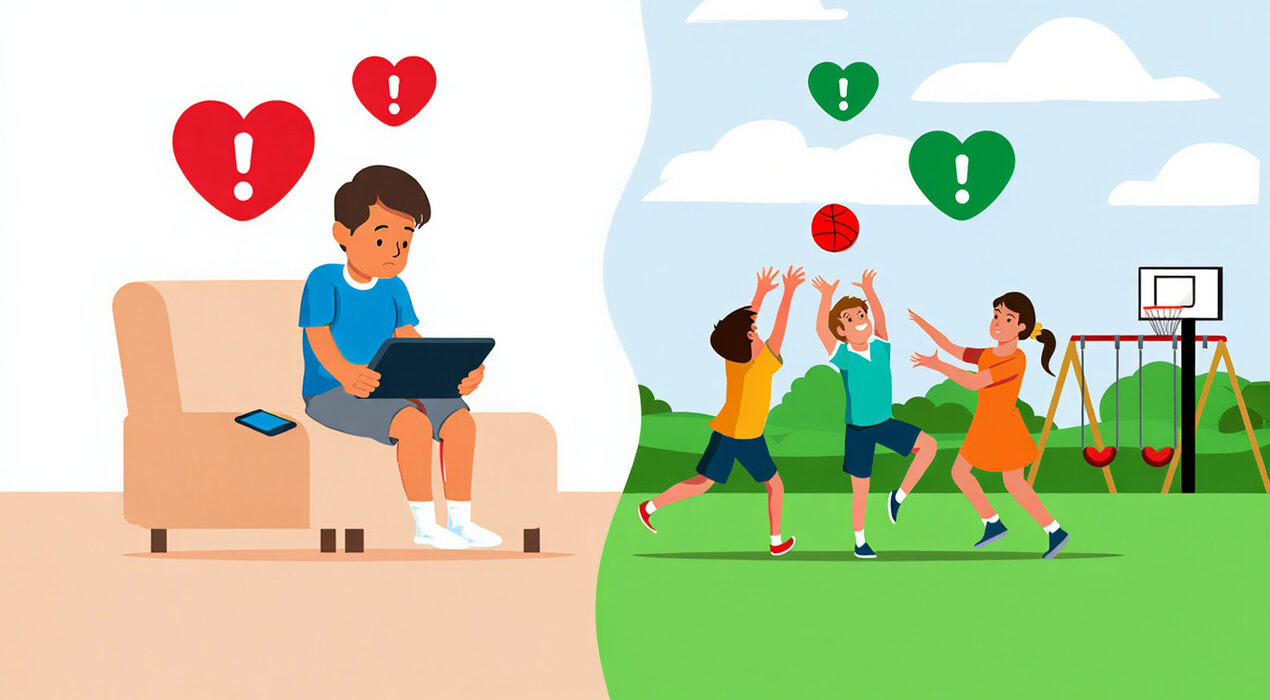
Experts Warn: Screen Time Could Be Damaging Children’s Hearts
Many children now spend hours every day on phones, tablets and TVs. That still, repetitive screen time can quietly influence heart health. Recent studies link more screen time with higher blood pressure and poor cholesterol levels in children and teens.
What the Research Found
In one major study of over 1,000 young people, each extra hour of recreational screen time raised a “cardiometabolic risk” score. That score included factors like waist size, blood pressure, “good” HDL cholesterol and insulin resistance. The link was strongest among older children and teens, especially those who slept less.
Why It Matters
Kids with higher screen time often sleep fewer hours, move less and may snack more. These habits combine to affect heart- health over time. In addition, harmful effects may begin early and carry into adulthood.While the research shows association not definitive cause-and-effect, the level of concern is growing.
What Parents and Caregivers Can Do
Start with balance. For example, set families’ “screen-free” times or zones, like during meals or an hour before bed. Encourage movement instead of sitting. Build routines where children get good sleep,because sleep seems to buffer some risk.
Also, talk about habits. Ask children what they use their screen time for. Help them alternate device use with outdoor play, reading or family time.
In addition, lead by example: children mirror the adults’ behaviours.
Too much screen time doesn’t just affect focus or sleep. It may also quietly impact a child’s heart and metabolic health. As a result, taking small steps now can help set healthier habits that last. That means less sitting, better sleep and more movement,and yes, fewer hours staring at screens.